

15 Once-Popular Seasonings No One Remembers Anymore
We may receive a commission on purchases made from links.
We live in a world where thousands upon thousands of flavors are easily available at our fingertips, but there are still seasonings many of us have never tried because they've fallen out of favor. Even seasoning nerds with a cupboard full of spices and a garden full of herbs haven't tried all the wonders that exist.
There are plenty of herbs, spices, flowers, seeds, roots, and resins that people enjoyed in antiquity but that you just don't hear about much. With the magic of the internet, you can source many of them, but some require planting in your garden or wandering upon them in their natural habitat. One that has particularly piqued our curiosity was so popular in its day that it's now thought to be extinct. Another racked up over 100 mentions in an ancient Roman cookbook. One comes from a tree that only grows on one island. Once you take a look at these 15 once-popular but forgotten seasonings, we have a feeling that you'll want to add a few to your cupboard and herb garden so you can try them for yourself.
Borage
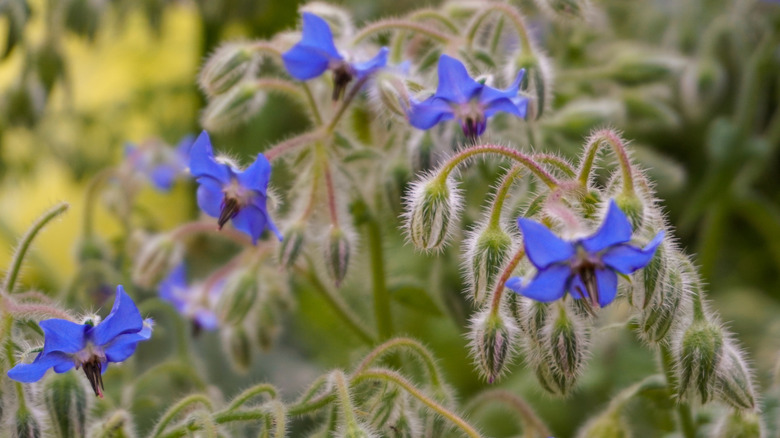
Borage likely originated in the Mediterranean region, where the ancient Greeks and Romans used it to treat a variety of ailments. Writers like Pliny and Francis Bacon both described it as a mood-boosting herb, with Pliny suggesting it was a main ingredient in the sorrow-drowning (fictional) nepenthe drink from The Odyssey. Meanwhile, soldiers of old took it for courage, including by mixing it with wine.
Not only are borage leaves edible, but the plant also has edible flowers. The plant has a flavor similar to cucumber, which is why it has long been used as an herb in salads, dating at least as far back as the 1390s. It's also great when infused in drinks such as tea and lemonade. Plus, it's a welcome addition to cocktails. People sometimes use it in oils and vinegars as well.
Calamint
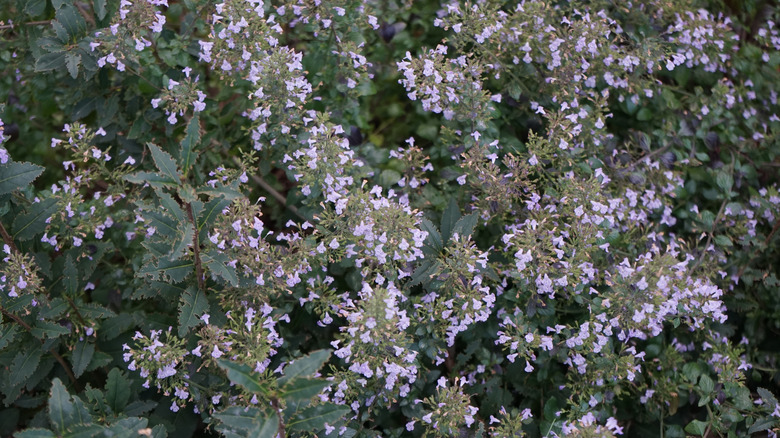
Calamint is native to Italy and was extremely popular during the Roman Empire. It was not only a culinary herb but also one that had medicinal purposes. This is another herb whose leaves and flowers are both edible. The flavor has been compared to a variety of herbs, like oregano, mint, sage, savory, and marjoram. In fact, it belongs to the mint family. If you encounter it in the U.S., it might be called nipitella (its Tuscan name) instead of calamint.
You can use calamint a lot like you would oregano. The fresh leaves work well with fish, shrimp, lamb, artichokes, beans, risottos, mushrooms, and vegetables. When dried, the leaves are good in teas. Meanwhile, the flowers taste nice in salads.
Cubeb
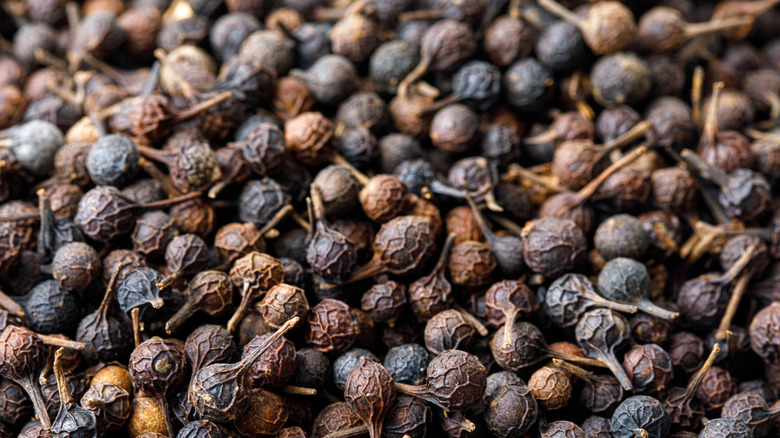
If you're trying to remember where you've heard of cubeb before, it might have been in the ingredient list for Bombay Sapphire gin. That doesn't clue you in on what it actually is, which is a spicy type of dried peppercorn fruit. The first literary mention of cubeb was about 3,000 years ago in India, and it was also popular in Europe during medieval times, often as a black pepper substitute. Today, it tends to come from Java, Indonesia. It has a flavor that's similar to black pepper, but it also has a flavor that can be described as piney or woody.
Many people use cubeb like they would regular black pepper. Because of its flavor notes, some even use it as an allspice substitute. It's also a good balancer for other flavors. For example, it can temper the gaminess in meat. It's also sometimes a component in Moroccan ras el hanout seasoning. It's also common in Indonesian curries, and Indonesia is where much of the world's cubeb comes from. Luckily, you can easily find brands like Spicy World cubeb pepper online.
Grains of paradise
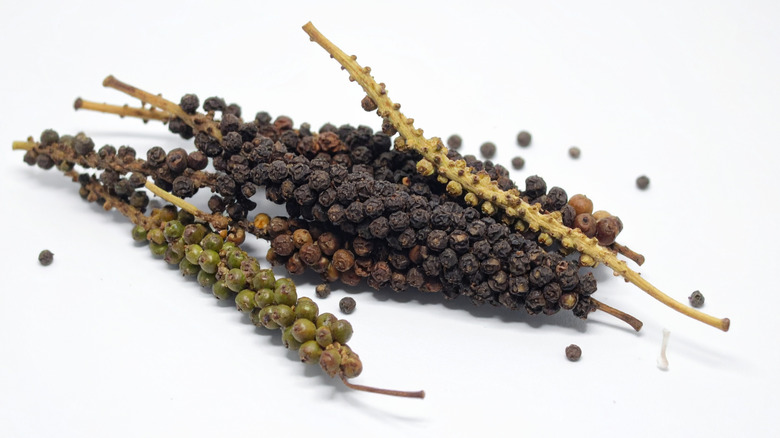
Grains of paradise are West African in origin and were especially popular in the 13th century. Their complex flavors placed them firmly on the spice trade route, satisfying medieval foodies when it was difficult to get black pepper from India. While grains of paradise are more closely related to ginger and cardamom, they also have peppery notes. However, they are more complex than pepper, with citrus, woody, cinnamon, clove, and cardamom notes while also being warm and earthy.
Like cubeb, you can use grains of paradise like you would black pepper, but you might need a little more than you would pepper. However, grains of paradise are also one of those types of spices special enough to use in holiday dishes. And they go with practically everything from meat to vegetables, fruit, sauces, stews, and even desserts. If you're curious enough to try, you can find brands like Hampton Distribution's grains of paradise online.
Hyssop
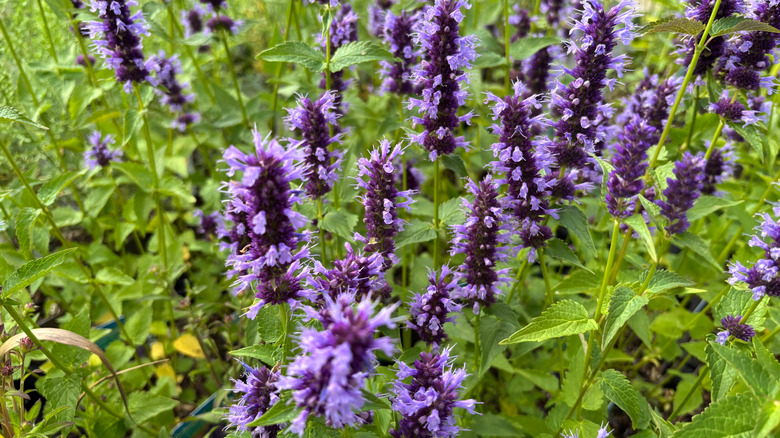
Hyssop is an evergreen herb in the mint family that grows wild throughout the world, with both its leaves and flowers edible. It has a history of religious use in ancient Egypt, where it was eaten with food for purification, and it is also mentioned in Psalms in the Bible in connection with cleanliness. Yet it's not as popular as it once was because of its strong bitter and spicy flavor.
Hyssop tastes like a more bitter and intense version of mint. So, you can use it in place of mint or even sage in recipes. It's good for infusing tea or alcohol with flavor, and the ancient Romans used it in their wines. In fact, if you're not growing it yourself, you're most likely to find it dried, like Wildfield Herbs hyssop tea. In cooking, it's an herb that works in moderation for seasoning sauces, salads, and pastas. It's also good in soups, which is how medieval monks used it.
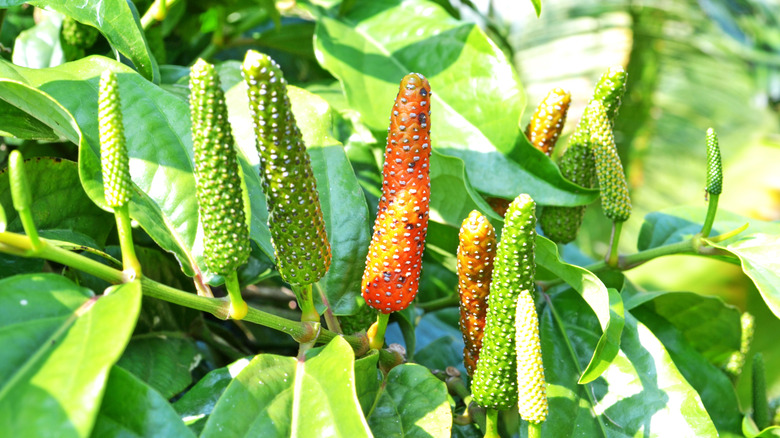
Long pepper
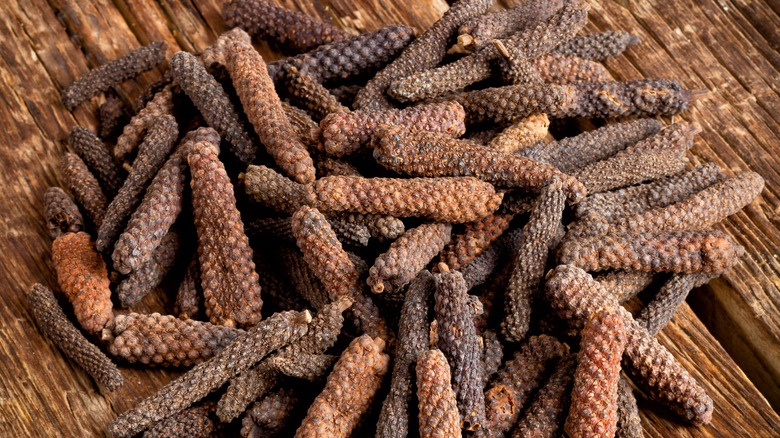
If you're interested in trying yet another black pepper alternative, long pepper is in the same family but offers a lot more complexity because it's sweeter and citrusy. It originated in India like black pepper but isn't as hot. While you can crush or grind it, some use long peppercorns whole. It's another spice that made its way along spice routes to become popular in ancient Greece and Rome. In Rome, it was double the price of black pepper. However, since it was difficult to grow outside India and Indonesia, it became less popular as black pepper became cheaper and Europe got chili peppers from the New World that could be grown locally to make food spicy.
Long peppers were a popular ingredient in medieval European drinks like spiced hippocras wine, mead, and ale through the 1500s. You can also still find it in Indian and Indonesian cuisines, as well as other cuisines like Malaysian and North African. Brands like Ayurvedashree long pepper aren't too expensive online, which is why you might be able to try pairing barbecued meats with long pepper or even adding it to desserts like ice cream.
Lovage
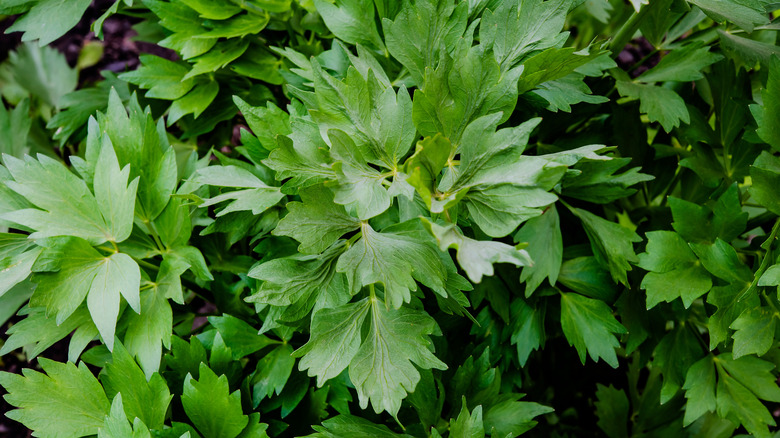
Lovage originated either in the Mediterranean or Southern Europe and shows up in the ancient Roman cookbook, "Cookery and Dining in Imperial Rome" by Apicius, 191 times, which is more than any other seasoning on our list. This herb is distantly related to a lot of common herbs we use often today, like parsley and dill. It's also distantly related to celery. However, in most modern dishes, you'll see parsley or celery where ancient cooks once used lovage since it's sort of like a cross between those two. However, it tastes more like celery and has a slight mouth tingle. Some think it has a hint of curry or aniseed. It also helps bring out umami notes in some foods like tomatoes, with some using it like they would monosodium glutamate.
Both the leaves and seeds have culinary uses. Lovage makes a good substitute for celery salt in dishes and can be used anywhere you'd normally use celery or parsley. Based on Apicius' cookbook, it works well in sauces, with seafood, in sausages, with meat dishes, on vegetables, in stews, and with mushrooms — basically, on everything but dessert.
Mahlab
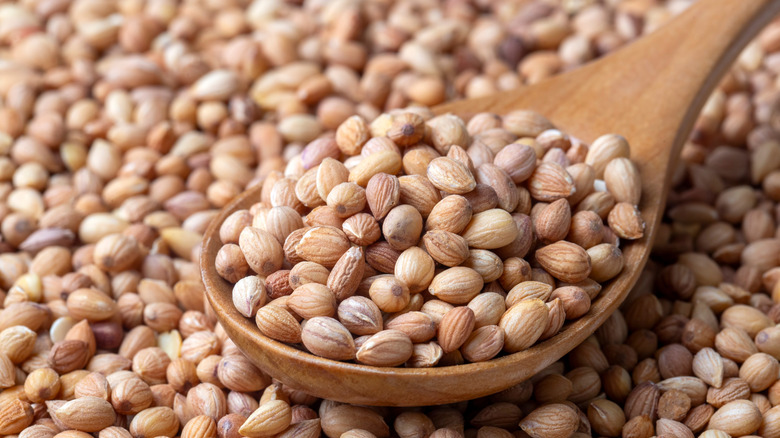
Mahlab is a curious seasoning made from the dried pits of St. Lucy's cherries, small ornamental but edible cherries that originated in the Mediterranean and Western Asia. The pits are mentioned for consumption in ancient Sumerian writings as well as medieval Arabic writings going back to the 1300s. The flavor of mahlab is especially intriguing, as it not only will remind you of cherries and almonds as you might expect but also of florals like roses with a bit of vanilla. You might also detect nuttiness and bitterness.
As you can imagine from the flavor profile, this is a seasoning that works well in desserts. It's an ingredient in a Greek holiday sweet bread called tsoureki and shines in pastries, cakes, cookies, and even rice pudding and crème brûlée. It's also an interesting addition to meat marinades or cheese. If you want to add mahlab to your spice collection, you can find options like Çerez Pazarı ground mahlab or NY Spice Shop whole mahlab to grind yourself.
In case you were wondering, mahlab does contain amygdalin, the same toxin in cherry pits that Healthline says can convert to hydrogen cyanide inside the body. However, normal culinary amounts of mahlab are generally considered safe, so a teaspoon in a recipe is not a cause for concern.
Mastic
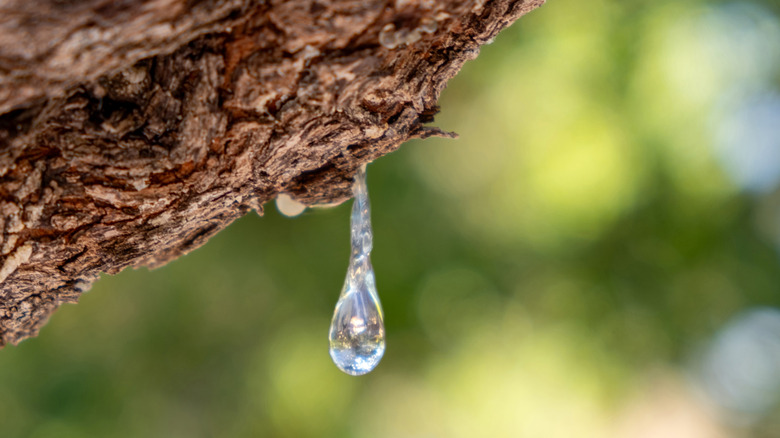
Mastic is unusual because it is a seasoning made from tree resin. It comes from the resin of the mastic tree that only grows in the southern part of Chios, a Greek island. So, to try it, you'll have to get some imported from Chios, like Mastiha Chios mastic powder. Ancient Greeks are said to have used it as chewing gum, and Egyptians used it for embalming. However, it has culinary uses as well. As you might expect from a tree resin, it has a flavor that's evergreen and similar to pine, with notes that can be earthy, herbal, sweet, and musky. Many compare it to vanilla.
Like mahlab, mastic shows up in sweet Greek tsoureki bread. In fact, dried and ground mastic seems to work in a lot of the same sweet treats, like pastries, cakes, cookies, and even ice cream. Besides using it in sweets, you can also add it to savory dishes, like meats, cheese, sauces, and dressings. Interestingly, it's also good in liquor, coffee, and tea. So, it's quite versatile.
Rue
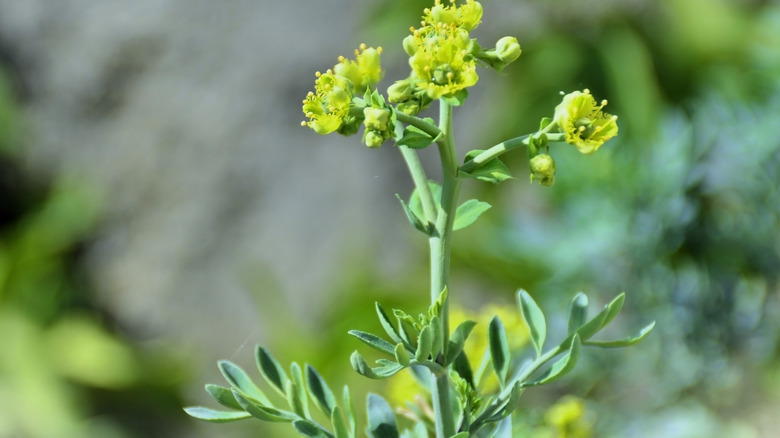
Rue is an herb from southern Europe that the Romans helped spread. It's mentioned in the Bible as an herb the Pharisees offered as part of their tithe. Ancient Romans often used it in sauces, combined it with a paste of other herbs and hard cheese, or combined it with other herbs in a bouquet garni. Romans also pickled it and used it in salads. Medieval cooks turned it into a condiment.
Not too many modern cooks use rue today because it adds bitterness to dishes. Still, it occasionally shows up in old Italian recipes that have been passed down through families. It's possible to infuse sauce with the flavor of rue without bitterness if you only boil the leaves for a minute in the sauce and then take them out. Ethiopians often add the leaves and seeds to their coffee. Intriguingly, the leaves can leave the tongue feeling a little numb, with the flavor even stronger dried than raw. Even the seeds have a bit of heat.
Something to keep in mind is that rue should be consumed only in small culinary amounts because it can be toxic in larger amounts. Plus, lots of people who grow herbs avoid touching it bare-handed because it can cause blistering, according to Mother Earth Gardener.
Safflower
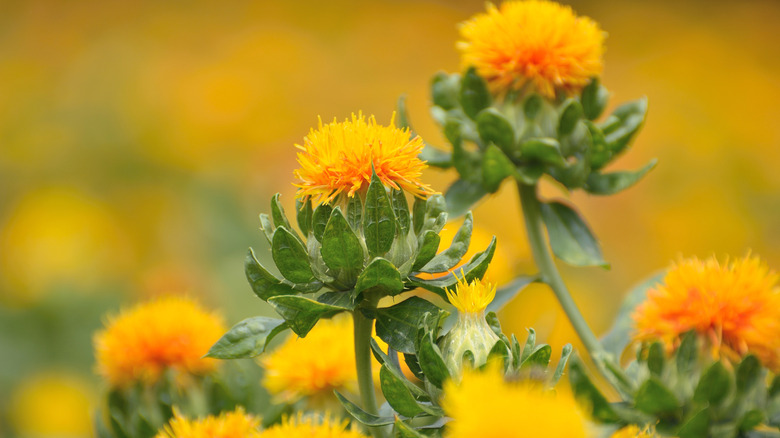
Safflower has been used to make neutral, high-smoke-point oil since the time of the pharaohs in ancient Egypt. But it has early ties not only to Africa but also to Asia and the Middle East. Later, in the 1900s, Europeans started using it as a sausage flavoring and cheese coloring. Today, you'll probably see it most often showing up as a coloring for margarine or butter. Dried safflower petals have a mild and lightly floral, earthy, and nutty flavor. Plus, because safflower gives food a yellow color, it can be used as a cheaper alternative to saffron. Whereas Banu Saffron organic saffron threads will run you around $282 an ounce, Adonis dried safflower petals come in at only a little over $4 an ounce.
Dried safflower petals work in a variety of dishes, especially ones in which you'd ordinarily use saffron for flavor or color. For example, you can add them to rice dishes, curries, paellas, stews, meat dishes, pastries, breads, and teas. They also work in both sweet and savory sauces.
Savory
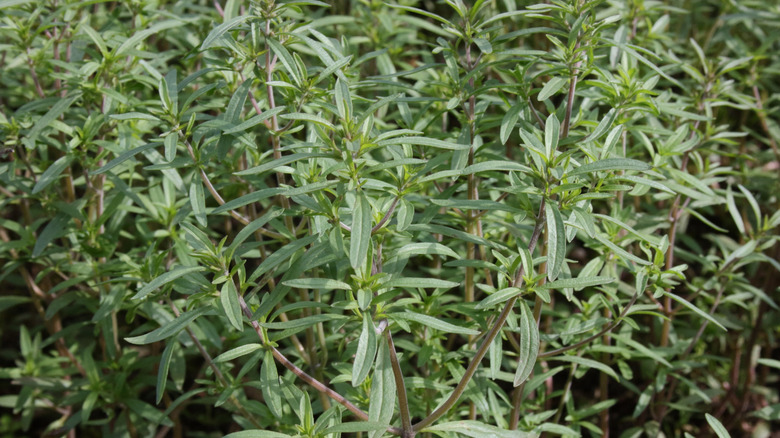
Savory is another seasoning the ancient Romans liked to use. While it originated in the Mediterranean, the Romans brought it with them when they expanded their empire into places like England. The Romans used it as they would salt and claimed it was an aphrodisiac. Despite being an herb in the mint family, its flavor is more like that of black pepper, thyme, mint, and marjoram. However, it's another seasoning that became less popular when black pepper became easier to get. While you may still experience it together with other herbs in herbes de Provence, it's not nearly as popular as a singular seasoning as it once was before black pepper took its place.
There are two main types: winter and summer savory. The summer variety is more popular, sweeter, and has a lighter flavor profile. Meanwhile, winter savory is more intense, with a more evergreen pine or sage-like flavor. Either version of the herb works well in a variety of savory dishes, just as black pepper does. It's just as good for elevating vegetable dishes like green beans as it is in soups, stews, and meat dishes. It's also an interesting addition to vinegar, creating a tangy and spicy condiment to splash on salads or dishes like roasted vegetables.
Silphium
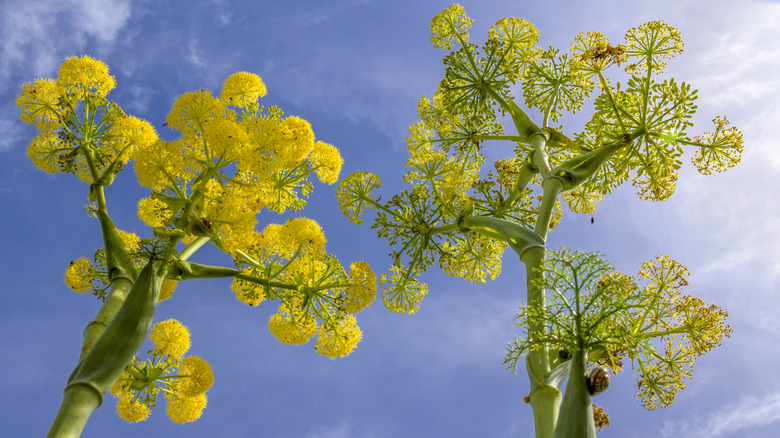
Ah, silphium. This is the herb you only wish you could try. Silphium made Cyrene (a city in present-day Libya) absolutely rich because it grew there and was as valuable by weight as gold. It was popular enough for Julius Caesar to keep a stash of it under government lock and key, to feature in songs and poetry, and even show up on Greek coins. Unfortunately, since it only grew wild in a 125-by-35-mile area of northern Africa, it's thought that its popularity drove it to extinction by the 300s B.C.E. (per BBC). Besides overharvesting, it's thought that the area may have simply become too desertlike to support the plant.
Romans sometimes used asafetida as a substitute, but it wasn't the same since the plant was compared to ferula, a genus that includes giant fennel plants. If there's any chance it might still exist, experts point to Ferula tingitana, Ferula communis, or a newly found species called Ferula drudeana as possibilities. Although we have a hard time believing ordinary fennel was getting this much fuss.
There were lots of ways to eat the whole plant, but it was the dried sap — laser — that the Romans famously turned into a condiment or grated over practically every food. People even fed it to animals like sheep and goats to make them taste better and be more tender. Beyond the kitchen, it was used for a variety of ailments as well as an aphrodisiac and a form of birth control.
Sweetgale
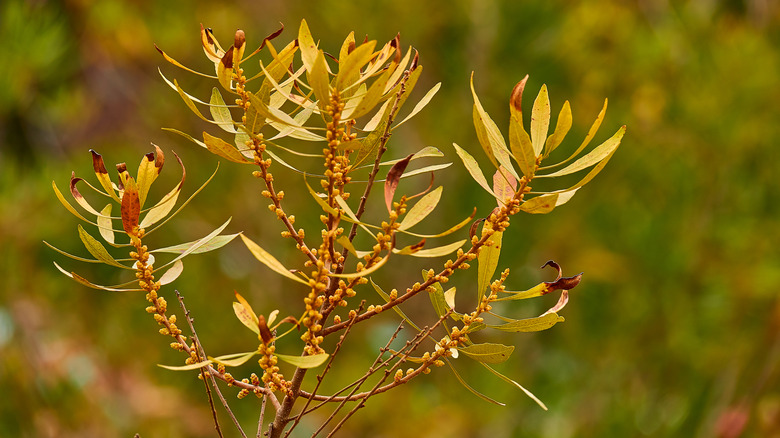
Sweetgale is a wild shrub that tends to grow in northern climes around the world near water, whether by a lake or a bog. It will grow in wet ground in a home garden, like near a pond. It's a plant known as northern nutmeg because of its spicy, warm notes that are likely to remind you of spices ranging from pepper and cloves to citrus, bay, and eucalyptus. Vikings liked to add sweetgale to flavor their beers, but hops have largely replaced sweetgale in modern beer. However, the dried leaves, catkins, and seeds all work nicely as a seasoning.
If you happen upon sweetgale, you can use it as a spice for a variety of savory and sweet dishes. It makes a great marinade for a variety of meats. It's also good in desserts, especially when paired with berries or chocolate. Plus, the leaves work well for making tea.
Zedoary
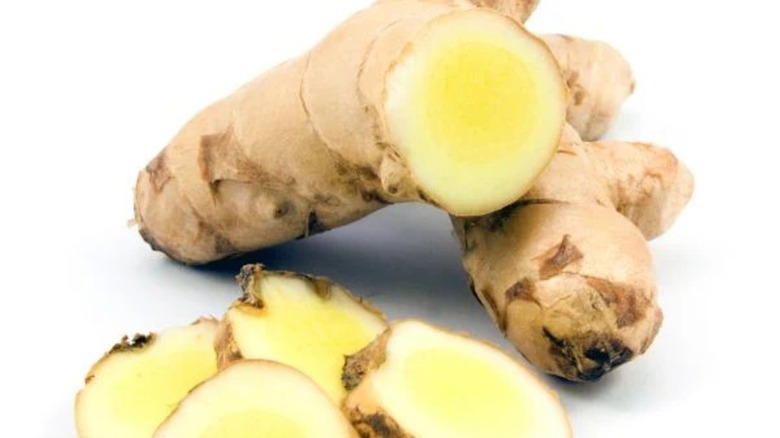
Finally, on our list of once-popular seasonings nobody remembers, we have zedoary. It's a root native to Indonesia and northeast India that's a forgotten relative of the ginger and turmeric family. Consumed raw, it does resemble the flavor of ginger, with a bit of mango, menthol, and bitterness added. When not consumed raw, it comes in dried slices or powder. However, it's often combined with other spices. While it was popular in Europe during the Middle Ages after Arab traders introduced it there, it fell out of favor because it was ultimately no match for turmeric and ginger.
These days, you might find it in curry pastes in Indonesia, complex spice blends in Thailand, and pickled as a condiment called achar. Alone, you can also use it in soups or to flavor meat like chicken. It's an ingredient in the Italian alcoholic beverage Fernet-Branca. We've also seen some Redditors experiment with using it to infuse liquor at home, but it seems to overwhelm other flavors easily. So, if you find some to use for culinary purposes, you may want to experiment by starting with a small amount.