

The Forgotten Delicacy Behind A Dark Chapter Of The Old West
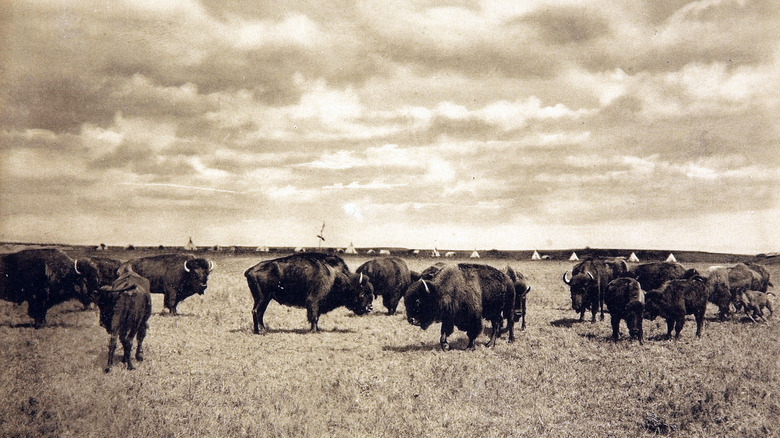
While culinary matters may not be the first thing we think of when we look back to the old West, no point in history can be fully understood without appreciating what people were eating at the time — or why they stopped doing so. The California Gold Rush produced the delectable pairing of eggs, bacon, and oysters we know as the Hangtown Fry, while chili would likely not have modern ubiquity if Texas cuisine had not been so heavily impacted by South American and European traditions in the late 19th century. One popular gourmet treat from that period did not enjoy such longevity, however, in part because of its ties to a dark chapter of Old West history: buffalo tongue.
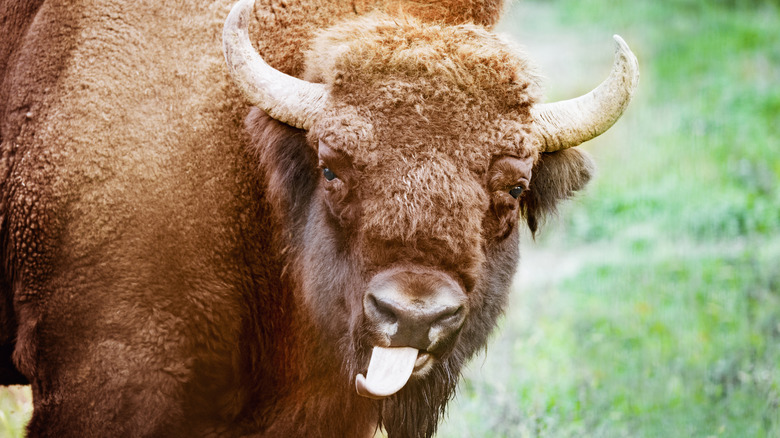
During the 19th century, the tongue of American bison was prized as a delicacy, with a texture comparable to a creamy pâté and a taste generally considered far superior to regular cow tongue. Its appeal extended beyond those states where the buffalo roamed, and their tongues were once served in eateries such as New York city's Delmonico's, the first fine dining restaurant in the U.S., with President Ulysses S. Grant reportedly being a tremendous fan of the dish.
A voracious appetite for buffalo tongue also developed among those soldiers posted to the Western frontier. In 1870, the newly appointed commander of the Department of Missouri, General John Pope, wrote to Colonel Richard I. Dodge with a request for 12 dozen buffalo tongues. Dodge obliged, and after three days of hunting in the Kansas wilderness, his men returned having killed over 140 buffalo simply for the tongues. However, this carefree willingness to engage in such slaughter would eventually lead to buffalo tongue ceasing to be widely available.
The American bison was almost wiped out
The reason buffalo tongue fell out of favor is that the American bison itself had been hunted almost to extinction over the course of the 19th century. While various other factors including drought, disease, and wildfires contributed to the decline of the buffalo, the commodities market for buffalo tongues, meat, and skins bore heavy responsibility for almost eliminating the species from the American West. Additionally, the U.S. Army encouraged the slaughter of the buffalo to wipe out this key resource of the Native American population and force them onto reservations. The American bison was reduced from a population of 30-70 million in 1853 (though estimates vary) to mere thousands by the early 1880s.
The effects of this disaster would last for generations, and when it became clear that the extinction of the buffalo was an imminent possibility, efforts began to preserve the species. Between the 1870s and the 1880s, hundreds of the animals took up residence in Yellowstone National Park, and under lobbying from the American Bison Society, Congress would establish numerous buffalo refuges in the early 20th century, beginning the slow work of rebuilding the population. Per the U.S. National Park Service, there are today roughly 360,000 plains bison owned as domestic livestock in the United States, while 31,000 are part of publicly owned herds in both the U.S. and Canada.
Though nowhere near the number they once were, the steady revitalization of the buffalo has more recently promoted some interest in it as a source of sustainable, environmentally friendly meat. This may also explain why buffalo tongue has started to reappear on some menus. Even if this delicacy should regain its bygone popularity, we should be wary never to treat the buffalo with such disrespect again.