

The 4-2-10 Method That's Worth It For Tender, Smoked Brisket
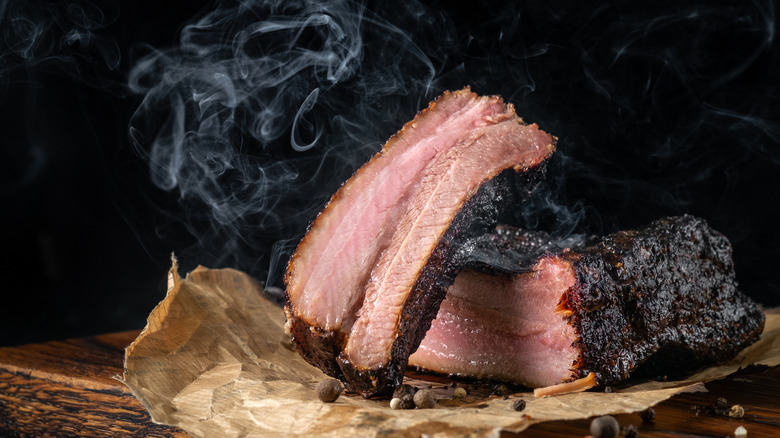
For many home barbecuers, being able to pull off perfectly tender smoked brisket is the ultimate demonstration of skill. Brisket is arguably one of the trickiest cuts of meat to master — it's packed with connective tissue, so it starts out incredibly tough. However, if you're able to nail your temps and timings, that stubborn cut will be transformed into a rich, succulent slab of beef that falls apart at the prod of a fork. And while there's no substitute for experience, it helps when there's a straightforward template to follow when you're starting out. For brisket, it's called the 4-2-10 method.
The 4-2-10 method is a simple approach that splits the whole process into three stages: smoking, higher-temperature cooking, and resting. The first four hours are all about flavor — the brisket sits in the smoker at a low temperature, taking on a bold smoky essence and developing a dark outer bark. The following two hours use a higher heat to help render fat and break down the tough connective tissues in the beef. Finally, a 10-hour resting period allows enough time for the meat to relax and its juices to properly redistribute. That wait-time might sound excessive, especially when you're staring at a delicious hunk of freshly cooked brisket, but it's necessary if you're chasing pro-level barbecue.
The appeal of the 4-2-10 method is that it takes a highly complicated cooking process and turns it into something anyone with a smoker can follow. You'll likely see even better results if you tweak the timings depending on the size of the brisket, the type of smoker, and how the meat behaves while it's cooking, but it always helps to have a reliable jumping-off point.
How to get even better results using the 4-2-10 method
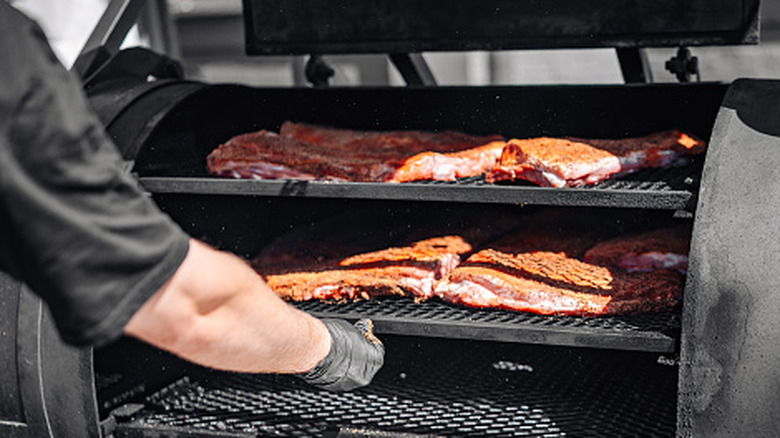
The 4-2-10 method provides a handy roadmap for anyone wanting to cook brisket, but true greatness comes from understanding the little things that can make or break the final texture. First, the meat itself matters. Brisket comes in two parts, and if you're using a full cut with nice marbling, there should be enough fat to keep the meat moist during cooking. However, a smaller cut will heat through more quickly, so a four-hour smoke might be too long.
Another crucial factor is how you handle the brisket once it's built up enough smoke flavor. Wrapping the meat in aluminum foil or butcher paper to trap moisture when it hits around 165-170 degrees Fahrenheit helps prevent moisture loss during the later stages of cooking, which can keep it from drying out. Brisket also has a tendency to "stall," which is when evaporating moisture slows the cooking process and prevents the internal temperature from getting where it needs to be. Wrapping can help counter this, but patience is also key. Cranking up the heat will only dry the meat out if the fat and connective tissues haven't had enough time to break down.
It's also important not to overlook the little details. For a complex brisket with deeper flavors, don't skimp on the seasoning, sauce, or smoke. Use quality ingredients and remember that there's no rush. The main thing is that you stick to the basic steps, maintain good temperature control, and let the meat cook slowly enough to achieve that melt-in-your-mouth texture.
Final steps to make the 4-2-10 method worth it
The 4-2-10 method might offer a reliable timeline for cooking brisket, but that doesn't mean you can take your eye off the prize, especially in the final stage. Regardless of how long the meat has been in the smoker, time is only a guideline — it's not the clock that will let you know when your brisket is ready.
The first thing to check is the internal temperature of the meat by inserting a reliable meat thermometer into the thickest part of the brisket. A digital, wire-free thermometer that you can leave inside the meat while it cooks is generally your best option. When the internal temperature hits around 200 degrees Fahrenheit, you can take it out of the heat and let it rest. However, if you're aiming for ultra-tender, juicy brisket, the ultimate test all comes down to texture. Insert your thermometer or a thin skewer into the thickest section of the meat — your brisket should feel like butter when you pierce it. It's worth continually checking the softness of your brisket, because if you overcook it, it will dry out.
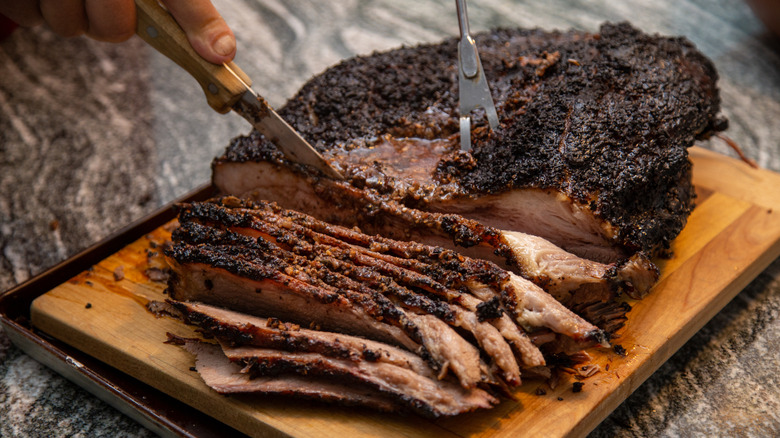
The last part is where a good brisket becomes a great one. After hours under the heat, you want to give the brisket time for its juices to redistribute. If you start slicing it up too quickly, there's a chance you'll lose some of that moisture on your cutting board. Speaking of which, the slicing technique is also important. Brisket is made up of long muscle fibers — cutting against the grain shortens them and makes each bite easier to chew. If you're working with a whole brisket, you may also want to separate the point and flat before slicing, since the two sections can have slightly different textures.