

Here's What It Means If Your Pepper Plant's Leaves Turn Yellow
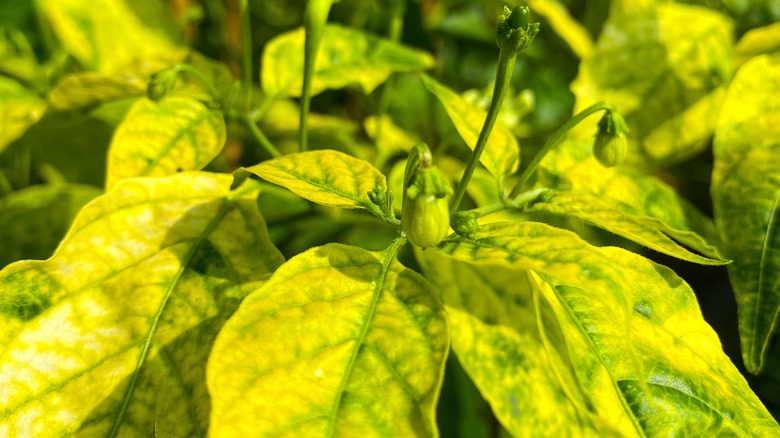
Everyone appreciates fresh produce, and there's nothing fresher than the fruits, vegetables, and herbs you grow yourself in your own garden. However, not everyone necessarily has a green thumb, especially when it comes to growing, maintaining, and harvesting peppers. Growing your own peppers is easy and cost-effective, and pepper plants also help keep garden pests away if you plant them next to your tomatoes. However, those who are horticulturally-challenged may find themselves turning yellow at gardening when their pepper plant leaves start going blonde.
The presence of yellow leaves isn't the end of the world — or your peppers. The yellow discolorations merely show distress in the plant, and the positive spin is that they are indicators of how you can remedy the situation. If the discolored leaves also have a bit of dryness and feel crispy or wilted, that means the pepper plant is lacking water and you should water it. If yellow leaves are limp, floppy, or soggy — particularly the older ones near the bottom — that means the plant has too much water and you need to stop drowning it. A common tip for growing peppers is to keep the soil moist, but not muddy.
Beyond watering issues
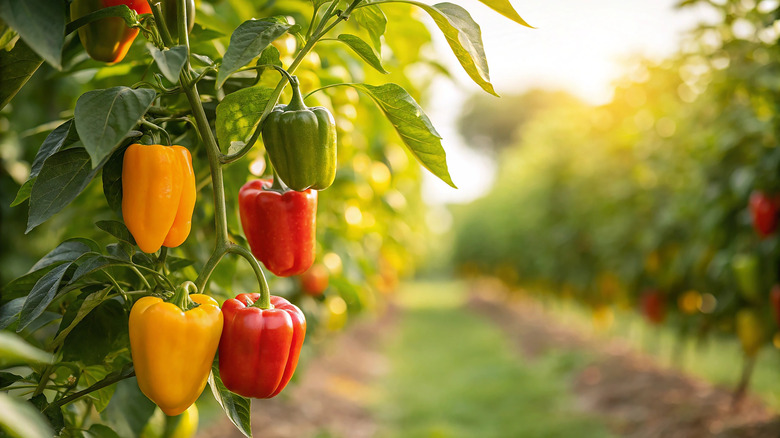
Adjusting the hydration level of a pepper plant is an easy fix, but sometimes yellow leaves are symptoms of other ailments, mostly involving a lack of nutrients. The most common deficiency is nitrogen, which roots pull from nutrient-rich soil, however, it might not always be present. To remedy this, introduce a liquid fertilizer or try a common household hack: Mix in some nitrogen-rich coffee grinds to the soil.
If leaves start to yellow but the veins remain green, resulting in a mottled aesthetic of the two hues, that indicates a lack of magnesium. A liquid fertilizer is an easy fix, but the common gardener's hack is to make a solution of drugstore Epsom salts — a tablespoon in a gallon of water — and spray the leaves.
If leaves start getting dark patches with a yellow ring around them, that means the plant has a bacterial or fungal infection. In this case, you'll have to give it some medicine, that is, a fungicide from your gardening retailer. Additionally, to prevent the spread of the disease to the rest of the plant, snip off the infected leaves.
When treating pepper plants, keep in mind that leaves that have already discolored won't necessarily revert back to green once you've found a solution. Rest assured that new growth will be healthy, and your plant should yield the best peppers you can harvest for your recipes.