

When Are Grill Grates Too Rusty To Use?
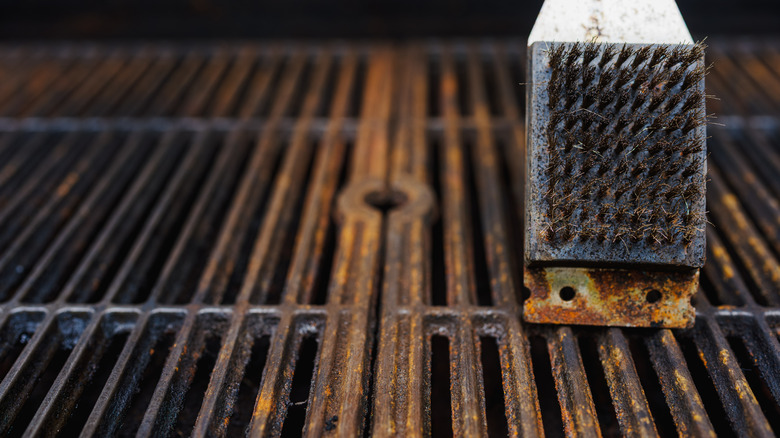
Opening your grill for the first barbecue of the season can be exciting, but depending on what you find under the lid, it can quickly become a headache. After a long winter or a wet spring, it's common for moisture and oxygen that's been trapped inside your grill to react with metal, causing rusty grill grates. In some cases, this can be easily cleaned and fixed. But if the rust is severe enough to have caused pitting — or divots that weaken the metal — or cannot be mostly removed, it may be best to replace your grates completely.
Often, rusty grill grates can be avoided with careful maintenance, regular grate cleaning, and proper off-season storage, but the weather is outside of your control. Fortunately, cooking on a lightly rusted grill isn't inherently a major problem, because iron oxide — the chemical compound of rust — isn't dangerous to ingest in small amounts. However, at best, it'll make your food taste bad and metallic, but eating too much can lead to an upset stomach and potential digestive issues.
Before you toss out the whole grill, though, give your grates a good cleaning so you can fully assess the problem. You might find it's not as bad as it first looked.
Can your grill grates be saved?
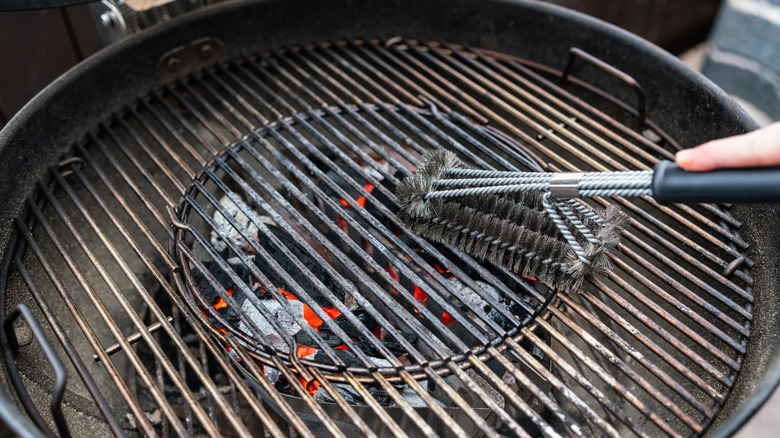
There are a few methods you can use to clean your grill grates, but to start, you should fire up the grill to soften any lingering grease or residue. Then, using a grill brush (avoid cleaning with a wire version), scrape away the remaining rust before soaking the grates in warm, soapy water. Another option is to scrub away the rust with a paste made of vinegar and salt, or attack it even more harshly with sandpaper. Whatever approach you take, once you've cleaned your grill grates, let them dry thoroughly before assessing. A few lingering spots of rust aren't cause for concern, and might even be removable with a second firm scrubbing.
However, if after cleaning, the grates are still rust-covered or don't look structurally sound, you have your answer. It's time for a new grill grate. While cast iron and stainless steel grates each have their merits in terms of cooking, stainless steel is more naturally resistant to rust. Cast iron grates, on the other hand, will require regular rust prevention and maintenance. For example,once your new grates are in place, it's important to season them before your next barbecue session, just as you would season a brand new grill. This step protects your grill from future rust, as well as creates a nonstick surface. Keep your grill dry and covered when not in use, which can further prevent rust from returning and building back up.