

Why Andrew Zimmern Never Cooks Seafood In Aluminum Foil — And What He Uses Instead

Aluminum foil is so thoroughly embedded in modern cooking techniques that it's hard to imagine a culinary world without it. Foil withstands high-temperature ovens, locks in moisture, retains heat, and protects food from burning or drying out. With all that goodwill and positive kitchen mojo, it seems unlikely that professional chefs would shun the shiny sheets — but there's definitely one who does, at least when it comes to seafood. It's Celebrity chef Andrew Zimmern, the co-author of "The Blue Food Cookbook" published in October, and the host and a judge on Food Network's forthcoming series, "Pitmasters," premiering on July 13.
Zimmern took the time to tell Tasting Table why aluminum foil is not an ideal material for preparing fish, and why he personally never uses it for that purpose. He noted that major food-safety authorities generally consider aluminum foil safe for cooking. But, in his opinion, there are still some issues. "Small amounts of aluminum can migrate into food during cooking," he said, "particularly when the food is acidic, salty, or cooked for long periods at high temperatures. Fish prepared with lemon juice, tomatoes, vinegar, or wine can increase that migration compared with neutral foods." He followed up with more detail on that, plus suggestions on what to use instead.
Alternatives to foil when cooking fish
In addition to acidic foods increasing the likelihood of aluminum foil migrating into food, Andrew Zimmern noted that foil reacting to acidic marinades may also leave discoloration or a slight metallic taste. But that's not all. He told Tasting Table that, if it's not well lubricated, delicate fish can stick to foil while cooking — plus aluminum foil "encourages steaming rather than browning, so you lose opportunities for caramelization and crisp skin." That said, it's not a big deal to replace aluminum foil with better cooking materials, and Zimmern offered several suggestions based on his own first-choice preferences.
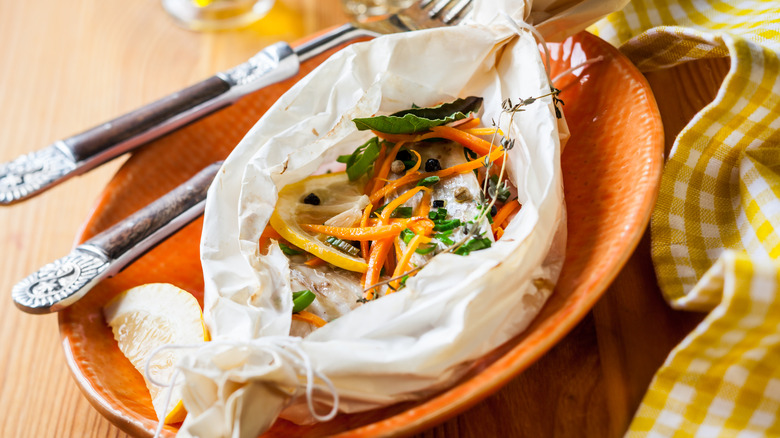
Zimmern's first suggestion was using parchment paper for "en papillote" cooking, a French term for cooking food in parchment paper. He called it "ideal for gentle steaming," since "it's nonreactive and preserves moisture and aromatics beautifully." Then there's stainless steel, which he revealed as "excellent for roasting and broiling," or cast iron or carbon steel, which he said are outstanding for "crisp skin and high-heat searing." Finally, for indoor cooking, Zimmern recommended glass or ceramic baking dishes as being "perfect for baked fish with wine, tomatoes, citrus, or herbs because they're completely nonreactive."
When things move from the kitchen to outdoor scenarios, things veer in a different direction. "If cooking over a grill, I often prefer a cedar plank or a well-oiled stainless-steel grill basket instead of wrapping fish tightly in foil," he explained. "Both allow better smoke penetration and improve texture while avoiding the steaming effect of an enclosed foil packet." For more insights on the seemingly innocuous practice of aluminum foil cooking, check out the reason why you should never cook salty foods in aluminum foil, and explore the differences between using aluminum foil and parchment paper when baking.