

The OG Way Of Selling Potato Chips Was Absolutely Terrible For Freshness
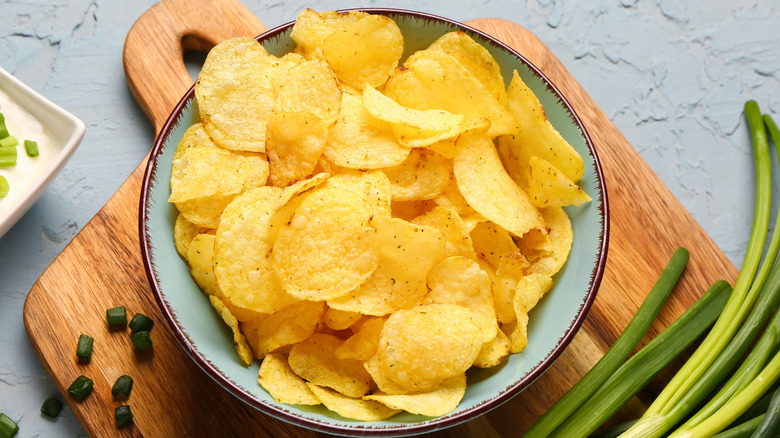
Over a billion pounds of potato chips get munched on every year in the United States. It's not just that they're so tasty, there's a scientific reason why we enjoy snacking on potato chips so much. Potato chips have been around since the early 19th century and first found their way into grocery stores in 1895. They weren't sold in the convenient bags we know today, though. For the most part, they were stored in large wooden barrels, which were at the time commonly used for crackers, wafers, biscuits, and the like. Sometimes the chips were kept in glass cases. Once purchased, the chips were handed to the customer in a paper bag.
Needless to say, this method of storing and selling didn't do much to extend the freshness of the crispy chips. In 1926, Laura Scudder, whose family ran a chip company in California, came up with a solution. She used wax paper to line the inside of the chip bag, and then she sealed the top by ironing it. This ensured the chips stayed fresh for a much longer time. Scudder also pioneered adding the freshness date to the bags, and so the bagged potato chips that we know today proudly belong among the iconic foods that were invented by women.
Nowadays, potato chip companies are trying to find a balance between freshness and sustainability
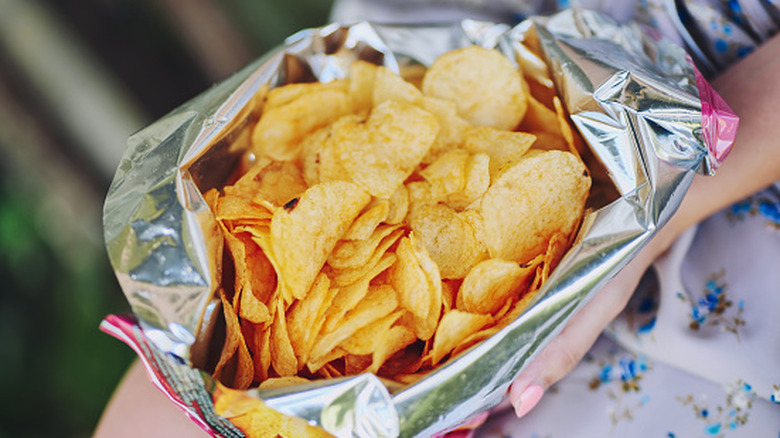
Potato chip bags have changed a lot since Scudder's days. They are now made from several different layers of plastic combined with a metallic layer at the end. The purpose of these materials is to keep the chips safe from moisture and air, the two factors that could ruin the freshness and spoil the product. The packaging ensures the chips have a long shelf life despite their delicate nature. As for the reason why potato chip bags are never fully filled, that's largely how companies protect the chips from crumbling. All in all, the modern bags seem like a genius way of selling this beloved snack, but they do have one big downside: You can't recycle them.
Several chip companies have tried to come up with a sustainable, recyclable package. Frito-Lay introduced a plant-made, compostable bag in 2009, but consumers found it to be too noisy and not as easily compostable as promised. Other companies have tried and failed as well; Kettle Chips has looked into various options with no success, but efforts are ongoing. A Dutch company, Snecco, is selling chips in fully recyclable plastic cups with a paper label. In the United Kingdom, Aldi is making chip bags from recycled materials. So, while we're not quite there yet, the potato chip bag is likely gearing for another big transformation in the near future.