

The Differences Between Savory And Umami, Explained

Umami is one of those fantastic, sophisticated words to throw out at a dinner party, while simply describing something as savory feels broader, more general. When the terms umami and savory are so often used interchangeably, is there a big enough difference to separate them? Well, yes. Because while foods that are umami can typically be described as being savory, it doesn't necessarily work in the opposite direction. Just because something is savory, doesn't mean it's umami.
Umami is very specific and has a hard-won place among the five tastes, the others of which are sweet, sour, salty, and bitter. Savory is a less specific term, often simply used to indicate that something is not sweet. Salt and umami are two separate tastes, yet both of these can be described as savory flavors. Online discussion of the difference is plenty, but one Redditor provides a useful thought experiment: "I think a difference is that umami does not necessarily need salt, because it's a basic taste, while savoury usually means salted. Like for example, unsalted chicken stock is umami. Add salt and it becomes savoury." The words savory and umami are so often used interchangeably because it's quite common to have foods that are both salty and umami at the same time, meaning savory becomes the word of choice to cover both tastes.
It is possible for food to be savory but not umami
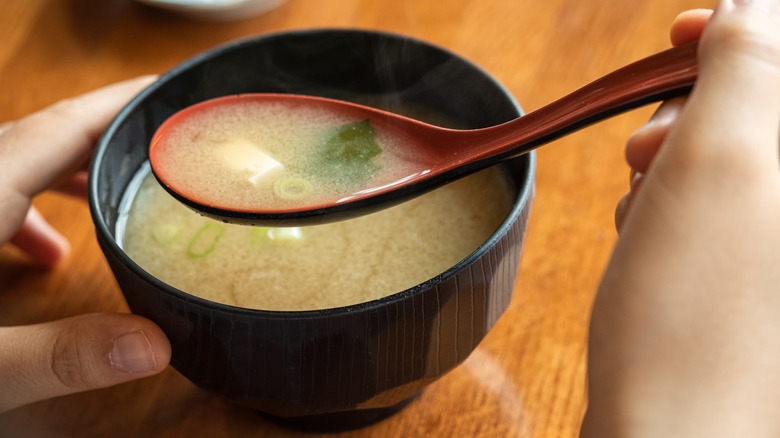
In 1908, a Japanese scientist named Kikunae Ikeda discovered the umami taste from a scientific perspective, and since then the word has gained increasing credibility in the west. 1982 saw the formation of the The Society for Research on Umami Taste to further our understanding of the taste, which was only officially recognized as one of the basic tastes in 1985 following a serious-sounding Umami International Symposium.
All of this work was done to understand what umami flavor is. Umami comes from a high level of free amino acids, most famously glutamate (as in monosodium glutamate, or MSG), but also inosinate and guanylate. This taste is the enjoyable, moreish, and satisfying flavor of mushrooms and miso, and is often described as brothy or meaty. Umami flavor signals the presence of protein, which is why it has dedicated flavor receptors in our mouths, a key requirement to qualify as one of the five tastes.
So when do you get to use the word umami?
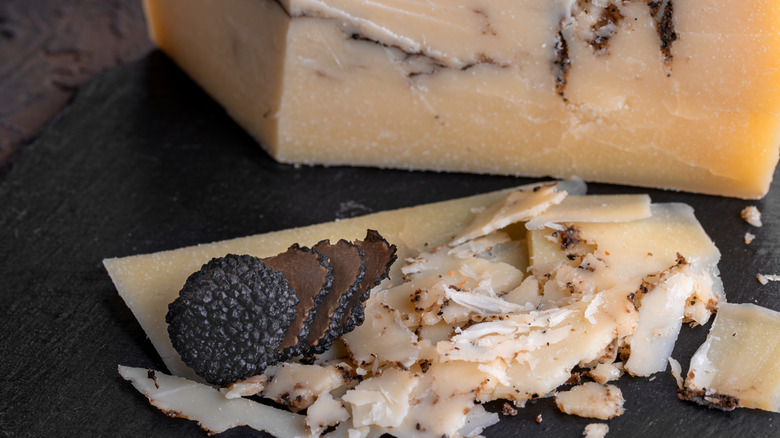
When something has that distinctly hearty, meaty flavor but is not obviously salty, (think sauteed mushrooms in unsalted butter) that's your time to shine with the term umami. Truffles are also a common example of a food that's intensely umami, while not being salty.
Glutamate also naturally occurs in vegetables like broccoli, asparagus, beans, onions, and kombu seaweed. Some meats are rich in isonate-derived umami flavor, such as pork, poultry, beef, and fish like sardines. Other foods that are naturally high in umami flavor are fermented foods like miso, soy sauce, fish sauce, and aged cheeses like parmesan. These foods are all both savory and umami, given that they often contain salt as well.
If you want to isolate the umami flavor to understand it better, find some monosodium glutamate (MSG) and taste it by itself or experiment with it in your cooking. MSG is effectively a cheat code for adding umami flavor to dishes with that magical amino acid glutamate. You may notice that the flavor of umami can be intense and perhaps reminiscent of saltiness, without actually being salty.