

Why 2 Popular Summer NYC Cocktails Were Banned
Hot weather calls for cool drinks. Anyone who's been in New York City during a heat wave when it's hot enough to fry an egg can tell you that. In a city as large as the Big Apple, you'd expect to find ice-cold beverages just about anywhere. That was the idea behind two infamous NYC summer cocktails: the Nutcracker and the Phrostie. These alcoholic beverages became famous because you could get them literally anywhere (even where you shouldn't) and infamous because they were sold completely unregulated and ultimately banned. Nevertheless, their legacy lives on to this day.
The Nutcracker has a much longer history between the two as NYC's staple summertime drink. These fruity concoctions were sold in plastic bottles or containers and served either ice-cold or frozen. The recipe varied from seller to seller but often featured a mystery blend of alcohol and juices. Since the 1990s, Nutcrackers have been sold throughout the boroughs, particularly at parks and beaches like Rockaway and Coney Island, by vendors who pull them straight out of coolers.
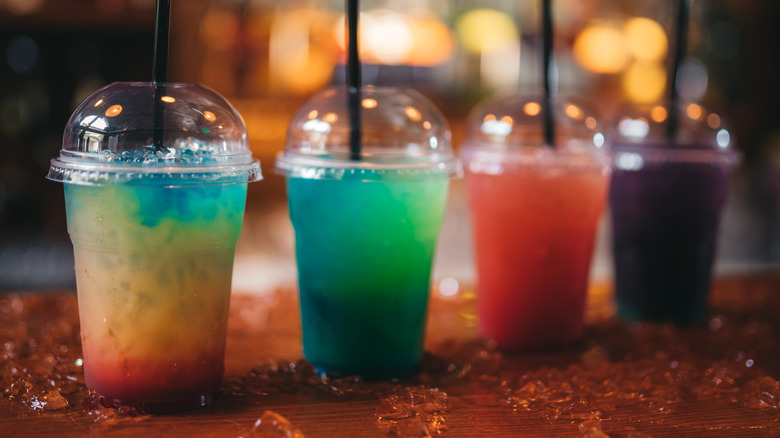
Phrosties, on the other hand, arrived later as the younger, online sibling of the Nutcracker. These frozen cocktails featured three colorful layers of fruity flavors served in plastic milk bottles. Back in 2014, they became a viral sensation because you could order them directly via Instagram with a 24/7 delivery service. This cocktail delivery service only lasted for a few months but still solidified their icon status in NYC history.
The origins of New York's illegal cocktails
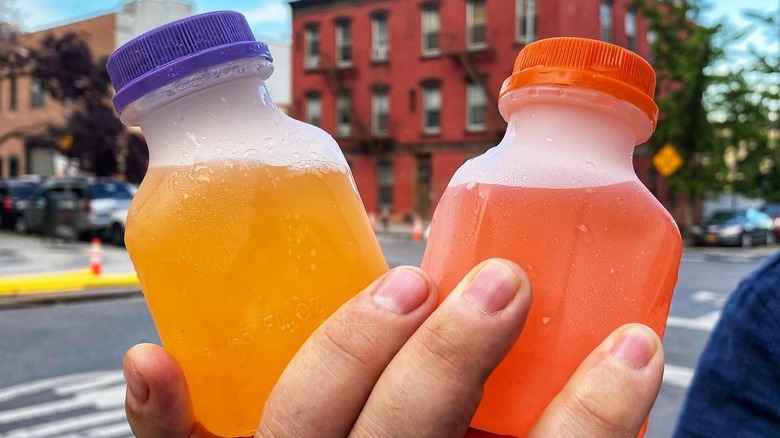
The Nutcracker allegedly originated at Flor de Mayo, a Chinese-Peruvian restaurant on the Upper West Side that started selling the fruity cocktails in the early '90s. The recipe eventually spread to street vendors across the city, who sold them for $10 each – although inflation eventually pushed those prices up to $15 in 2022.
Phrosties also sold for $10, but their entire history is confined to just a few wild months in 2014. With flashy flavor names like Volcanic Paradise, Tsunami Sunrise, and La Phiesta, the cocktails were rumored to have intense, borderline hallucinogenic effects, and some speculated that the secret recipe contained codeine or other drugs. New York Magazine actually sent a sample to a lab for testing, only to find that they just contained a decent amount of sugar and a 12% alcohol content (basically equivalent to a strong glass of wine).
Although to-go cocktails definitely had a moment during the COVID summer of 2020, that movement was led by legitimate businesses with liquor licenses. In contrast, Phrosties and Nutcrackers always operated outside the law, which led to their ban. Of course, that doesn't mean they've vanished from the streets forever — wink wink — but when you think about those mystery ingredients, their illegal status is probably for the best.