

9 Candies And Chocolates From The '70s That Deserve A Revival
We may receive a commission on purchases made from links.
There's a chance that, 50 years from now, we might be talking about the candies and chocolates from the 2020s that deserve a revival. What would we say? Maybe Honey Roasted Peanut M&M's, which hit the market in 2025, or Hershey's vegan chocolate bars, released in 2023? Unfortunately, we don't have a time machine, so it's impossible to say. What we do have, though, is access to memories from 50 years ago. So instead of looking forward, we're looking back.
What are some of the candies and chocolates from the 1970s that deserve a revival today? To find out some of the many answers to that question, we scanned through blog posts and social media to get an idea of some of the sweet treats people miss the most from the 1970s. You can find the results of our investigation below. But just a warning before you scroll: You can expect to feel some serious nostalgia in your taste buds.
Fry's 5 Centre
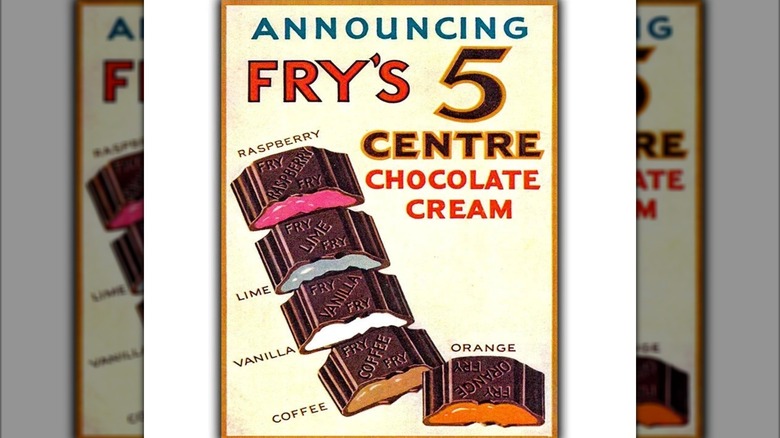
This British chocolate bar first hit shelves in the 1930s, and with its decadent dark chocolate shell and fruity cream center, it was a hit. The key to its popularity was its uniqueness; as the name suggests, this candy bar didn't just have one flavor, but five. And it gets even more fun: There were seven squares, but only five flavors of cream (in varieties like strawberry, lime, orange, pineapple, and raspberry), so you never knew exactly what you were going to get and when. The thrill.
Fry's 5 Centre wasn't discontinued until the 1990s, but it's the 1970s that many people associate it with. "Loved them," said one Facebook user in a group devoted to 1970s memories. "Still can get [Fry's] in original, orange, and mint, why not the 5 Centres?" Another added: "My only criticism of these was the fact that there were five [centers], but seven segments." The nostalgia is so strong for some that there is even an entire Facebook group dedicated to bringing back Fry's 5 Centre. At the time of writing, it has over 2,000 followers.
Marathon Bars
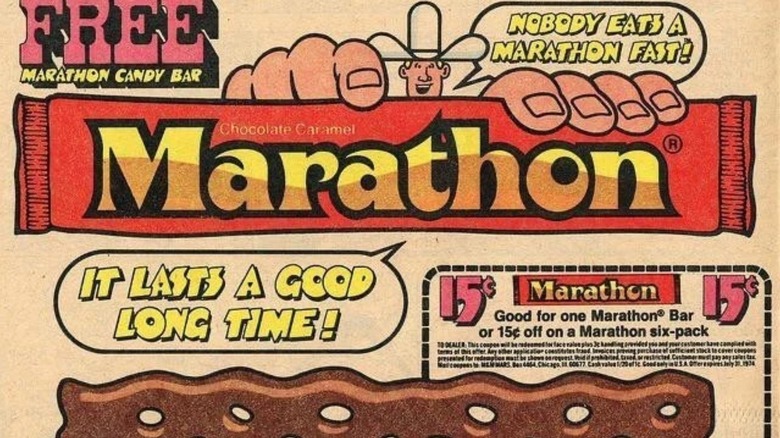
Unlike Fry's 5 Centre, which managed to stick around on British shelves for around six decades, the American Marathon bar only lasted eight years. And yet, despite this, it sticks in people's memories as one of the most beloved candy bars of the 1970s.
Launched by Mars in 1973, Marathon bars were, well, a bit of a marathon to get through. They were 8 inches long, braided, and filled with sticky, chewy caramel. In other words, they were a child's dream. One Redditor referred to Marathon bars as a "long chewy piece of heaven," in the r/vintageads subreddit, while another said: "When I got my braces at 13, this is what I told everybody would be the first thing I ate when I got them off."
Unfortunately, while plenty loved them, Marathon bars' sales weren't up to scratch in the early 1980s, and they were discontinued in 1981. Maybe one day they'll get a revival, but if you're tired of waiting, another option is to head to the U.K. to try the very similar, and very much still available, Cadbury Curly Wurly bar. "When I discovered [Curly] was the Marathon, I practically cried," said one Reddit user in the r/candy subreddit. "The memories of enjoying that candy were intense."
Jujubes
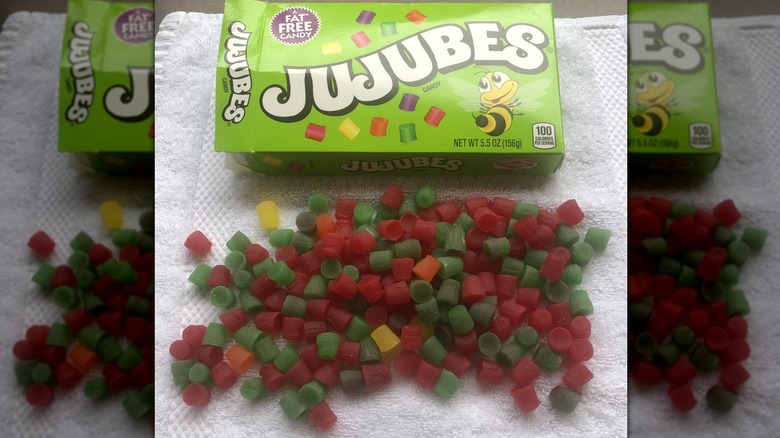
A trip to the movie theater in the 1970s wasn't complete without a pack of Jujubes. Created by the Heide Candy Company back in the 1920s, these super-chewy, fruity candies were inspired by real jujube, a very sweet, Southern Asian fruit that tastes just like candy. Candy Jujubes, though, were hard, incredibly chewy, floral-flavored, and a little waxy. Many people loved eating them back in the 1970s, despite the risk they posed to fillings and braces. "I loved them, but so hard on your teeth," said one Facebook user in a group dedicated to memories of the 1970s and 1980s. Another added: "They took my fillings out but they were delicious!"
To the disappointment of many fans, but likely to the delight of dentists across the U.S., Jujubes, which by 2017 were being produced by the Ferrara Candy Company, were discontinued in the early 2020s. While a century-long run is nothing to be sniffed at, many still aren't ready to say goodbye. At the time of writing, a petition demanding that Jujubes come back has more than 3,600 signatures.
Caravelle
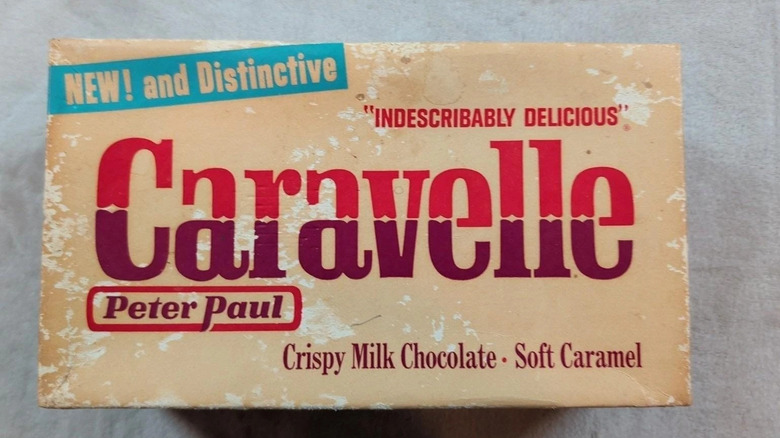
The Peter Paul candy company had many hits over the course of the 20th century. Mounds, of course, was a big success, but so was Caravelle. It's unsurprising, really. With decadent milk chocolate, caramel, crispy rice, and Brazil nuts, the bar had all of the ingredients for a popular sweet treat. Caravelle was on the shelves until the late 1970s, when it seemed to mysteriously disappear. Many believe this was a result of the merger between the Peter Paul company and Cadbury, which was announced in 1978.
Whatever the reason it disappeared, we know one thing for sure: Caravelle has been mourned by fans for a long time. "A perfect combination of taste and texture," said one Reddit user in the r/AskOldPeople subreddit. Another described it as "Caramel inside and like [Nestle's Crunch] surrounding it."
For a similar taste, some recommend Ferrero's 100 Grand Bar. It's a similar flavor and texture, thanks to the combination of milk chocolate, caramel, and rice crisp. Although some say that nothing will ever be as good as Caravelle. "It was the hundred thousand dollar bar before the hundred thousand dollar bar," said one Redditor in the r/Candy subreddit. "One of the best candy bars of all time." They added: "I like 100 Grand bars a lot, but the Caravelle was better."
Choco Lite
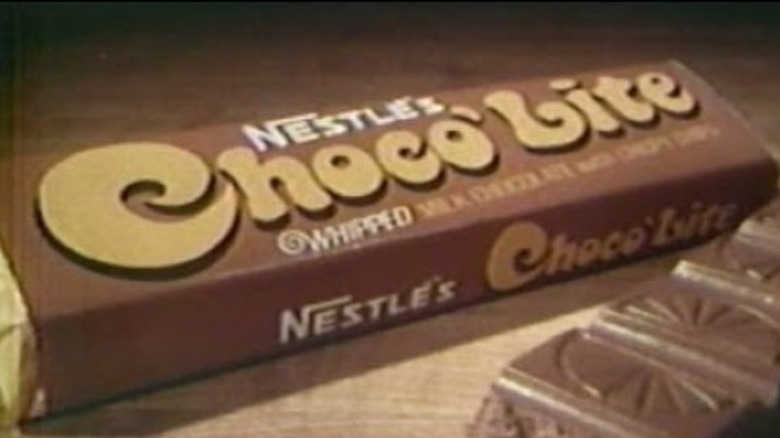
Back in 1971, Nestlé decided it was time for something new in the candy world. It launched the first-ever aerated, puffed milk chocolate bar with crispy chips in America. Yep, what a time to be alive. The candy bar, named Choco Lite, was a big hit over the course of the 1970s, but it wasn't to last. At some point in the early 1980s, Nestlé pulled Choco Lite from the shelves.
People are still devastated by the loss of Choco Lite. "My FAVORITE candy bar when I was really young," said one Reddit user in the r/70s subreddit. "No other bar tastes the same." Another added: "Choco'Lite had the absolute most unique texture hands down of any food, and I miss it!"
With their bubbly, light texture, Nestlé's Aero and Cadbury's Wispa bars in the U.K. are close to the 1970s favorite, but again, many say they'll never be the same. One Redditor described it as "like a cousin" of these bars in the r/70s subreddit. "They all have a bubbly texture," they said. "But [Choco Lite] had crispy chips in the bar and used honey as an ingredient."
Cristy Bars
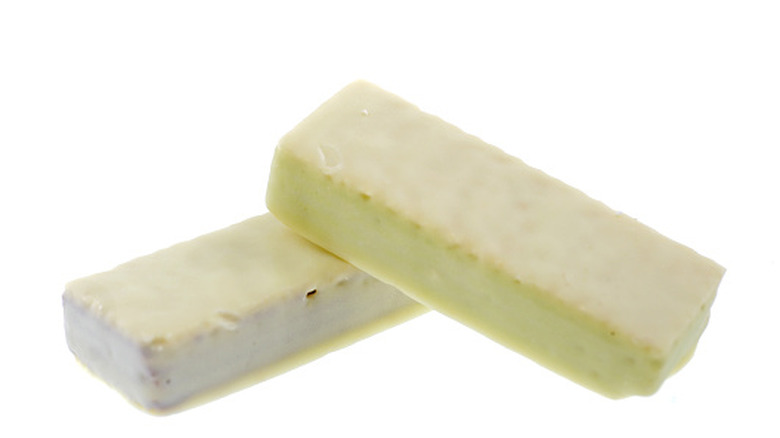
Before Nestlé wowed Americans with Choco Lite, another candy company, called Concorde Confections, had a go at introducing something a little different to U.S. consumers. In 1969, French nougat-filled Christy Bars (later renamed Cristy Bars) hit the shelves. People enjoyed the taste of the bars, and in 1970, it was even named in one poll by The Manufacturing Confectioner Magazine as one of the best new bars of 1969. Cristy Bars seemed to be off to a strong start, but in the end, they didn't make enough of an impact to last.
Still, many remember the super-sweet taste and white chocolate coating on Cristy Bars, and wish they would make a return. When the In The 00's blog posted about the 1970s bars, many people commented with fond memories. "I ate dozens of them during the course of a semester," said one person. Another added: "I bought it in a local drug store. I spent the five cents and discovered a taste that has stayed with me until now, nearly [50] years later." If you're nostalgic for Cristy Bars or simply intrigued by the taste, many say that Hershey's Zero bars are a pretty close match, thanks to the mix of white fudge and nougat.
Dynamints
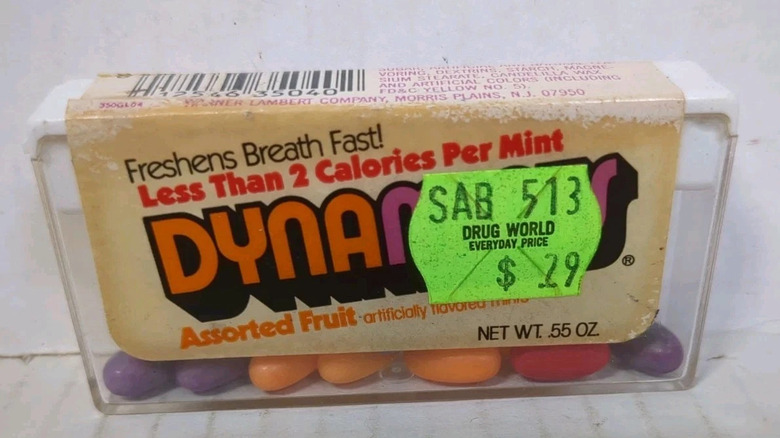
Back in 1969, Ferrero launched its now-iconic candy, Tic Tacs. But it wasn't without competition. Around the same time, Dynamints also hit the market, to great success. In fact, made by Dentyne, Dynamints, which came in flavors like peppermint, lemon and lime, and mixed fruit, seemed to be even more popular than Tic Tacs in the mid-1970s, with a larger share of the breath mint category than their biggest rival.
But, of course, you already know who actually won the breath mint war — given that Tic Tacs are still around and Dynamints are long gone. It's hard to find the exact date they were discontinued, but most don't remember seeing them beyond the 1990s. However, many people wish there had been room for both Tic Tacs and Dynamints in the market. "That mixed fruit pack was my favorite," said one Redditor in the r/candy subreddit. "I'd buy if they brought 'em back!" Another added: "I liked these as a kid ... way more than Tic Tacs."
Space Dust
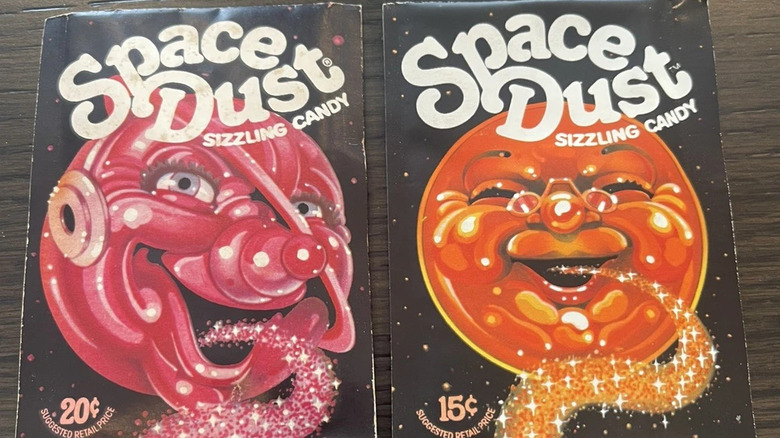
Many of the world's favorite foods have come about accidentally. Ice pops? Accident. Chocolate chip cookies? Accident. Popping candy? Yep, total mistake. Chemist William A. Mitchell was attempting to make instant soda for the General Foods Corporation in the 1950s when he discovered that the crystalline candy he had created would pop and fizz on the tongue. It took a while for the higher-ups at General Foods to catch on to the ingenious invention, but in the 1970s, the company launched its first popping candy: Pop Rocks.
Space Dust was just like Pop Rocks, only unlike the latter, it was sold in powdered form. Kids loved the flavors and the space-themed packaging, but parents, not so much. In fact, many said that the name reminded them of a drug called Angel Dust, and they didn't want their children buying it. General Foods tried to appease parents by changing the name to Cosmic Candy, but more rumors came (including that combining popping candy and soda could make your stomach explode — yes, really), and Space Dust was done for by the early 1980s.
Despite the myths, many people who grew up eating Space Dust miss it. "I can still hear it and taste it," said one Facebook user in a group dedicated to 1970s memories. "I thought I was hot stuff when I had this candy lol." Another added: "Loved [Space Dust]. We had such awesome candy back in the day."
Snik Snak Stiks
After decades of success in the U.K., Kit Kat finally hit the American market in the late 1960s. At first, the candy bar was distributed by cigarette company Philip-Morris, and then in 1970, Hershey took over, manufacturing the popular candy bar on home soil. But not everyone was content to let Hershey's dominate the American market for milk chocolate-covered wafers. In 1973, M&M/Mars released its own take on the candy, with chocolate-covered cookie fingers, called Snik Snak Stiks. The slogan on the packaging? "Take a break, take a Snik Snak." Sound familiar?
While plenty stuck with the original, to some Americans, Snik Snack Stiks were better than Kit Kat. They were a little crispier and lighter than Hershey's version, and some say they were sweeter, too. "Snik Snak was one of my favorite chocolate snacks of the '70s, and then it disappeared," said one commenter on the Collecting Candy blog. "I thought it was tastier and much better than Kit Kat." Another added: "I would love to see Mars bring these back someday."