

Before Dawn And Ajax, Everyone Had This Old-School Liquid Dish Soap Sitting On Their Sinks
The first known record of soap-making was in 2800 BC, when ancient Egyptians created a cleansing material from alkaline salts and animal and vegetable oils for bathing and washing. Since then, the soap-making process has evolved immensely, yet liquid soaps were not a commonplace household item until the mid-20th century. In fact, before the invention of liquid dishwashing soaps, most people had to find ways to wash dishes without running water and used washing soda or bar soap to wash clothes and dishes.
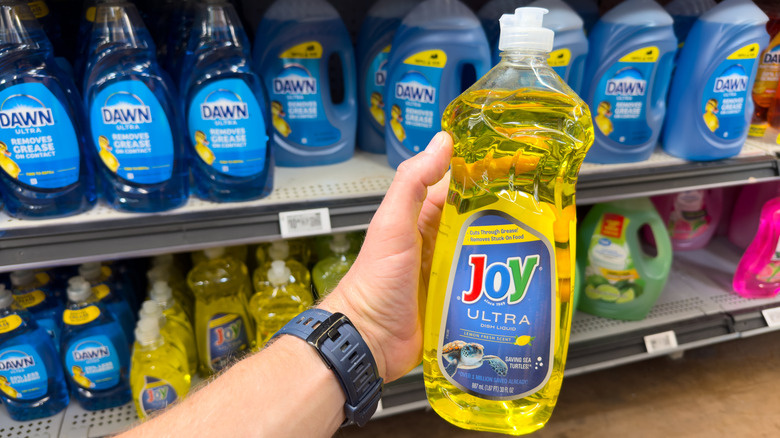
Ajax didn't sell a line of liquid dish soap until 1971, and though Dawn is now one of the most trusted dish soaps on the market, the company got its start selling bar soap in the 1950s. It didn't introduce the liquid version of its famous dish soap until around 1972. The pioneer in introducing an affordable, convenient, and effective liquid dish soap to American households was a company that most people may not even remember today: Joy.
In 1949, Joy dish detergent was the first nationally-marketed liquid dish detergent in the U.S. Its advertisements claimed its product would make dishwashing a breeze, touting its grease-cutting powers as well as how gentle the product was on the hands, and its cost and convenience compared to boxed soaps and detergents. Owned by Procter & Gamble, the same company behind Dawn, Cascade, Comet, and Mr. Clean, Joy was also the first dishwashing liquid to use a lemon scent to make cleaning more pleasant. Its products quickly became incredibly popular, and the brand was even one of the first sponsors of serialized radio dramas and television soap operas.
Joy was the first readily available liquid dish soap, but the company didn't invent liquid detergents
It's unclear who actually invented the first liquid soap; however, in 1865, a man named William Sheppard patented his recipe for an improved liquid soap. This patent indicates that there was already a known method for making an all-purpose cleaner, and Sheppard had simply found a better process that resulted in a thicker liquid. Sheppard's soap was made from ammonia and solid soap, and it was primarily used in industrial and commercial facilities.
By the late 19th century, druggists were creating their own versions of liquid soaps to sell to the public. "The Era Formulary: 5000 Formulas for Druggists" book, published in 1893, contained a number of different recipes for making solid and liquid soaps to use for bathing, household cleaning, laundry, and washing dishes.
In 1942, British company Teepol manufactured the first liquid dishwashing detergent, and it remains a leading brand in the U.K. to this day. Though Procter & Gamble found a highly effective strategy for marketing liquid dishwashing detergents to consumers, and the company claims on its website that Joy was the first liquid dish soap, it was merely the first widely available, affordable version of the product at the time.