

Rub Vs Dry Brine: Is There Really A Difference?
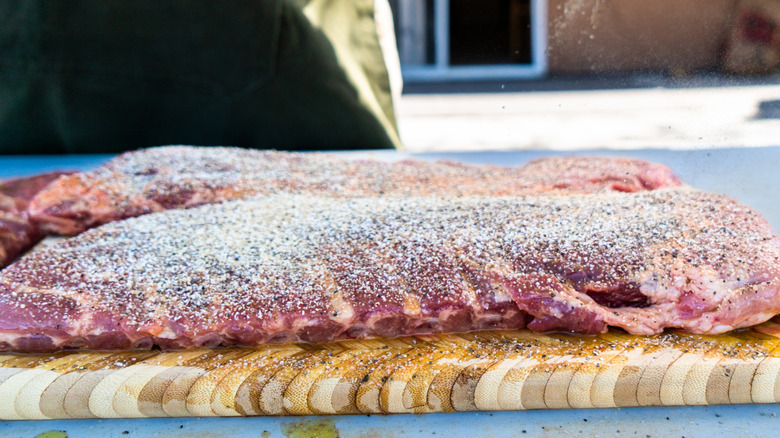
Cooking may be an art, but it is also a science, so when you make use of a culinary technique, it helps to understand precisely how it works in order to get the best results. You may be wondering if there's really any difference between a rub and dry brine — after all, don't they both just mean sprinkling your meat with spices and seasonings? Actually, no — while a dry brine is not a rub, a rub can act as a dry brine. Confused? Let's break it down.
Dry brining is a way of seasoning raw meat with salt to ensure maximum juiciness once it is cooked. The idea of thirst-inducing salt helping meat retain moisture might sound counterintuitive, but by salting the meat's surface, the meat's natural moisture is converted into a concentrated, natural brine that is then reabsorbed into the meat. As this moisture is from the meat itself, this technique will yield juicy, crispy results without any flavor dilution, and is simple and effective.
Unlike a dry brine that can take up to a few hours to work its magic, a dry rub — also known as a spice rub — is an aromatic mixture of seasonings applied to the meat's surface right before cooking. Rubs can have as few as two ingredients or grow to become ludicrously complex and can feature multiple herbs or spices, plus sugar. Some seasoning blends that work well as a dry rub you will probably be familiar with, like Old Bay Seasoning, Cajun spice mix, and Jamaican jerk seasoning.
A rub is about surface flavor
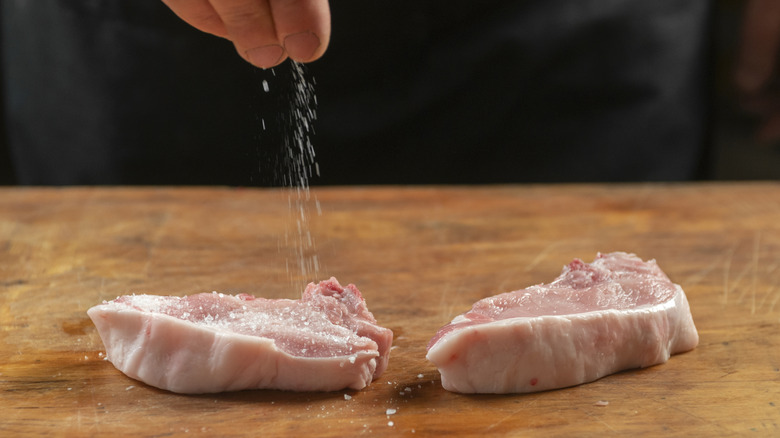
There are plenty of rub recipes that include salt, which in addition to balancing sweet, savory, and spicy flavors, can also act as a dry brine. However, some culinary experts advise against including salt in your spice rub and instead do a separate dry brine first. This is because salt will penetrate the meat, while the purpose of a rub is to flavor the meat's exterior. The reason many rubs include sugar is its hygroscopic nature attracts moisture and dissolves, encouraging the Maillard reaction during cooking, producing a crispy, caramelized bark.
Unlike brines, rubs are not strictly either-or when it comes to wet versus dry. One popular BBQ method is to slather the meat with a wet rub before coating it with a dry rub to help seasonings stick. Alternatively, making restaurant-quality homemade BBQ ribs often involves applying a dry rub before cooking, and then periodically spraying the meat with a flavorful liquid, like apple juice or apple cider vinegar, as they smoke, and finally finished with barbecue sauce.