

Are San Marzano Tomatoes Worth It — Or Just Regular Canned Tomatoes In Disguise?
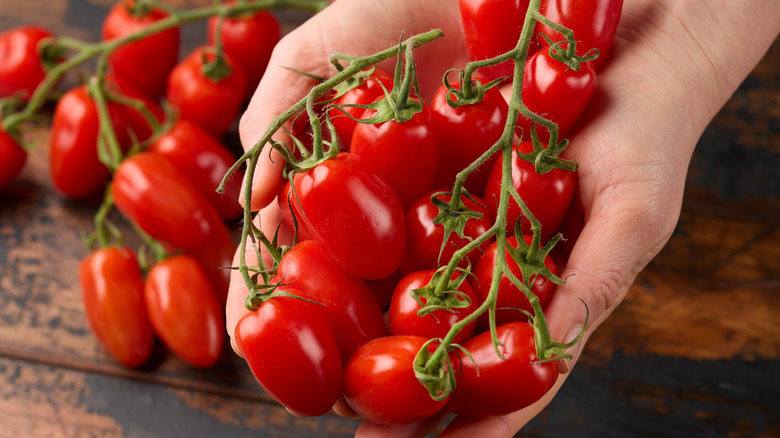
One of the great joys of food is discovering new versions of a familiar favorite. There are over 7,500 types of apples in the world, and more than 10,000 varieties of tomatoes. You can find cherry tomatoes in salads, Roma tomatoes in pasta sauces, and beefsteak tomatoes on sandwiches. When it comes to cooking, especially sauces and pasta, San Marzano tomatoes are considered the peak of the tomato world. Some even call them the Ferrari of canned tomatoes.
San Marzano isn't just a type of tomato; it's a region in Italy where the tomatoes are traditionally grown. Volcanic soil near Mount Vesuvius provides a rare and nutrient-rich environment that helps make true San Marzanos sweeter, more flavorful, and less acidic than many other varieties. They also have firm flesh and fewer seeds, which allow them to retain some body when they cook rather than turning to mush, making them ideal for sauces.
A can of Cento brand certified San Marzano whole tomatoes costs about $5 at Walmart. A can of Great Value brand regular whole tomatoes is about $1.50 for the same size. San Marzano tomatoes definitely come at a premium. The question of whether San Marzano tomatoes are better or worth the price becomes complicated when we refer back to that 10,000 number. San Marzano tomatoes are definitely sweeter, juicier, and more flavorful than some tomatoes, but not all, so you may prefer another variety. Even experts acknowledge that there are many other tomatoes that taste as good or better. And not every San Marzano tomato is a certified San Marzano tomato.
The world of San Marzano tomato fraud
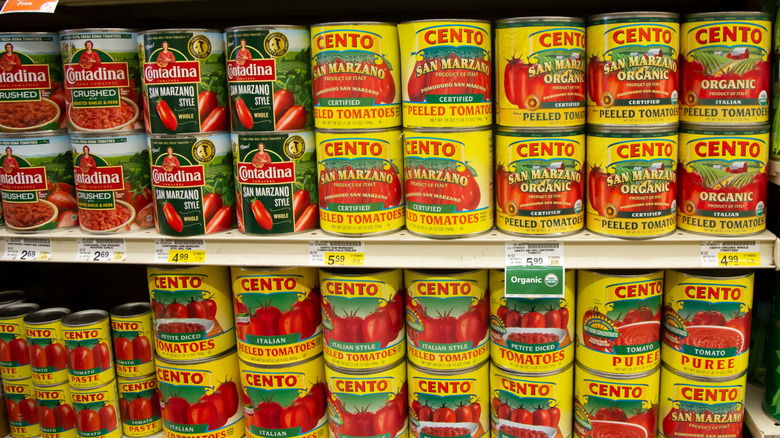
True San Marzano tomatoes will be certified Denominazione d'Origine Protetta, which means protected designation of origin, a quality seal regulated by the European Union to certify that the tomatoes were grown to set standards in that specific region. In much the same way that champagne can only come from the Champagne region of France, San Marzano tomatoes can only come from a specified region of Italy. A true San Marzano tomato benefits from the Italian climate and the volcanic soil.
However, in 2011, Edoardo Ruggiero, the president of Consorzio San Marzano, the organization that oversees San Marzano tomatoes, told Gustiamo that he believed only 5% of San Marzano tomatoes in America were real, meaning 95% were fake. There was even a company that called itself San Marzano so it could use the label on tomatoes grown in America. Some Italian companies exported unlabeled cans to the United States, where so-called certification labels could be applied, since there is no legal status in America for those labels.
Fifteen years later, concerns about San Marzano tomato authenticity in America remain. In 2026, a class action lawsuit was filed against Cento, accusing the company of fraudulently branding its tomatoes as certified San Marzanos. While there are no longer claims that only 5% are genuine, concerns about mislabeling remain.
Cento has defended its tomatoes, saying they are grown in the right region of Italy but are just certified by a different organization (via ABC News). There is no word on when the case may move forward; in the meantime, if you like San Marzanos, authentic or otherwise, we recommend looking for cans that include basil for an even tastier experience.