

The Highest-Rated Cast Iron Skillet On Consumer Reports Isn't Lodge Or Smithey Ironware
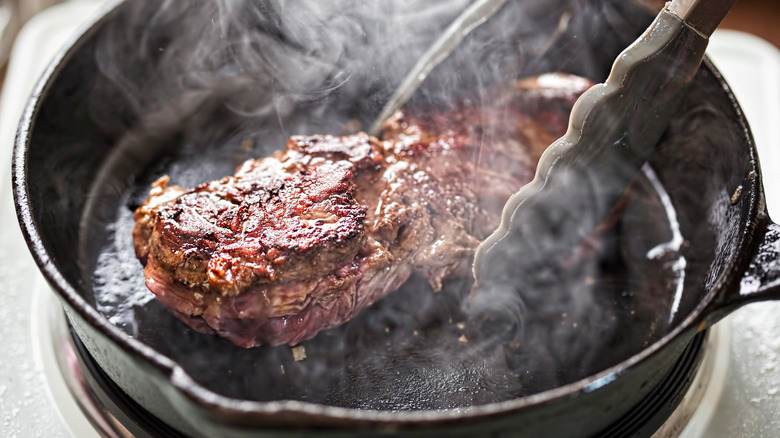
The best known names in cast iron are probably Lodge and Smithey Ironware, so it surprised us when a recent Consumer Reports product rating guide for cast iron frying pans put another company on top. Butter Pat's Joan Cast Iron frying pan earned the highest spot.
Consumer Reports provides unbiased reviews based on rigorous testing, helping consumers make informed decisions on the products that they choose. Its expert lab results gave the Joan frying pan a high overall score based on baking and searing trials, cooking evenness, and ease of cleaning. Cooking evenness was deemed to be very good, and both searing and baking were rated excellent. Consumer Reports judged the pan based on baking cornbread, which they said was evenly-baked with good moisture, rise, and a golden hue, and on searing a New York strip steak.
However, there's just one problem. The Joan pan under the Butter Pat label is no longer available. That's because the company was acquired by gear brand Yeti in 2024, and Yeti remade the pan under its own label. The Butter Pat company, founded in 2013 in Pennsylvania (later moving to Maryland), made a point of creating superior cast iron pans, which was why the original pan retailed at $345. The good news is that Yeti figured out a way of scaling production using the same techniques yet lowering prices using a foundry in Wisconsin, and you can get a lookalike 12-inch Yeti pan for $250, that is considered to be as good as the Butter Pat ones. If you're wondering about investing, make sure you read up on some facts you should know about cast iron before diving in.
Why was the Butter Pat pan so good?
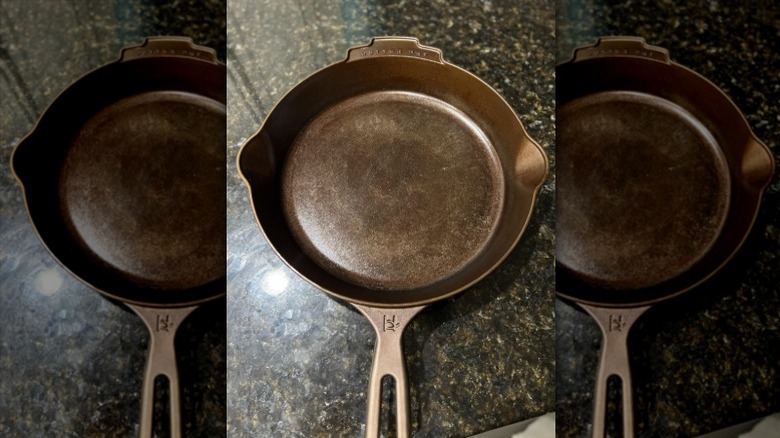
Butter Pat's 12-inch Joan cast iron skillet weighed just 6.3 pounds, was compatible with induction cooktops, was oven-safe, and had an impressive 100-year warranty. Butter Pat grew a cult following that got people talking, with Inside Hook labelling it the "Patek Phillipe of cast iron." The walls of Butter Pat's cast iron pans are thinner than the bottom to make them more lightweight, and the bases are extra thick to maintain even cooking. Founder, Denis Powell even developed a forging technique to give the pans a smoother finish similar to vintage pans that were made using green sand, a now-outlawed process. Butter Pat seasoned its pans using beeswax and coconut oil to prevent rust.
While some may balk at the steep price tag (although that's slightly less steep now with the Yeti pans), others say it's justified based on performance, and the skillets certainly offer long-lasting quality. While most observers say that the new Yeti pans are as good as the originals, some people seek out Butter Pat Joan pans on second-hand sites like eBay, Etsy, or Facebook Marketplace, as they're now collectors items. Yeti pans can easily be bought at retailers and online.
Butter Pat spawned fan threads on social media. One Redditor mused on the pans back before the Yeti takeover, saying, "Absolutely fantastic pans. I personally believe they are the best of all the modern premium iron pans — and I don't think there's a close second." They may have a good point, if the Consumer Reports results are anything to go by.