

Got Embalming Fluid? The Toxic Chemical Once Added To Milk Before It Was Banned
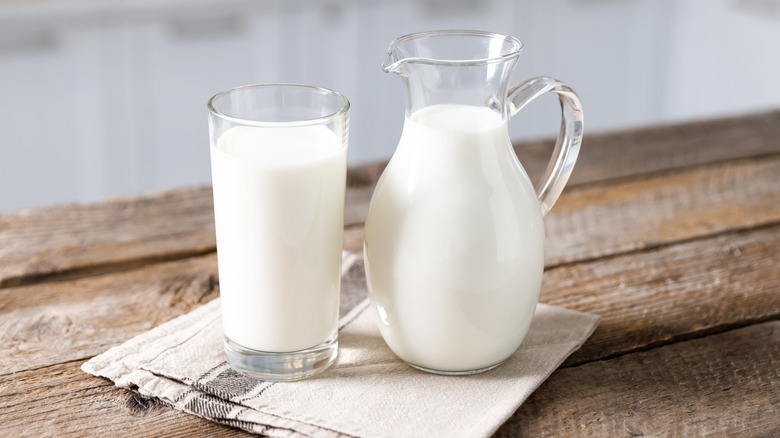
Milk has been a hot topic lately. Some people have been reaching for raw milk, believing pasteurization kills beneficial properties. Meanwhile, prominent food scientist John A Lucey states in a PubMed Central article that there are no nutritional advantages in raw milk. The U.S. goverment's Centers for Disease Control also warns that pasteurization is crucial for ridding milk of possible bacteria and contamination — without it, milk can cause serious illness.
This isn't the first time milk has been in the spotlight for concerns around what's in it or not. Humans have been drinking milk for thousands of years. It's long been a hearty, nutritional beverage people could access from their own animals, which evolved into a commercialized industry. With that comes a history of additives going into milk for various reasons. One of the most notable — and alarming — examples? Formaldehyde, aka embalming fluid.
That's right, the same chemical morticians use to preserve the bodies of those who have passed on was also used to preserve milk in the late 19th century. It slowed spoilage, and even had a subtly sweet taste. Nowadays, formaldehyde is in some cleaning products, glues, paints, and building materials. Regulations limiting formaldehyde have formed to keep levels low and create more sustainable materials to use in your home, as consistent exposure to it can cause skin, eyes, nose, and throat irritation and even cancer long-term. But in the 1800s, exposure was unregulated, unknown to most consumers, and incredibly unsafe, often causing illness.
Formaldehyde, pond water, and calf brains were all milk additives

By the 1890s, journalists began exposing the fact that formaldehyde was being used in milk, as well as in meat. There were also crusaders like Indiana state officer for public health John Newell Hurty and chief chemist of the U.S. Department of Agriculture Dr. Harvey Washington Wiley. Hurty campaigned vigorously to alert consumers to the dangers lurking in their milk, including embalming fluid. And Wiley recruited volunteers to ingest additives like formaldehyde in their food and beverages to prove to both the government and the public how dangerous this was.
Embalming fluid wasn't the only shocking substance lurking in milk in the 1800s, either. In Victorian England, poisonous boracic acid was used to hide spoilage in milk — so people were drinking bacteria and poison. Dairy producers at different times stretched milk further with water or gelatin, used dyes to make it a more appetizing color, and even utilized calf brains to mimic the effect of heavy cream. If you think adding water sounds like the least harmful approach, consider that it was often dirty — one of Hurty's investigations found worms in pond water-mixed milk.
These are horrifying additions, but uncovering them led to the passing of the first food safety law in 1906, and marked progress in government regulation over what goes into our food and drinks. Today, there's a range of high-quality organic milks to choose from, many alternative milks, and a lot more publicly available information about what's in milk.