

Some Brave People Eat This Shellfish Relative That Raids Your Backyard At Night
Every year the pressure mounts to find more sustainable ways to farm, produce, and consume food. According to the Environmental Protection Agency, in 2022, agriculture in the United States accounted for 9.4% of the country's greenhouse gas emissions, whether that's gas coming from manure, or from ... digestively active ... cows. In the last few years, traction has been gaining on a protein alternative that's nutrient-dense and has a far lighter impact on the planet. What's more, it's right in your backyard — literally, eating your spinach. The solution is the humble cricket. Yep, the insect.
The truth is, you don't actually have to be brave at all to enjoy these, with the insects being reconstituted into protein powders (also called acheta powder), or even protein-rich flours for making breads or crackers. Cricket flour is tasty, with a mild nutty, earthy flavor, and a versatile alternative source of protein for smoothies, baking, or mixed into coffee, soup, eggs, and other foods. It's also rich in vitamins, carbohydrates, mineral salts, lipids (fats), and another red-hot buzzword: fiber.
They also take a lesser toll on the environment. In general, insects farmed for food (known as "minilivestock") offer a wealth of benefits over normal livestock, both in terms of nutrition and sustainability. They're cheaper to farm, are more energy efficient, and have a lower environmental footprint while reproducing at a higher rate. Crickets in particular require 1⁄12 of the feed-to-body weight gain ratio of cows. Without cows or manure to emit gasses, less requirement for water, and less land needed to farm, crickets themselves aren't just on a smaller scale than traditional livestock, but so is their impact on the planet.
Cricket flour's viability for people with different food allergies
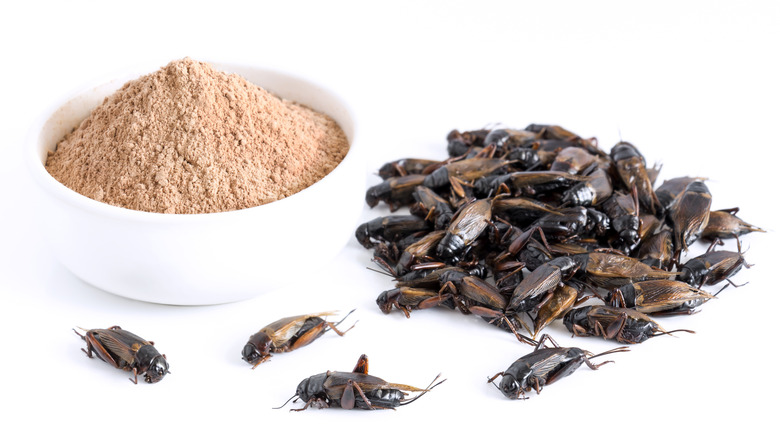
What many don't realize is that crickets and other insects and arachnids are in fact in the same phylum — arthropods — as crustaceans like shrimps, crabs, and lobsters, which are a subset of that phylum. In other words, a shrimp is just a cricket's splashy cousin.
The familial tie between crickets and crustaceans means there are real-world implications for those with shellfish allergies. These individuals usually have an immune reaction to proteins that appear in an allergenic form in shellfish. The most common culprit is tropomyosin, but also sarcoplasmic calcium-binding protein and a protein called arginine kinase. These, unfortunately, can also be present in shellfish's relatives, the land arthropods like crickets and other insects. That means that those with shellfish allergies should think twice before eating insects – so acheta powder is most likely off the table as a viable food option.
Foods like bread that use cricket flour in place of wheat flour are gluten-free provided there's no added gluten, which means that there are actually upsides for people with other food intolerances or sensitivities. Crickets don't contain starch, however, so bear in mind that swapping out cricket flour for wheat flour isn't a one-for-one.
The biggest selling point for cricket powders, whether mixed into smoothies or cooked or baked into food, is just how nutritionally dense they are. Cricket powders can comprise up to around 77% protein, which makes them a strong contender against cattle-derived protein powders like whey protein. And due to the chitin in their exoskeletons, crickets also offer substantial amounts of fiber where other animal protein powders don't. Overall, it's a good thing that entomophagy (the practice of eating insects) is becoming a more accepted practice worldwide.