

Cabernet Sauvignon Vs Malbec: What's The Actual Difference
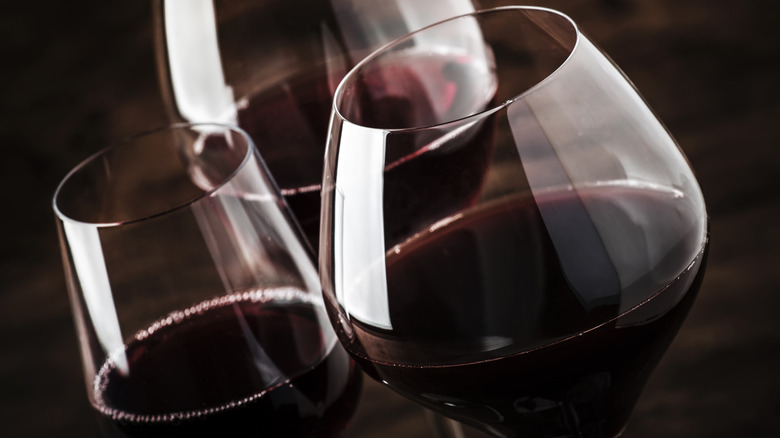
There are so many types of wine out there, especially for red drinkers. Terroir, varietal, vintage — all the different factors keep things interesting for connoisseurs but it can be overwhelming for the rest of us. Each wine has its own unique tasting notes and texture, but two major types of red wine that are often compared to each other are cabernet sauvignon and malbec. While both are popular, full-bodied reds native to France (though now produced globally), they're actually very different.
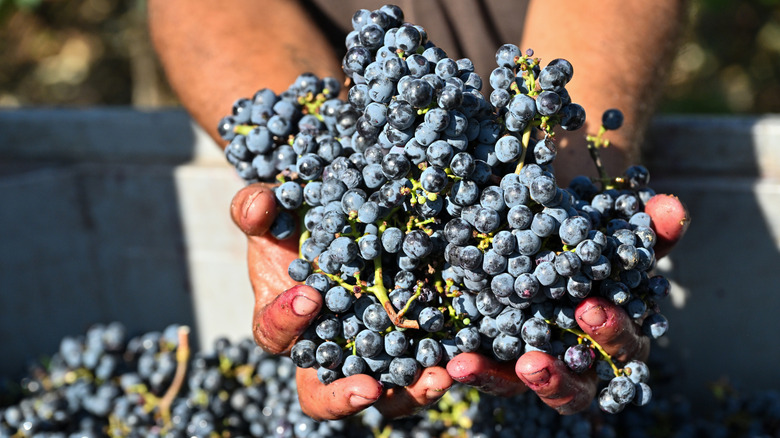
First of all, cabernet sauvignon and malbec are produced from different grapes. Malbec grapes tend to be larger, and the thick skin of cabernet sauvignon grapes results in a much darker wine. Cabernet sauvignon grapes come from the Bordeaux region, which malbec also originally did, but it now mostly grows much more happily in warmer climates, like Argentina.
Because the grapes taste different, the wines they produce are distinct too. Cabernet sauvignon is known for having a much bolder, more refined taste reminiscent of blackcurrant and cherries. Malbecs tend to be fruiter, with notes of berries, plums, and cocoa. Malbec typically has a low to medium tannin level, giving it a more velvety mouthfeel. It's generally considered to be smoother and easier to drink, while the high tannin level in cabernet sauvignon leads to a drier, more structured mouthfeel and an intense finish.
More about cabernet Sauvignon and malbec
Where cabernet sauvignon and malbec tend to overlap is in the pairing department. Because they're both big reds, they both complement red meats, aged cheeses, and earthy vegetables like mushrooms. However, malbecs tend to work better with grilled meats, especially Argentinian dishes like grilled skirt steak with chimichurri. We've also put together the ultimate cheese and wine pairings for Malbec. Save cabernet sauvignon for hearty braises and stews, like a classic French beef bourguignon.
If you're having trouble deciding which one to try, the price point might help. Cabernet sauvignon tends to be more expensive, particularly if it's from Napa or Bordeaux. It's also a wine that ages well, so some bottles could be over 30 years old, which drives up the cost. Even a younger bottle can cost over $50 and many jump much higher. However, you can get some decent cabernet sauvignon bottles for under $15.
Malbec, meanwhile, is best enjoyed within a few years of bottling, and there are excellent ones for $10 to $25. Perhaps start by trying a few cheaper bottles of each from different regions. Malbec is a crowd pleaser but cabernet sauvignon is more sophisticated — so use one for parties and the other for a fancy dinner.