

Wood Charcoal Vs Coconut Shell Charcoal: What's The Actual Difference?
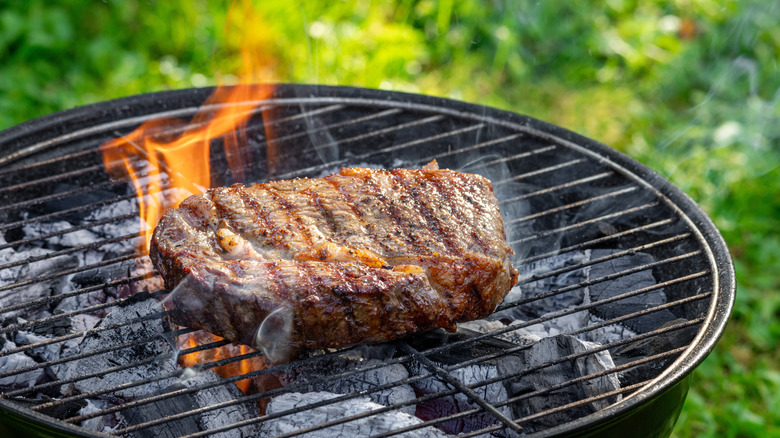
Charcoal and gas grills are the two most common types familiar to casual grillers. The fact that we call one a charcoal grill speaks to just how ubiquitous charcoal has become. Often we don't give a thought to what it means. Charcoal is charcoal, right? In fact, there are several kinds of charcoal that are manufactured from different base materials and through various means. Lump charcoal made from wood or briquettes made from wood byproducts are what most of us are familiar with, but some grillers looking to shake up the barbecue experience are ditching wood charcoal in favor of coconut shell charcoal.
Coconut shell charcoal originated in places like Thailand and Indonesia where coconuts are a major crop and the waste material has been an underused byproduct for years. As the popularity of grilling increases, so does the demand for alternative fuels beyond traditional wood charcoal and gas. In the grilling world, variety and innovation is welcome. Choosing between a gas or charcoal barbecue, or pellet or offset smoker, changes the grilling experience. Choosing between wood types like applewood, cherry, and mesquite can affect how you grill and what your food ends up tasting like. But the actual core type of fuel is not often given as much consideration, when it should be.
Much like a burger cooked over a gas grill will taste different than one on a charcoal grill, food cooked over wood charcoal is going to taste different than food cooked on coconut shell charcoal. Beyond taste, factors like heat output, smoke, cost, and sustainability all come into play when the two are compared. Choosing what's best for grilling depends on what you're hoping to accomplish.
Wood charcoal
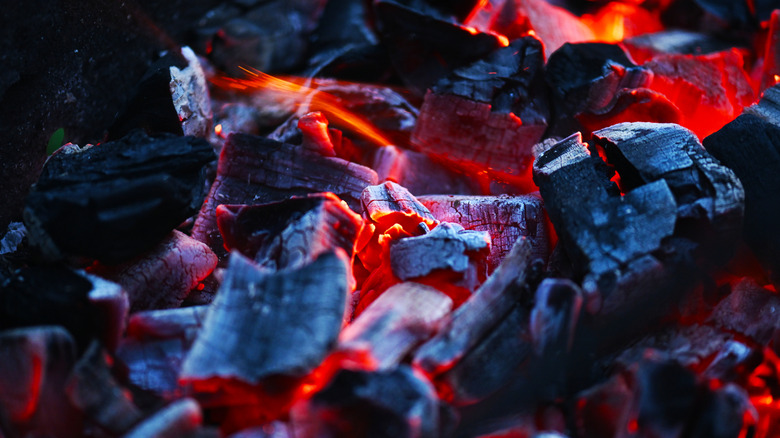
Wood charcoal could technically refer to more than one type of charcoal. Lump charcoal is the most common type, and it is made from hardwood. Nearly any type of hardwood can be turned into charcoal but much of the charcoal sold in America is made from oak or mesquite. The wood is heated in low-oxygen conditions which prevent it from turning to ash. Instead, the wood carbonizes and forms those black chunks normally associated with lump charcoal.
Charcoal has lost all moisture and other materials found in the original hardwood that would normally smoke when burned. So it burns with very little flame or smoke and can sustain heat output for a long while, making it an ideal cooking fuel. Lump charcoal can reach temperatures up to 700 degrees Celsius, or 1,292 degrees Fahrenheit.
Charcoal releases certain compounds as it burns that contribute to that unique, smoky flavor that makes barbecue so popular. It's why some people prefer charcoal to gas grills. The flavor of the smoke itself, particularly if specific woods like hickory or mesquite are used, contributes to the taste of the finished dish.
While wood charcoal produces little smoke on its own, it does release carbon dioxide as a byproduct, which contributes to climate change. At your backyard barbecue, the amount of CO2 released doesn't seem like a big deal. However, there is a larger environmental concern for some people when multiple sources of CO2 are taken into account. Since charcoal comes from trees, deforestation is an issue. Charcoal production is a major reason for deforestation in some regions, so environmental impact, climate change, and sustainability all come into play. But if you use briquettes made from wood byproducts like sawdust and scraps from lumbar mills, this is also using up a waste product.
Coconut shell charcoal
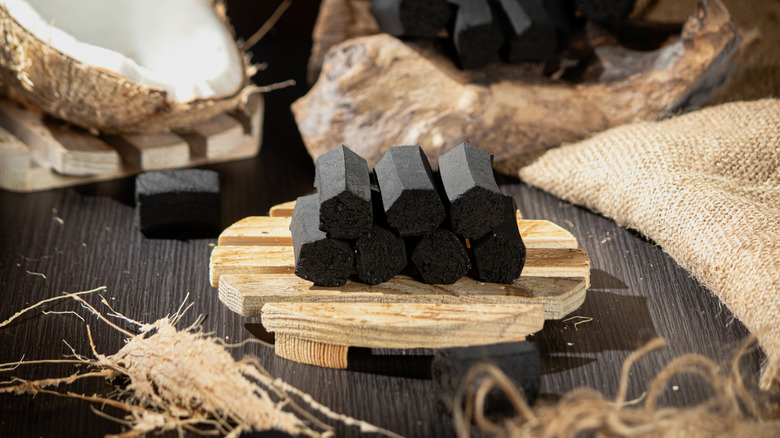
Coconut shell charcoal is a byproduct of the coconut industry. The same process used to make wood charcoal is employed when making coconut shell charcoal. The material is heated in a low oxygen environment so it carbonizes rather than turning to ash.
Although it can burn slightly hotter than wood charcoal at 720 degrees Celsius or 1,328 degrees Fahrenheit, coconut shell charcoal also burns longer. It's denser than wood charcoal which means it holds heat well. Like wood charcoal, coconut shell charcoal is often sold in briquette form, which can burn almost twice as long as loose coconut shell charcoal.
Unlike wood charcoal, coconut shell charcoal adds very little flavor to food on the grill. For some, this makes it an ideal fuel for cooking anything with delicate flavors, or when you want the natural flavors of ingredients to shine without getting overwhelmed by a smoky grill taste.
Coconut shell charcoal is often seen as a more environmentally friendly alternative to wood charcoal. Since it's a byproduct of the coconut industry, it's repurposing a waste product. It's also way more renewable than hardwood. Even though burning coconut shell charcoal releases CO2, it's often considered more environmentally friendly because it repurposes a waste product, reduces deforestation, and prevents the methane emissions that can occur when coconut shells decompose naturally.
Each version of charcoal has advantages and disadvantages. Depending on how you like to cook and what you expect from your charcoal, you may find a reason to switch between the two. Depending on where you shop, you can find both wood charcoal and coconut shell charcoal for under $2 per pound if you're interested in comparing them head to head.