

What's The Actual Difference Between Beef And Veal?
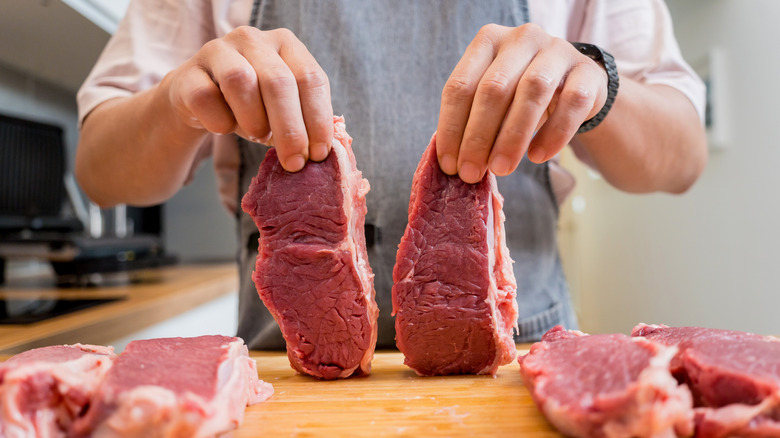
You probably already know that veal is from a young cow, but beyond that plenty of people don't understand what actually makes it different from beef. It's okay to eat veal and not feel bad about it, but it sometimes has a stigma attached to it, it's expensive, and the United States doesn't have as much of a culture of eating it compared to places like Italy, so it remains a mystery to many. Veal and beef are also far from interchangeable despite coming from the same animal, so if you want to cook it, it's important to understand those specifics.
Veal comes from calves, which can be up to 12 months old before their meat is considered beef. However, most veal comes from younger animals than that, which are often six to seven months. Prior to eight months of age, veal is quite pale in color, but between then and 12 months it starts to get more of that reddish coloring beef is known for, and is called rosé veal.
There are a few reasons why veal is prized. Because the cows are young they haven't done much work, which makes the meat more tender than normal beef. And while it's tasty, it also has a more mild flavor than beef, which means it won't overpower other ingredients as much. Finally, veal is almost as nutritious as beef, containing slightly more protein and only a little less iron and vitamin B12. Veal is also leaner, containing less than half the fat and only 68% of the calories, which makes it a good option for people who are conscious of those. Coming from smaller animals, veal is also broken down into fewer different cuts than beef. So you won't find the same variety of roasts and steaks with veal.
Veal is leaner and has a milder flavor than beef
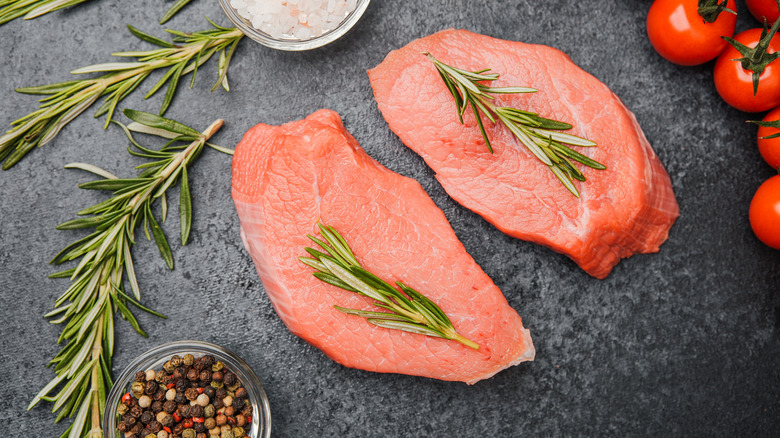
Those differences make veal and beef popular for different types of recipes. One of the most popular forms of veal is the cutlet. Due to their tenderness and mild flavor, these can function much like chicken breast or pork cutlets. Some Italian-inspired dishes that are typically made with chicken in America are more often made with veal cutlets in Italy. The authentic Italian version of chicken piccata, for example, is scaloppine al limone, which is made with veal. Wiener schnitzel is another well-known European dish that started off being primarily made with veal. Other common cuts are veal chops, which can be cooked much like lean pork chops, or veal shanks, which are braised in dishes like osso bucco. Meanwhile, beef has more versatility, lending itself to everything from roasts and stews to grilled steak.
Even with options that seem similar to beef, veal will bring different dimensions to a dish. Ground veal is leaner than most ground beef, but it also has more collagen, which turns to gelatin as it cooks, adding moisture and richness. It's why veal meatballs can be so tender, and also why veal bones are favored over beef for making stock. Veal's lighter flavor means the stock won't be as intense, which makes it more versatile as a base for different soups and sauces.
Of course, those differences also mean there are mistakes you need to avoid with veal that are more of a consideration than with beef. The biggest is overcooking. You don't want to do that with beef either, but veal's leaner nature means it's much more prone to getting tough and dry. So outside of a few cuts like shanks with lots of connective tissue, stick with quick, high-heat cooking for veal.