

The Hidden Issue In Your Fridge That Could Be Freezing Your Food
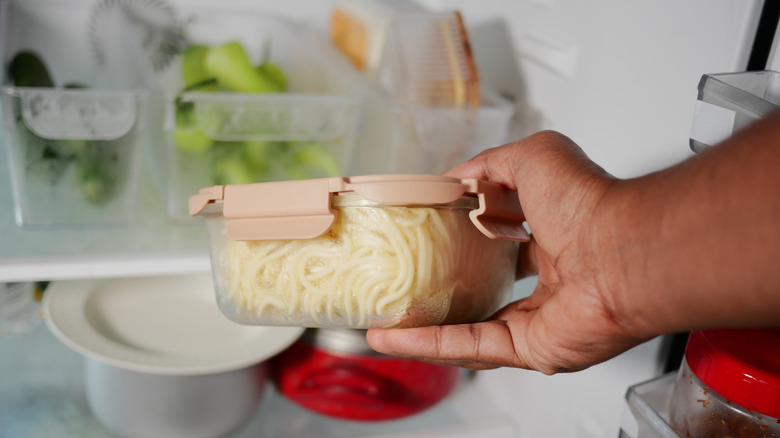
Having fresh ice ready at the press of a button is a convenience that's hard to beat. In-door ice makers are not just a fun addition, they are becoming a necessity for many shoppers who are specifically looking for a fridge brand with good ice output. But sometimes, it's precisely the addition of the ice maker that can cause our food to start freezing inside the fridge.
Fridge ice makers need to be hooked up to your water line in order to work. The appliance automatically fills an internal ice mold with water, freezes it, and then pushes the ice into a special dispensing compartment. This process is ongoing; there's a sensor that triggers a new cycle whenever the dispensing compartment starts getting low on ice. For as long as you keep this cycle going, there shouldn't be any issues with the ice maker overcooling your fridge. The problem starts when you pause ice making.
People mistakenly think that simply disconnecting the ice maker from the water line is enough to make it stop working. But it will actually continue trying (and failing) to make ice, even without any water running into the mold. This constant attempt to freeze water that isn't there has the effect of the temperature in your fridge dropping drastically. To fully stop the ice production, you need to manually turn off the ice maker — as each fridge is different, the user manual is the best place to find out how to do that.
Maintaining a consistent temperature in your fridge will keep it from freezing
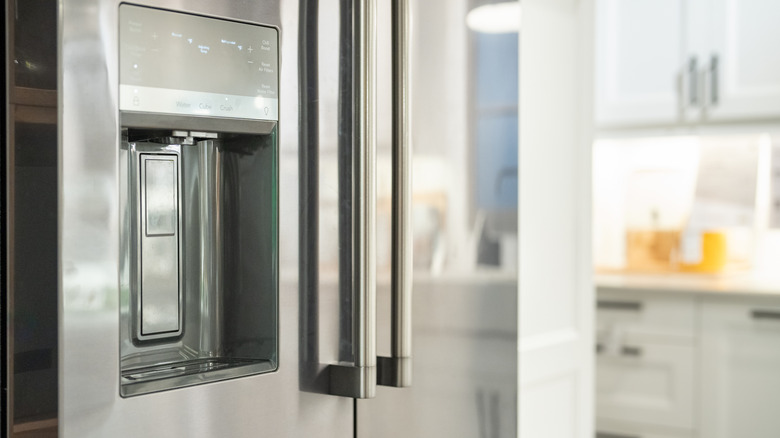
Finding a frozen cup of yogurt at the back of the fridge is not always the ice maker's fault, however. Do be mindful of brands that are famous for ice maker malfunctions, for example, the most common problems with Samsung refrigerators are to do with ice production. But generally speaking, frozen food inside the fridge is caused by inconsistent temperature, which can happen for various reasons.
For one, the culprit could be an improper temperature setting. Ideally, the inside of the fridge wouldn't be set below 33 degrees Fahrenheit. You may need to adjust it depending on how full your fridge is, though. When a fridge is mostly empty, there's a higher chance the items inside will start freezing. In side-by-side style refrigerators, this can especially affect the produce drawers at the very bottom, which is exactly where the cold air will drop. In contrast, in a top-freezer fridge, the food first starts freezing on the highest shelf, as it's closest to the freezer.
Also double-check the door seals to make sure they're not letting any cold air escape, as that will only signal to your appliance that it needs to cool harder, which is when problems arise. Maintaining a consistent temperature inside the fridge safeguards your food from freezing — and the task is a lot easier with high-rated refrigerators that have great temperature uniformity.