

Does Frozen Meat Ever Actually Expire?
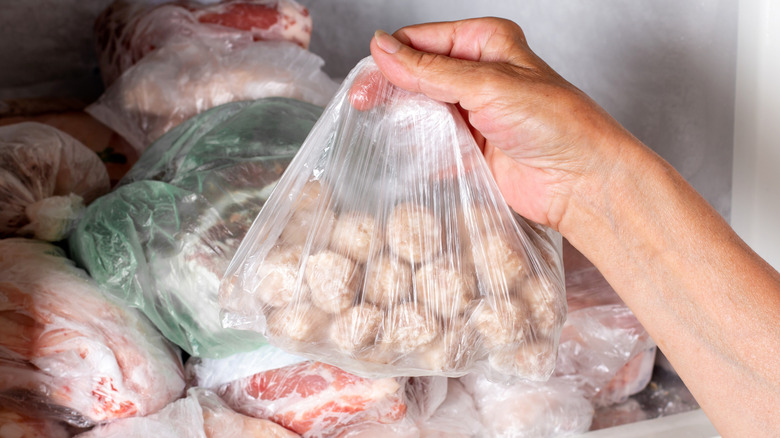
Despite what you might think about "best before" dates, once frozen, food essentially remains safe to eat indefinitely. In other words, in terms of safety, frozen meat doesn't expire. To understand why freezing works so well to preserve food, we need to go to a molecular level. Freezing turns water molecules present in food into ice crystals. Bacteria rely on water to grow, and freezing removes their access to it, so they become dormant until the food is thawed.
However, the quality of frozen meat will decline over time. This is why frozen products still have "best before" dates. As a general guideline, whole animals and large pieces of meat will remain good for the longest, while the quality of smaller pieces of meat will degrade more rapidly. For the highest quality, the USDA recommends that bacon, sausages, hot dogs, and lunchmeats be frozen for no more than one to two months, while uncooked ground meat can retain its quality for three to four months. A whole chicken can be frozen for up to a year.
For the best results, flash-freezing meat makes a big difference, as it minimizes structural cell damage caused by the formation of ice crystals during freezing. Clarence Birdseye's flash-freezing invention was inspired by studying how Inuit people rapidly freeze fish in the harsh environment of Northern Canada, maintaining the food's fresh quality.
Freezer burn can ruin the quality of your meat
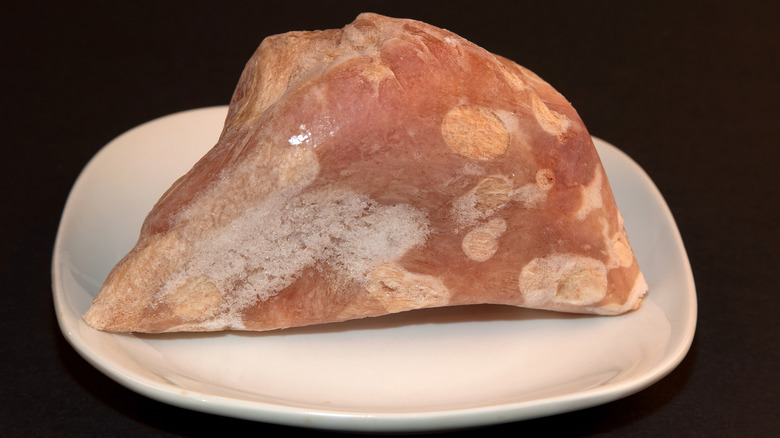
To check whether the quality of your frozen meat has deteriorated, first look for freezer burn. This is caused by oxidation on the meat's surface, causing gray-brown patches that are dry and taste unappealing. Fortunately, freezer burn can be prevented by keeping your meat properly sealed from air. You should also label your meat with the date of freezing, as it typically takes a few months for freezer burn to develop. Your nose is also the best judge of quality; once thawed, smell the meat — if anything seems rancid or unusual, it's best not to eat it.
While the idea of frozen food remaining safe indefinitely is certainly reassuring, this comes with some important caveats. If food has been left out of the fridge for more than two hours — or just one hour above 90 degrees Fahrenheit — then it should never be frozen, as any bacteria that have developed will be locked in until it thaws. Some nasty bacteria, such as listeria, salmonella, and E. coli, can survive freezing, and some major food safety incidents have occurred after these were found in frozen produce.
During the freezing period, it's essential that your food remains at 0 degrees Fahrenheit or below. After you take your frozen meat out of the freezer, never thaw it at room temperature. The "danger zone" in food occurs at 40 to 140 degrees Fahrenheit, and this is where bacterial growth is at its fastest. Instead, defrost your meat in the fridge, under cold water, or in a microwave.