

The Best Way To Enjoy Peaches Isn't Chilled: Do This For More Robust Flavor
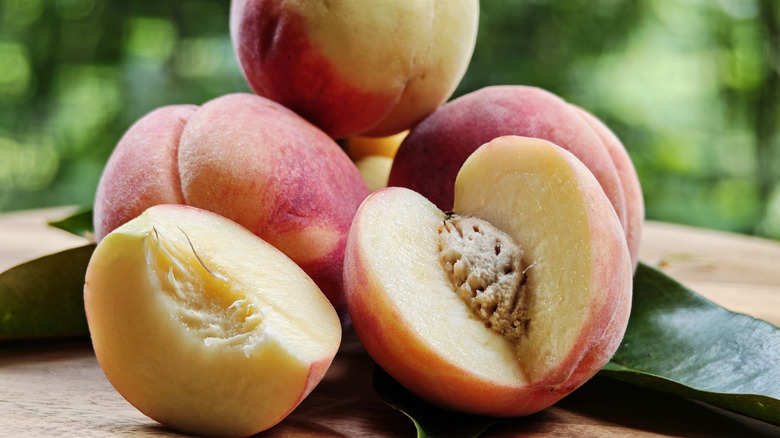
Summer is the best time of year to buy peaches, when they're in season, ripe, and juicy. However, eating a peach chilled can mute its natural flavor. Conversely, heating can turn even a slightly underripe peach into a culinary delight, unlocking a more intense, complex and robust flavor. There's some interesting science behind this: Sweet, bitter, and umami are heat-sensitive tastes which begin to be perceived more strongly when a food's temperature is above 59 degrees Fahrenheit. This peaks at 95 degrees Fahrenheit, when those flavors become an astonishing 100 times stronger. Suddenly, that cold peach (or strawberry, or tomato) that was ever-so-slightly-sweet has become a sweet taste sensation.
Still, knowing how to select the best peaches matters. A bad peach heated is still going to be a bad peach. Avoid hard peaches, or ones with green markings, as they're underripe; likewise, avoid overly soft ones which tend to break down too quickly when baked or grilled. A ripe peach should smell fragrantly peachy, and have a little give when you squeeze it gently. If you already have underripe peaches, leave them at room temperature to ripen quickly, then move them to the crisper drawer once ripe — just remember to bring them up to room temperature before eating or heating in order to maximize those sweet, umami tastes.
The best way to heat peaches is grilling
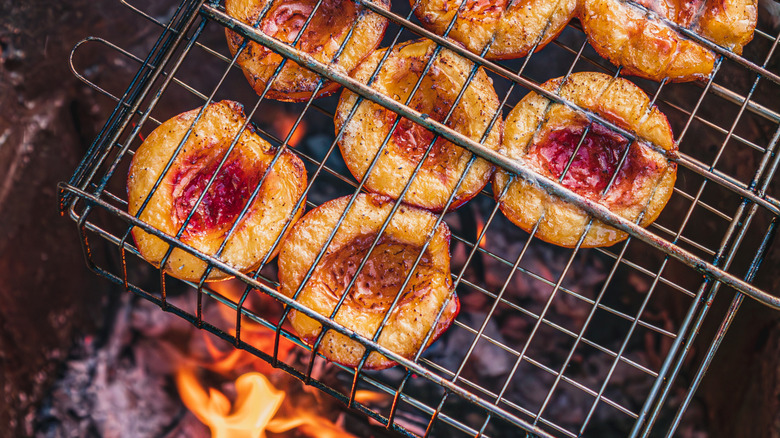
While you can bake peaches, or heat them in a pan, grilling is the best method, as it doesn't just warm up a peach, it transforms it. Direct heat caramelizes a peach's natural sugars through the Maillard reaction, producing hundreds of new flavor compounds, including toasted, nutty, and buttery notes in the process. As it cooks, water molecules within the peach begin to evaporate, which concentrates the remaining sugars. Grilling also amplifies a peach's lactones, the aroma compounds responsible for the rich, creamy smell of a ripe peach, and these become more intense, buttery, and caramelized. On top of this, a grill creates smoke from whatever's burning, whether it's wood or charcoal. With the cut side face down on the grill, a peach's interior is the perfect surface to absorb smokiness.
When grilling peaches, first cut the fruit in half and remove the pits, and then brush the cut-sides with butter. This helps caramelization and provides a more effective barrier than oil, while sugar will just fall off or burn — plus, peaches already have plenty of natural sugars. Place the peach halves into direct heat on the grill, cut-side down. Leave them for about five minutes or until visible grill marks form, then transfer them to a pan, flip them cut-side up, cover the pan with something grill-safe, and place this on the cooler part of your grill to allow the flesh to soften without the peaches drying out. Grilling fruit is an underappreciated way to get complexity and intensity from humble ingredients, and grilling a peach is one of the best things you can do with them.