

The Raw Seafood You Should Never Store In A Sealed Container
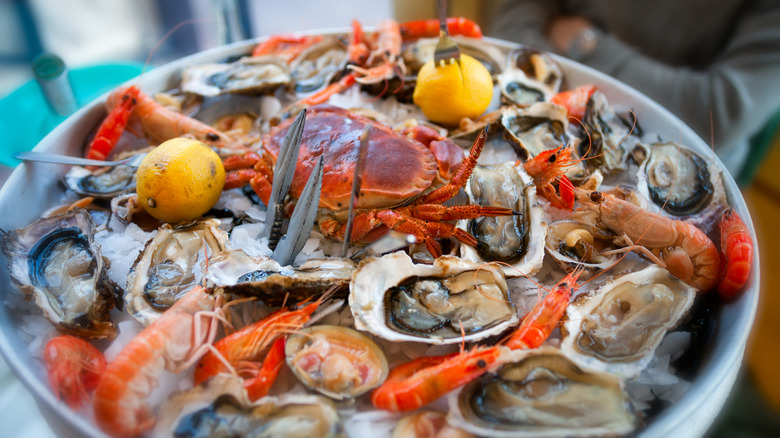
Bringing home the freshest seafood available is a no-brainer, at least as far as hopeful intentions. Whether harvested from oceans, seas, lakes, or ponds, one thing common to all raw seafood is the need to keep it fresh as long as possible before cooking. With that in mind, there's a common misconception to be aware of when it comes to storage: Certain types of shellfish should never be stored in a sealed container.
To get some insight on this matter, we reached out to expert Dora Swan, founder of fin – your fishmonger. She notes that "shellfish" is a broad category that includes two main types: crustaceans (crabs, shrimp, crayfish, and lobsters) and mollusks (scallops, oysters, mussels, cockles, and types of clams). Although you may purchase crustaceans while they're still alive, you'll typically cook them right away. However, many home cooks may stash mollusk shellfish away in the fridge for later, unaware that the clams and oysters they just bought are still breathing. And the last thing you want to do is store them in sealed containers.
"Unlike other seafood (finfish) you may see in the display case at your local fishmonger that have been skinned, scaled, butterflied, or filleted, raw shellfish arrive still alive," she says. "Yep. Inside those shells are clams, oysters, and mussels that remain living." They therefore need oxygen to survive, which they are unable to get inside a sealed container. Once they die, they are inedible and must be thrown out. That means it's crucial to know how to store these sea creatures before cooking, and how to recognize if they are no longer alive.
How long to store mollusks before cooking
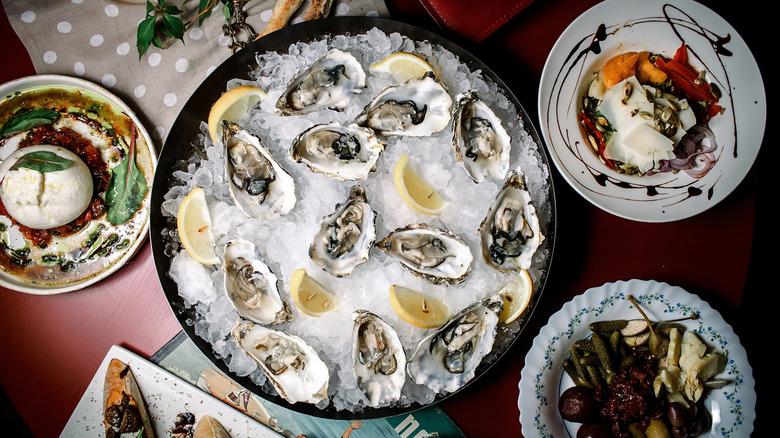
While mollusks are still fresh, alive, and waiting to be cooked, it's pretty easy for home chefs to store them, notes Dora Swan. "Your first thought might be to store your clams or other mollusks on ice in the fridge, right? Nope. Because that fridge temp is not below freezing, the ice will eventually melt and suffocate your mollusks." She acknowledges the potential confusion, since water is their original home, but explains: "It's not that they will drown because it's water, but because it's not the right kind of water, with the proper amount of salt to keep their tissues alive."
It's best to store them in the coldest part of your fridge, which is usually in the back bottom area, explains Swan. She suggests placing them in a container without ice, covered by a damp, light kitchen towel or paper towel. Even then, they won't last long. "Remember that in most cases, we're not lucky enough to live seaside and harvest our own clams and oysters directly from the water, so you'll want to keep in mind that your fishmonger has purchased mollusks that have been stored and shipped and stored again at their shop." After journeying the final step into your fridge, Swan says, they should be good for a few days — but the sooner you eat them, the better. The USDA recommends up to two days before cooking or freezing.
Depending on where you're buying raw mollusks, there may be clues that can help indicate freshness. According to Swan, bags of seafood are tagged with the dates of harvest, the lot, and the harvest area — and fishmongers keep those tags for months so they can trace shipments for safety reasons, such as potential bacterial infections. "You can absolutely ask to see these tags when you're shopping for your shellfish," she said.
How to tell if mollusk shellfish are still alive
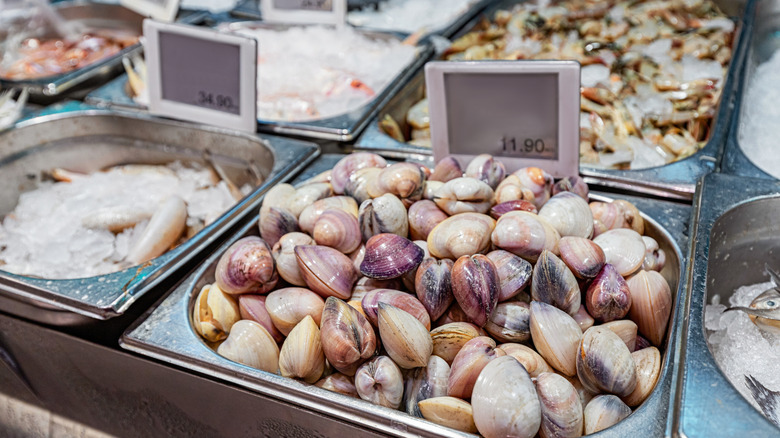
Understanding how to store mollusk shellfish before cooking is important, but so is determining whether they're even still alive. Despite your best efforts, they can inadvertently die, begin to produce bacteria, and become inedible right away. There are several ways to tell when this unfortunate scenario has occurred, explains Dora Swan.
"Their shells are open, they feel lighter than the others, or sound hollow when tapped. Easy!" She also says to discard any mollusk with a broken shell, then reveals another tip from her own shop: "If the shell is open and you tap it against the shell of another and it closes, it's still alive and safe to prepare to enjoy." If the shell sounds hollow, that indicates a dead clam. "If any shells remain closed after preparation, throw those away, too, as they are dead," she said.
Working with raw seafood in a home kitchen can be a tricky situation with quick turnaround times for freshness. That's when your freezer comes in handy. For some tips on proper fish and shellfish freezing, check out these three common mistakes everyone makes when freezing seafood and the easy way to freeze seafood without a vacuum sealer.