

The Best Way To Store Chocolate Bars For Long-Lasting Freshness
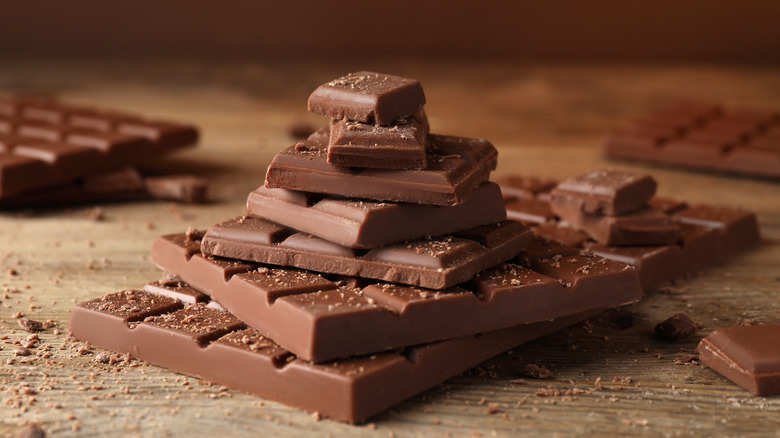
It's estimated that Americans eat over 2.8 billion pounds of chocolate every year on average, making it one the most popular confections on the market. No one's pointing fingers, but chances are you probably have some hiding around your home right now. Chocolate stays fresh for a long time, so it's okay to hoard it — you just might want to think about where exactly you're storing all of those precious bars to keep them in the best condition.
Chocolate is created through a delicate process that involves grinding up cacao beans and blending them with sugar and other ingredients. The chocolate achieves its glossy, snappy finish during the tempering stage, where it is heated and cooled to a specific temperature in order to align all of the fat molecules. It's a lot of work, and it can become undone if the chocolate is exposed to any sudden changes in temperature. The best way to preserve the flavor and texture of chocolate is to keep it at a stable temperature between 60 to 70 degrees Fahrenheit.
All that means is that it should be kept in an airtight container in a cool, dark space that never changes temperature, like the pantry. Otherwise, the chocolate can develop what's known as bloom — that white, chalky layer that tends to form on chocolate that has melted and resolidified. There are two types of bloom: sugar and fat bloom. Both are harmless, but they can alter the taste of your favorite treat.
Don't store chocolate in the fridge
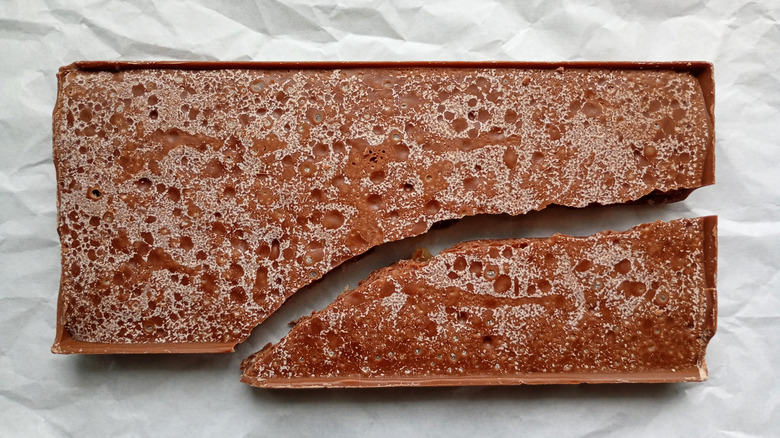
Fat bloom can occur when chocolate reaches any temperature above 75 degrees Fahrenheit. As the chocolate warms, all of those fat molecules in the cocoa butter that came together during tempering start to disconnect, leaving you with a dusty-looking candy bar. Sugar bloom occurs when moisture dissolves on the surface of chocolate and then evaporates, leaving behind sugar crystals.
Sugar bloom is the reason you should never store chocolate in the refrigerator or freezer, which are prime zones for condensation. If you live somewhere very warm, keep your chocolate in the fridge but it should be placed in an airtight container. Otherwise, put that airtight container in the pantry, where it will be safe from any light, which can affect the flavors, and moisture. Airtight matters because cocoa butter is highly absorbent, so it takes on the aromas of any other foods around it — this is especially important to keep in mind if you do need to keep the chocolate in the fridge.
Chocolate tastes best within three months of production, so stick to the best-by date if your bar has one. If not, milk chocolate tends to have a shelf life of about 12 months and dark chocolate can last for two years. If you see any signs of mold or spoilage or it smells off, throw it out right away. Even the best type of chocolate isn't worth getting sick over.