

The Best Foods To Eat For Lower Cortisol Levels
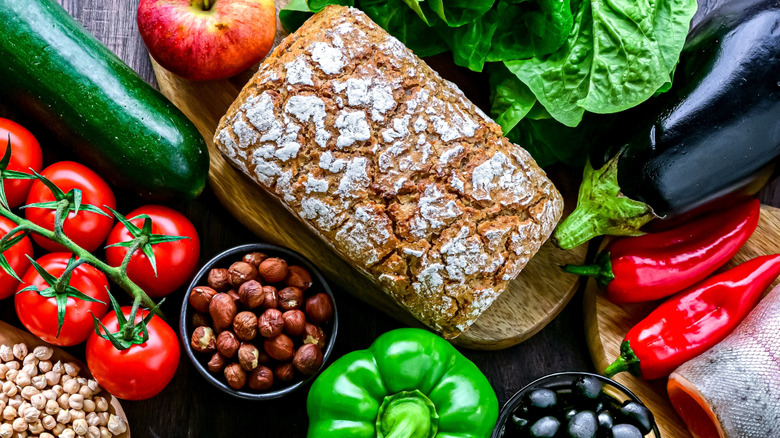
Stress sneaks into the body, and cortisol, the hormone linked to it, plays a major role in how it shows up. Though no single food can act as a magic pill that lowers cortisol levels, the way your plate looks can have an impact. We spoke to registered dietitian Angel Luk for tips on building menus to support a healthy stress response.
"Foods that are part of the Mediterranean diet help reduce inflammation, which may reduce cortisol as a result," Luk explains. This translates into fatty fishes like salmon and sardines and reaching for ingredients like chia seeds, leafy greens, legumes, and lower-fat dairy. According to Luk, omega-3-rich foods improve the ratio of omega-3s to omega-6s and omega-9s in the body, all of which support the body's natural ability to respond to inflammation. Magnesium-rich foods like oats and bananas can promote relaxation, resulting in better sleep quality, and lower levels of stress and cortisol.
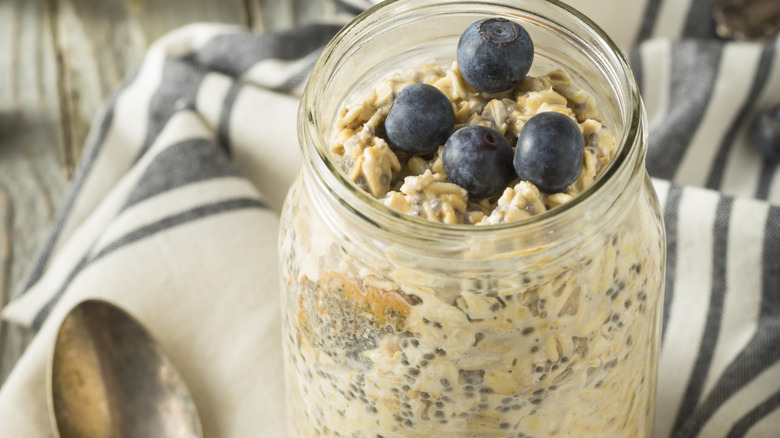
If you're not sure where to start, Luk offers an easy shortcut that is simple to incorporate into weekly patterns. She recommends overnight oatmeal made with chia seeds, frozen fruit, and lower-fat milk. "Chia seeds are rich in omega-3s and magnesium," she explains. "The oats, fruit, and lower-fat milk provide additional components of the Mediterranean diet including dietary fiber, potassium, calcium, and antioxidants." It is an easy cortisol-conscious meal that can be put together the day before.
Building a stress-busting diet
Though planning cortisol-minded menus can be about including specific ingredients, Angel Luk does recommend eliminating one item entirely. In Luk's opinion, alcohol should be the first to go if stress hormones are elevated. "It does not contribute any essential nutrition to the body and can be avoided completely without compromising our health," she says. Not only does alcohol offer little in the way of nutritional value, but alcohol can worsen stress and anxiety and raise cortisol levels in both the short and long term.
Still, this doesn't mean that every indulgent ingredient has to be cut. Luk's approach is less focused on elimination and restriction and more on crowding out less beneficial choices with more nourishing ones. This tactic looks to build a baseline that encourages the body to be more resilient rather than tracking specific numbers on a lab panel. Consistency counts, as cortisol responds to long-term patterns, not the occasional indulgence. A few servings of fish each week or a regular magnesium-rich snack in the afternoon can help move the needle over time. And what better way to start than with tomorrow morning's breakfast?