

The Nut To Snack On If You Want A Big Magnesium Boost
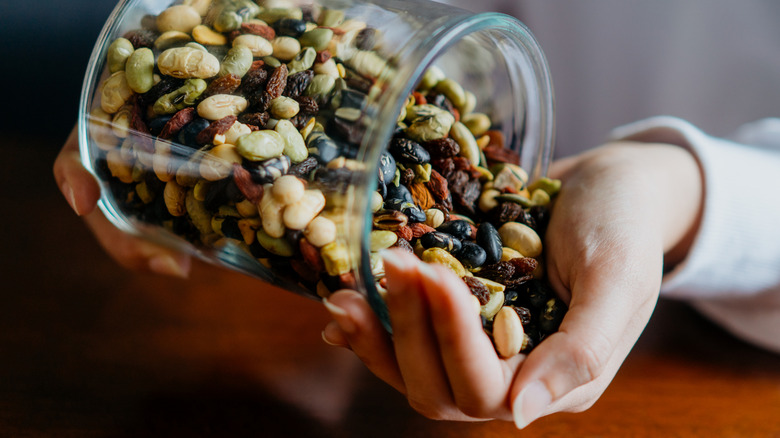
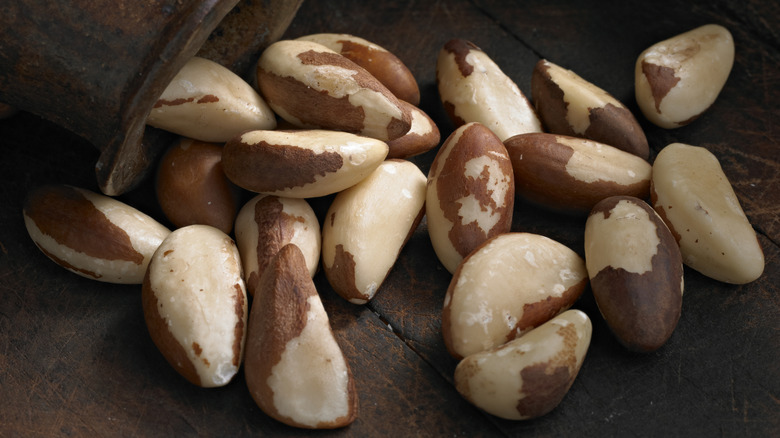
Among all the tree nuts that we eat, Brazil nuts stand out. They're large, pale, and rich in oils that give them a creamy, coconutty flavor, and offer a high fiber content. These dense little guys are one of the most concentrated sources of magnesium and selenium in the natural world.
A one-ounce serving of about six Brazil nuts contains over 100 milligrams of magnesium (about 18 milligrams per nut). The recommended amount of magnesium per day is around 300 milligrams for adult women and around 400 milligrams for men. But that serving of Brazil nuts also contains roughly ten times the daily requirement of selenium, which is why experts recommend no more than five nuts per day, max. While selenium is good for you in moderation, too much can cause health problems.
Magnesium supports more than 300 enzyme systems in the body, influencing muscle relaxation, nerve conduction, and energy metabolism. It stabilizes blood sugar, and helps regulate mood and sleep. Selenium also helps protect cells from damage and assists the working of thyroid hormones. Basically, these two minerals support systems that get frazzled when you are wearing thin under stress.
They are also essential nutrients that the body cannot make itself. Magnesium, selenium, and other trace elements must come from food. The balance is narrow, with too little leading to deficiency, too much to toxicity. The best thing about whole foods is that when eaten in regular dietary amounts, they don't really push those limits. Two Brazil nuts meet daily selenium needs – don't double up with vitamin supplements. Eaten with fruits or greens, like on top of a salad or in a nutrient-dense black forest smoothie, they add structure to the diet's mineral foundation rather than overloading it.
Two Brazil nuts a day keep the doctor away
Magnesium exists in several absorbable forms, each tied to a different role, which can get really confusing when you're staring at a shelf of vitamins at the store. Magnesium glycinate is often used for calm and sleep, citrate for digestion, malate for cellular energy, and l-threonate for cognition. Supplements isolate these forms, and charge an arm and a leg for them, but in food they coexist naturally, buffered helpfully by fiber and fat. That synergy makes dietary magnesium gentler on the system and better retained.
When people fall short on magnesium, which many do, they can show signs of hypomagnesemia, which are fatigue, muscle tension and low resilience to stress. Common, delicious foods like pumpkin seeds, cashews, almonds, lentils, dark chocolate, and cherries all contain bioavailable magnesium, but Brazil nuts rank among the highest per ounce. Their selenium content adds another layer, supporting immune function, fertility, and antioxidant defense. Selenium accumulates if your body doesn't use it, and one or two nuts a day equal roughly 70 to 180 micrograms of selenium, covering daily requirements without approaching the upper limit of 400 micrograms.
It's important to pay attention to sourcing, which influences quality. Many Brazil nuts are wild-harvested in the Amazon, falling naturally from trees that thrive in undisturbed forest soil. Some are certified organic, which ensures minimal pesticide exposure and better storage standards. Nuts stored too long or handled in humid conditions risk mold growth, so freshness is worth the price difference. The best flavor means good handling, with a firm, clean snap rather than softness or acrid bitterness. Buying from a supplier that rotates stock quickly is as practical as choosing organic, in this case.