

What To Know About Whole Foods' 'Try Before You Buy' Policy

Yes, it's true, Whole Foods lets customers ask to sample many in-store items before buying. According to the Whole Foods website, its "try before you buy" approach extends to packaged and bottled items, as well as fresh produce. "We are happy to provide samples for our customers," a spokesperson confirmed when Tasting Table contacted the grocery chain about the policy. "If a customer would like a sample, they just need to ask a team member for assistance." This is to avoid valid food safety risks associated with consuming unwashed produce or other health concerns. As the spokesperson continued, "We want to ensure customer safety is our top priority."
Getting a Whole Foods staff member involved is a reasonable and effective way to prevent the full in-store anarchy that would unfold if customers started helping themselves to a bite of whatever takes their fancy as they browse. While there are many grocery stores which offer free samples, this isn't the same as the Whole Foods "try before you buy" policy, which is request-based and not reliant on any product-specific sample offerings.
Additionally, while free samples have a psychological effect that encourages customers to migrate toward certain products and spend more time browsing, this specific Whole Foods policy builds trust between the brand and its customers. It offers shoppers the freedom to request a taste of anything and allows them to experience the quality of the produce first-hand.
What are the limits of the Whole Foods 'try before you buy policy'?
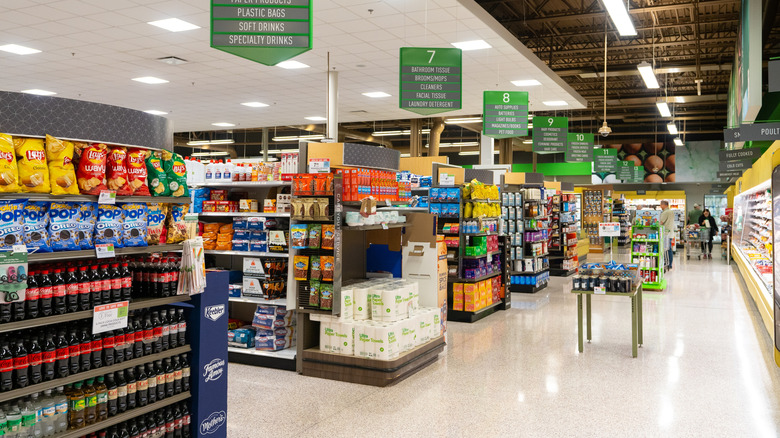
The Whole Foods spokesperson contacted by Tasting Table declined to comment on the specifics of its "try before you buy" policy, so details around its limitations and rules remain unclear. For example, we cannot confirm whether the policy extends to alcoholic beverages or whether any product can be opened and tasted on request, regardless of size. Admittedly, the Whole Foods' website notes that customers can try "nearly" anything, so there are clearly some limits in place.
Since meat and fish can be dangerous to eat raw, it's highly unlikely that these will be provided for in-store tasting on request. Another question is whether the policy covers any item, regardless of how expensive it is, such as caviar, or whether customers are also able to try all the non-food items sold in Whole Foods stores, for example those in the beauty department.
The ambiguities of the policy allow employees to adapt to suit specific circumstances. For instance, in some cases it's difficult to offer customers just a taste without opening the packaging, such as with yogurt. In these instances, you may occasionally receive the product for free to take with you and try at home. Don't count on this, of course, but it's good to know that Whole Foods aims to provide the best experience possible.