

Here's How Long To Let Your Quick Pickles Marinate
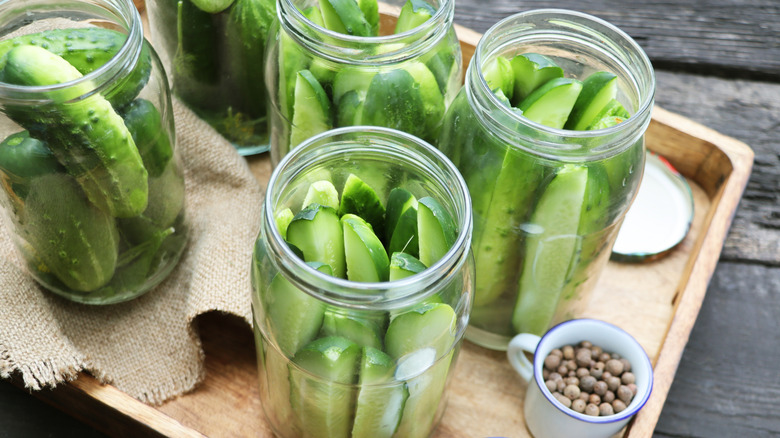
"Quick pickles" isn't just fun to say — it's a low-effort way to add bright, tangy flavor to sandwiches, salads, and grain bowls, and build the ultimate charcuterie board. Unlike your grandma's shelf-stable pickles, quick pickles don't require a lengthy fermentation or water-bath canning process. They're made by soaking fresh vegetables in a vinegar-based brine and storing them in the fridge. They're sometimes called "refrigerator pickles," which is just one of the many different types of pickles out there.
Chef Marc Forgione — a winner on "The Next Iron Chef" and restaurateur who recently participated in the launch of Red Barn Creamery Butter — knows a thing or two about the process of making quick pickles. According to him, the best part is that you don't have to bust out the water-bath canning equipment or worry about sterilizing. "Now that we're getting into the summer, I love doing the no-cook pickle," Forgione told Tasting Table. "You know, sugar, vinegar, a little bit of water, salt. And you just let the cucumbers marinate."
A common question home cooks have is just how long (or how quick) the pickling should be. Forgione advised: "A couple hours — but if you can do overnight, do overnight." Thinly sliced veggies like cucumbers, red onions, radishes, or jalapeños can begin absorbing flavor in as little as 30 minutes. But most recipes benefit from several hours of marinating time for the best balance of flavor and texture.
Customize your quick pickles with spices and herbs
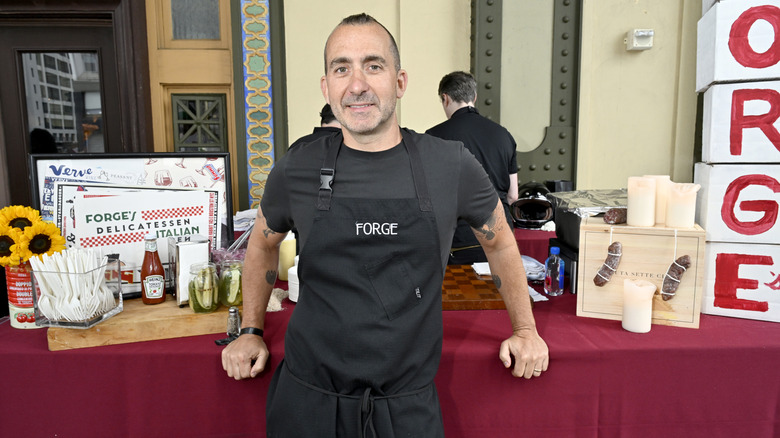
The basic quick pickle method is simple. Slice your chosen veggies and pack them into a clean, non-reactive jar (glass is preferred). Most brines consist of a base of vinegar, sugar, salt, and a pinch of sugar, but Marc Forgione encouraged experimentation. "Again, it's summertime," he said. "So, you know, basil, mint, you know, [you] can have fun with different spices, coriander, black pepper, fennel seeds, ... turmeric, if you want to add a little color. Curry powder. Dill, obviously."
You can heat the mixture, but to keep this recipe simple and summer-friendly, a cold brine is ideal. Once the vegetables are submerged, simply refrigerate them until they're ready. Just about anything can be pickled. Pickled red onions are especially popular and can be added to any dish that needs a pop of flavor and color. Pickled carrots, green beans, and peppers are obviously fantastic in a Bloody Mary, but you can upgrade any summer cocktail with pickled garnishes.
The real fun, as Forgione shared, comes from customizing your brine with whatever's in season. If you enjoy heat, sliced fresh chiles or crushed red pepper will give a nice kick while cloves or allspice can provide a warm, earthy flavor. Most quick pickles keep in the fridge for three to four weeks, but if you crave a crunchy texture, it's better to chow down sooner than later.