

11 Best Tips For The Ultimate Tuna Melt
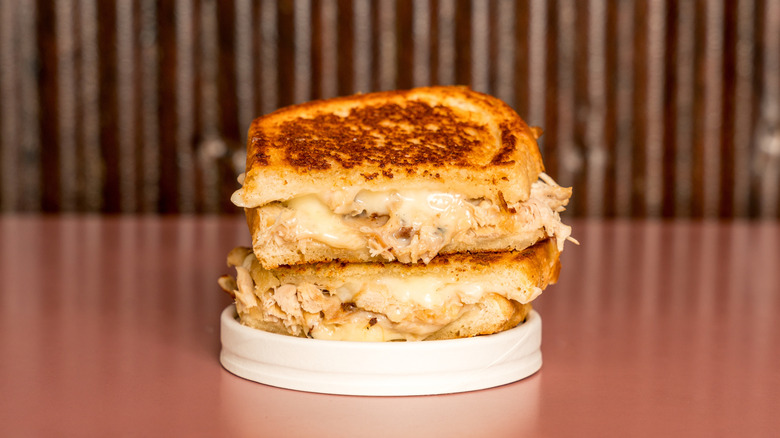
Sandwich orders are deeply personal and subjective, from the type of mustard a person favors to the number of turkey slices they deem necessary. It would be foolish to claim that one type of sandwich is superior, but it's difficult to argue against a well-built tuna melt. The fish provides protein and flavor, the mayo delivers creaminess and moisture, and the cheese, well, do you even need to explain why cheese is a good thing? Throwing in the toasted element means that the sandwich is also crispy on the outside while the center is filled with a gooey, melty cheese. Regardless of your usual lunch order, the tuna melt commands respect.
Like any other sandwich, there are myriad variations on this delectable recipe. Today, some old versions that feature additions like flour, evaporated milk, or boiling water would make most sandwich enthusiasts scratch their heads, but recipes with ingredients such as capers or walnuts have become more common. While there are no right or wrong answers for making a tuna melt, there are certain areas where you can vastly improve the results through technique and ingredient quality. To this end, we spoke with two experts: Kathy Sidell, the founder of the Boston and Los Angeles-based seafood restaurant Saltie Girl, and Libby O'Sullivan, the founder of the New York-based, Australian-inspired café Tuckshop.
Start with top-quality tuna
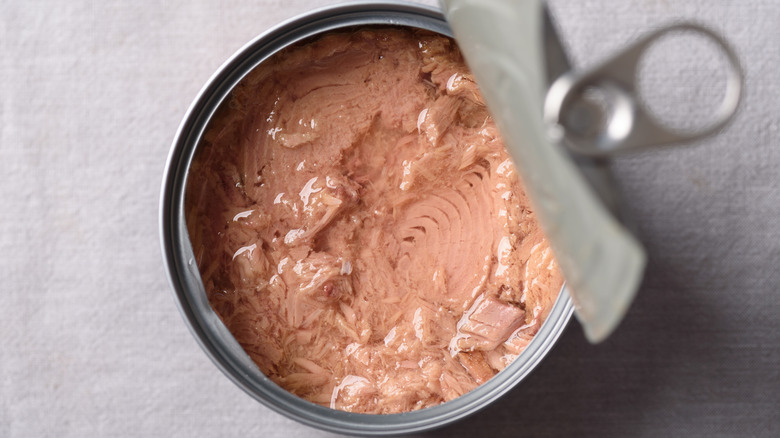
Both experts we spoke to stressed that, no matter how creative you get with your ingredients, the tuna should always be the star in a tuna melt. Most of us probably just reach for whatever type of tuna is available at the grocery store, but if you want to level up your sandwich, it's worth making sure that the central ingredient is top quality. For Kathy Sidell, the preferred option is ventresca, which is the meat from the belly of the fish and is known for its high fat content. Sidell calls it the "true velvety perfection," and she singled out Olasagasti as her brand of choice.
If you aren't quite prepared to spring for the pricey ventresca tuna, you can still upgrade the quality of your tuna salad with one easy choice. Libby O'Sullivan noted that regardless of the type of tuna you get, it should always be packed in oil rather than water. Since tuna can be notoriously dry, that additional fat will help keep the mixture moist, even if you do end up draining most of it away.
Use oil to avoid dryness
Relative to other types of fish, such as mackerel and salmon, tuna is low in fat. A can of drained albacore tuna contains 1 gram of fat, compared to 14 grams in a portion of canned salmon. This lack of oil can make tuna extremely dry and claggy in the mouth, no matter how much mayonnaise you use. You can opt for the oily belly meat, but if you are using a standard can of albacore or yellowfin tuna, you don't have to resign yourself to dry fish, either.
As Kathy Sidell told us, the best way to hydrate your tuna is to add oil. "If using a flavored tin, I use that oil and incorporate it into the dressing — be it plain mayo or a vinaigrette. [It] adds much more flavor!" That said, some tuna is packed in low-quality oil, such as soybean oil, which isn't exactly noted for its gourmet flavor. If you aren't able to purchase tuna packed in good, high-quality oil, you might prefer to simply drain the generic vegetable oil from the can and mix in a small amount of premium extra virgin olive oil.
Pick high-fat, simple-ingredient mayo
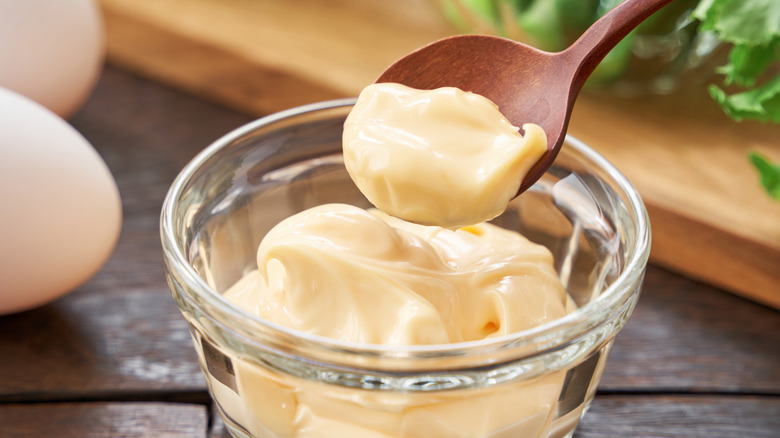
Although there are plenty of substitutes for mayonnaise, the traditional tuna melt hinges on this egg-based condiment. It's the glue that binds all the ingredients and adds that velvety mouthfeel that is integral to the overall experience. There are countless options out there, from low-fat to homemade, but there are certain attributes that you should seek out when you're planning to use the mayo on a tuna melt.
High-fat mayo is key. Without it, you'll simply end up with a watery concoction that creates sogginess without the richness, a deathly combo for tuna melts. Another consideration is the number of ingredients. Mayonnaise only requires three of them: eggs, oil, and acid, such as lemon juice or vinegar. Other things may be added to provide flavor, a longer shelf life, or alter the texture, but these can pose issues for tuna salads. Some mayo contains sweeteners, which may taste delicious on a ham sandwich but could clash with tuna. Others contain starch, often to thicken a low-fat concoction. The results might not be watery, but they won't be rich, either. Sticking with a high-fat option that sticks as closely as possible to the basic three-ingredient formula will produce the most predictable results. It will also give you more control over the flavor of the final product.
Don't skip the onions
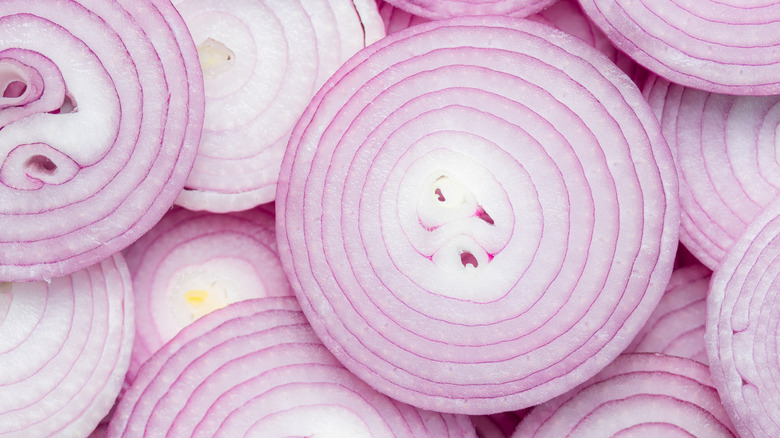
The experts we spoke to weren't aligned on everything, but something they did agree on was the necessity of onion addition. "Tiny diced onions or shallots and garlic are a MUST," Kathy Sidell told us, noting that they upgrade flavor and texture of the tuna mix. Libby O'Sullivan mentioned onions as well, highlighting red onions as her variety of choice.
Luckily, onions are easy to procure at just about any grocery store, and you don't really have to worry about dropping extra money on high-quality options. There are, however, differences between the most popular types of onions that you might want to consider when deciding which one to use. For example, yellow onions mellow into a sweet flavor when cooked, but they can be unpleasantly pungent when raw. Red onions, on the other hand, tend to be a little milder when raw, making them ideal for sandwiches and salads. If you want to add a bright spiciness, you could opt for the green part of spring onions. Regardless of what you choose, don't be afraid to layer it in. Sidell revealed that she even adds onion powder to double down on the flavor.
Be creative but restrained with add-ins
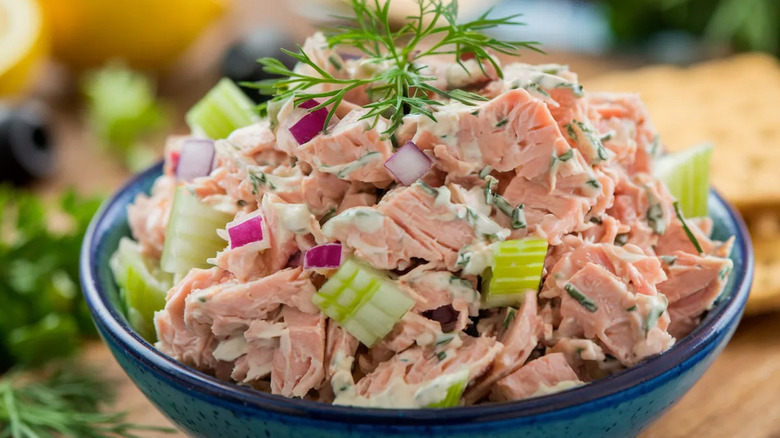
So far, we've kept things pretty uncontroversial, but from here on out, tuna melt enthusiasts may find themselves spoiling for a fight. Add-ins are where the purists and the adventurers diverge. For example, Kathy Sidell, who identifies herself as a member of the former category, rejects using pickles and celery, which regularly appear even in stripped-back tuna salad recipes. Meanwhile, Libby O'Sullivan asserted that "the tuna mix must be a flavor bomb." At Tuckshop, the tuna mix includes fresh herbs, cornichons, capers, and lemon zest, in addition to the usual onions and mayonnaise. Our spruced up tuna salad recipe even contains Dijon mustard and carrots.
Essentially, it comes down to personal preference. If you want a sandwich that leaves people doing mental somersaults trying to identify all the flavors, you can take O'Sullivan's approach. If you want to keep things classic as classic can be, take the less-is-more approach that Sidell prefers. Ultimately, though, you should never lose sight of the star ingredient — the tuna. If you end up adding so many ingredients that the tuna is reduced to a filler ingredient rather than the main event, you probably need to edit your recipe.
Add a crunchy element
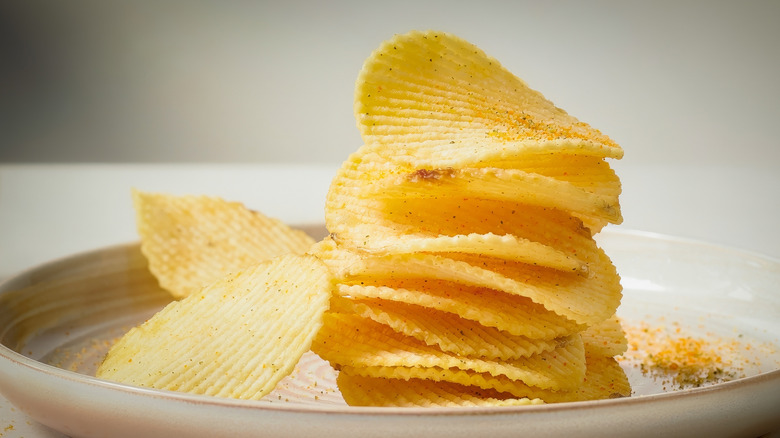
One of the best things about tuna melts, no matter how you choose to make them, is their textural variation. From the smooth creaminess of the filling to the gooey cheese and the crispy bread, they are designed to offer a little bit of everything. Many recipes call for at least one crunchy element in the filling, just to ensure that the middle of the sandwich isn't too boring. For Kathy Sidell, those crunchy ingredients should not be pickles or celery. She isn't a fan of either of them, though some people will certainly disagree. "Add potato chips and a hunk of iceberg lettuce for crunchy goodness," she said.
If you've never tried potato chips in a sandwich, you're in for a treat. We've already explained why you should add chips to your fluffernutter sandwich, and the same principle applies to tuna melts. Chips are salty and crunchy, and they help balance out the moisture of the tuna mixture. You can't go wrong with a classic potato chip, but you can always use flavored ones, too. Salt and vinegar chips are a fitting choice, cutting through the mayo to add a layer of acidity. If you want a crunchy texture but minimal additional flavor, iceberg lettuce has your back. It won't do much for your taste buds, but it will provide that textural variation you're looking for.
Be picky about the bread
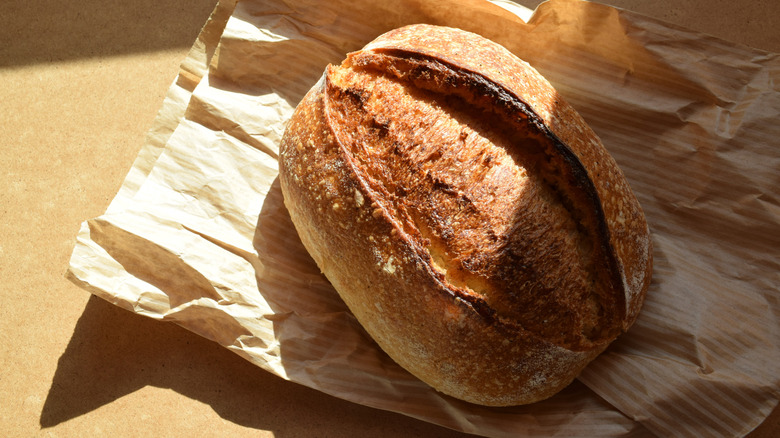
Regardless of whether you're doing an open-faced tuna melt or a closed tuna melt, the bread you choose will have a big impact on the result. Firstly, neither of the experts mentioned sandwich bread. It's convenient, and you probably already have some at home, but it is also soft and spongy, prone to sogginess, and simply not sturdy enough to handle all the moisture of a tuna melt. For Libby O'Sullivan, sourdough is the answer. She uses a top-quality, freshly baked option that contains no additives or preservatives and is fermented for up to 72 hours. This type of bread is perfect for absorbing some of the moisture without becoming soggy, while also imparting a lot of flavor.
Kathy Sidell is a fan of milk and rye bread. As the name suggests, milk bread is made with milk, which gives it a deliciously fluffy texture and subtly sweet flavor, but it isn't as flimsy as store-bought sandwich bread. If you've ever swooned over a pillowy brioche bun, you have milk to thank for it. Rye bread is the more flavorful option. It's the go-to bread choice for Reuben sandwiches and has a deep, earthy flavor. All three options have a thick enough texture to hold up under the moisture and weight of the tuna mix, but they also provide additional flavor, so you really can't go wrong.
Adjust the thickness for an open-faced sandwich
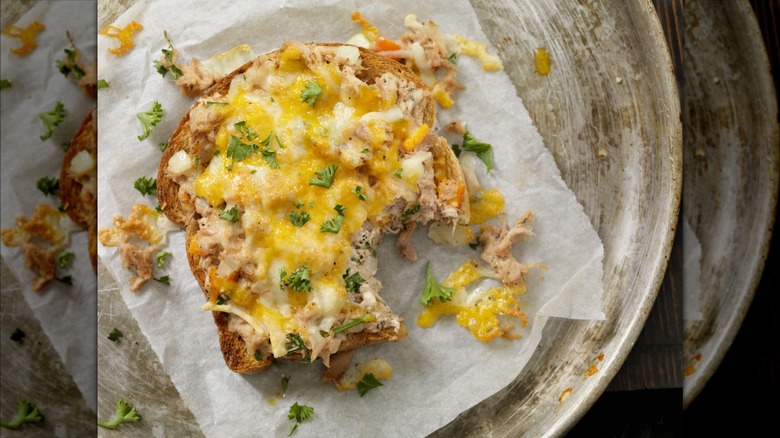
There are two divisive ways to make a tuna melt — open-faced or closed. The arguments are strong on either side. Proponents of the open-faced option argue that, with a lower bread-to-tuna ratio, the version is all about the filling and the crispy cheese topping. On the other hand, a closed sandwich can be grilled on both sides, creating more of that crispy, buttery bread surface.
There is no judgement here, but if you choose the open-faced route, be aware that you'll need thicker bread slices. People like to argue that an open-faced sandwich allows for a significantly higher proportion of tuna to bread, but you'll still need that one slice to be thick enough to hold all the filling. The last thing you want is for the melt to be so top-heavy that the bread collapses under its weight and the mixture slides off onto your plate (or lap). As a general rule, the bread for an open-faced melt should be roughly twice as thick as the bread used for a closed sandwich. If you're using a sturdier bread like sourdough, you can get away with a thinner slice.
Select cheese for its melting potential
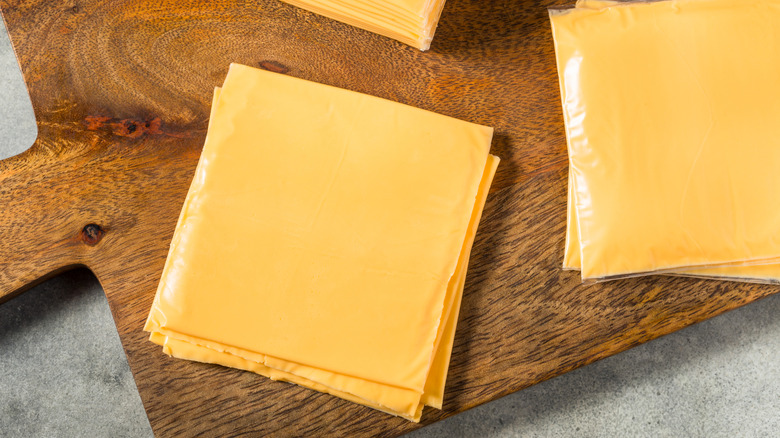
Cheese has many attributes that make it a superstar ingredient, but when it comes to tuna melts, the key is in the name: Above all else, the cheese must melt. That rules out several delicious options, including fresh goat cheese and queso fresco, which will not melt no matter how long you leave them in the oven. Kathy Sidell's favorite cheese is sharp cheddar, which is one of those all-rounders that is tough to ignore in pretty much any recipe.
Libby O'Sullivan has a more unconventional pick: American cheese. "We tested a lot of different options, but at the end of the day, American cheese just won," she explained. "It melts perfectly, gives you that rich creamy texture, and ties everything together without overpowering the tuna." It's true: American cheese is engineered to melt and stretch. It's made of cheese, milk, milk protein, and chemical compounds that reduce the formation of protein bonds. The result is a product with a smooth, velvety texture that easily melts due to excess liquid. Add a few slices of American cheese to your tuna melt, and it will be a gooey perfection in a matter of seconds, even though it won't do much in the flavor department.
Use two textures of cheese for more stretch
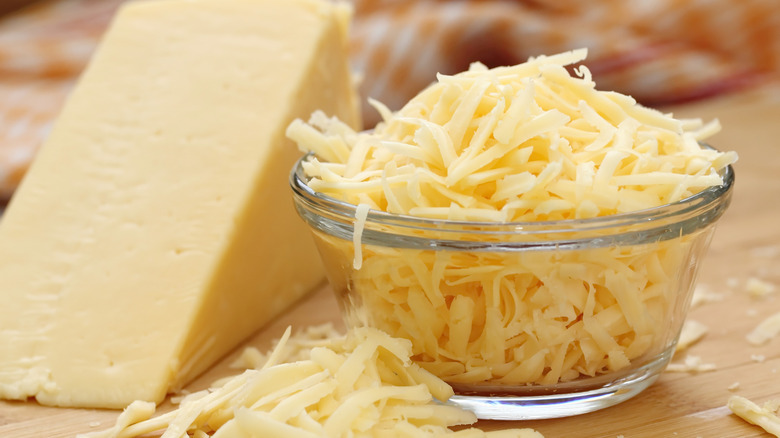
If you like the idea of a stretchy tuna melt but also want to use a strong, sharp cheese like aged cheddar, you can use one of the few cooking hacks that actually works to get the best of both worlds. "Make sure you slice and shred — you will get a better cheese pull," Kathy Sidell told us. So, combine two techniques, and you'll end up with a perfectly melty, stringy sandwich.
It all comes down to chemistry, of course. When you expose cheese to heat, protein structure starts to break, allowing the fat molecules to spread. Shredded cheese has more surface area that speeds the melting process, while the small size of each piece creates a uniform rate of melting. The result is a homogenous, smooth melt. Sliced cheese has a smaller surface area, and it doesn't melt as uniformly as shredded cheese. However, that also means that it retains some of its structure and doesn't become too viscous. When you combine them, you get a mix of both textures — the gooey shredded cheese and firmer sliced cheese. As Sidell said, the results are deliciously stretchy and ideal for tuna melt.
Treat the toasting process like an art form
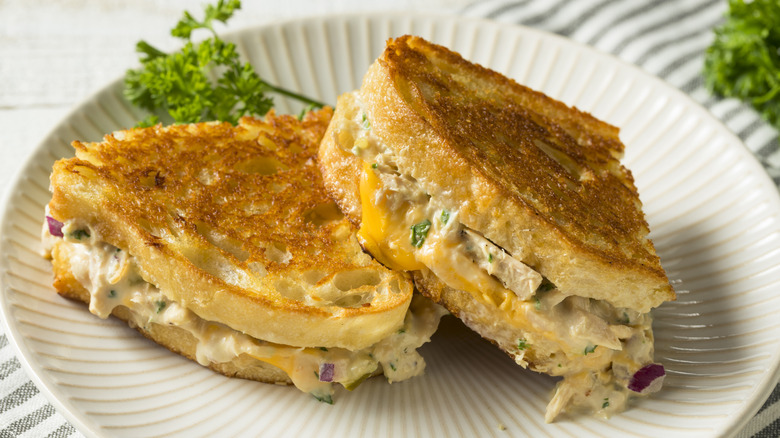
Even if you assemble all the best ingredients, you can still produce a lackluster tuna melt. After all, one of the most obvious features of this sandwich is the heat. If the cheese isn't melted and the bread isn't toasted, it's just a tuna sandwich. There are multiple ways to cook a tuna melt, some of which are more technical than others. Libby O'Sullivan's favorite method requires a panini press, or a toastie machine as they're known in Australia. "Our toasties take a little time, and that's the key," she said. "You want the cheese fully melted and the bread slowly crisping up into that deep golden, buttery crunch without rushing it. The press gives you even heat on both sides, so everything melts together properly while the outside gets beautifully crisp."
Kathy Sidell didn't call out a specific method, but she mentioned the crispiness you should be looking for. "Melting your cheese should be treated as an art form, particularly if you want to add a frico crust." You know when cheese is melted in a pan and becomes caramelized, lacy, and crunchy? That's frico. When you make a tuna melt, one of the most delicious ways to toast the bread is in a skillet with the cheese oozing out the sides and into the pan, where it creates a crispy, lace-like, toasty layer.