

The Meat Cooking Myth Many People Believe (And Need To Stop Now)
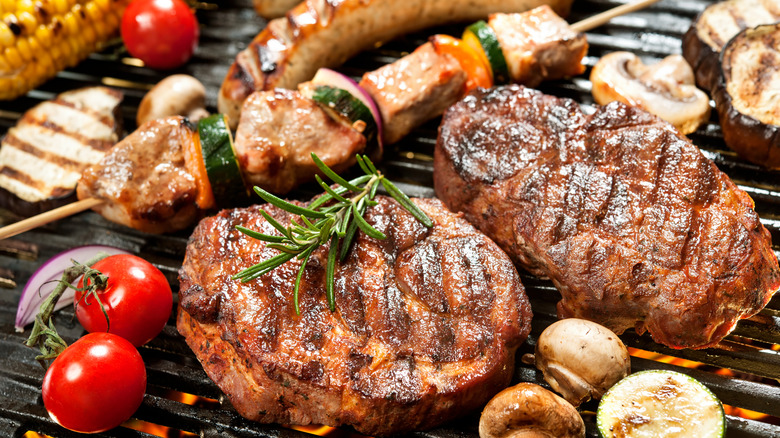
Cooking meat is both an art and a science. Not only do you have to master the perfect seasoning, but you also have to make the tough call about when it's done cooking. While there are signs, you shouldn't rely on visual cues, such as the color of the meat, to tell you when it's done. An internal temperature is the only way to know for sure. If you fail to cook it to the right temperature, you won't kill any of the potentially dangerous foodborne bacteria and pathogens that can make you sick. That simply isn't something you want to gamble with.
According to 2001 research performed by the USDA's Agricultural Research Service, even burgers that look done — meaning the interior is no longer pink — might not be cooked to a safe temperature. This is because there are other variables affecting color, like whether the meat was frozen beforehand or how long it was allowed to rest. In fact, researchers found that a burger that was removed from the heat at 135 degrees Fahrenheit and sat for four minutes looked just like the burger that was cooked to the safe temperature of 160 degrees Fahrenheit.
Instead of looking for the "right" (or what you think is the "right") color of meat, you should be sticking it with a meat thermometer. Although there's a good reason why you should let meat rest after cooking it, you also want to be sure you're abiding by all meat-resting guidelines.
What temperature does your meat need to be cooked to?
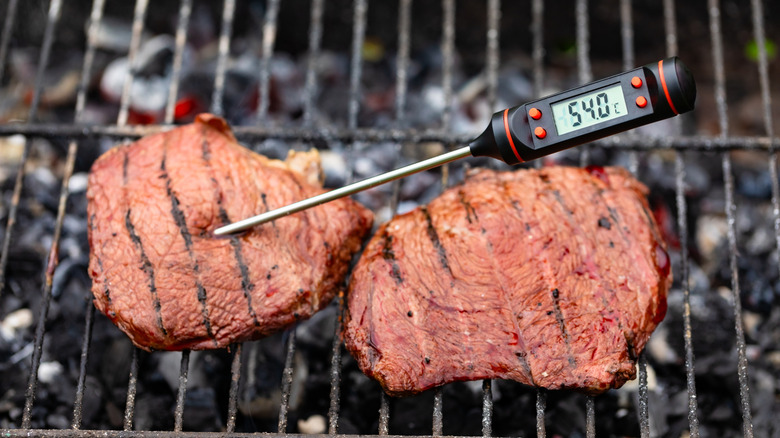
The exact temperature that you need to cook your meat to depends on the type of meat itself. Red meat chops, roasts, and steaks — including lamb, beef, veal, and pork — should be cooked to at least 145 degrees Fahrenheit and be left to rest for no less than three minutes. Ground meat (like for burgers) should be cooked slightly higher, to 160 degrees Fahrenheit. Poultry products, including both ground and cuts from the bird, are finished at 165 degrees Fahrenheit.
Since you should be taking the internal temperatures of all meats you prepare in your kitchen, as well as other dishes advised by the USDA, including casseroles, leftovers, and eggs, you'll want to purchase a quality thermometer. Some of the best meat thermometers cost as little as $10, though the higher-end models can cost you upwards of $110. It may feel like a big splurge, but you should consider it an investment in your safety.