

The 3-3-3 Grocery Rule Designed To Save Money And Plan Balanced Meals
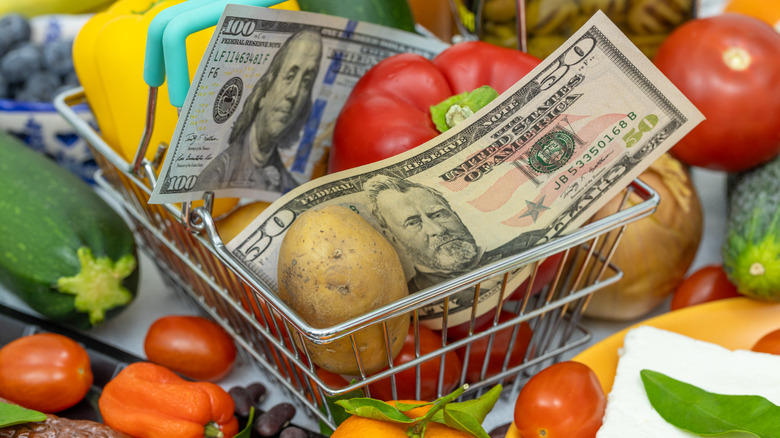
If you're the kind of person who wanders through a grocery store planning menus on the go, with every aisle triggering a new set of ideas, chances are you're buying more than you need. Not only does this kind of impulse-driven shopping lead to inflated bills, but it also almost always results in food getting wasted. And wasted food comes at a cost, too. According to the Environmental Protection Agency, food waste from one family can total hundreds of dollars every month. The 3-3-3 rule is a simple framework designed to help you save money and plan balanced meals. It has a couple of happy side effects as well: you can be done with your grocery shopping in less time than it takes to cook packet ramen.
The 3-3-3 rule is easy enough to follow: it means that you only buy three sources of protein, three sources of carbohydrates, and three sources of fat on your weekly trip to the supermarket. So you could pick chicken, eggs, and yogurt as proteins, rice, potatoes, and oats as carbs, and olive oil, peanut butter, and almonds as the three sources of fat. This combination itself will give you a whole range of options like chicken and rice, omelets with potatoes, overnight oats with yogurt and peanut butter, grilled chicken with roasted potatoes, or even just a simple bowl of yogurt topped with oats and almonds for a snack.
The 3-3-3 rule leaves room for flexibility
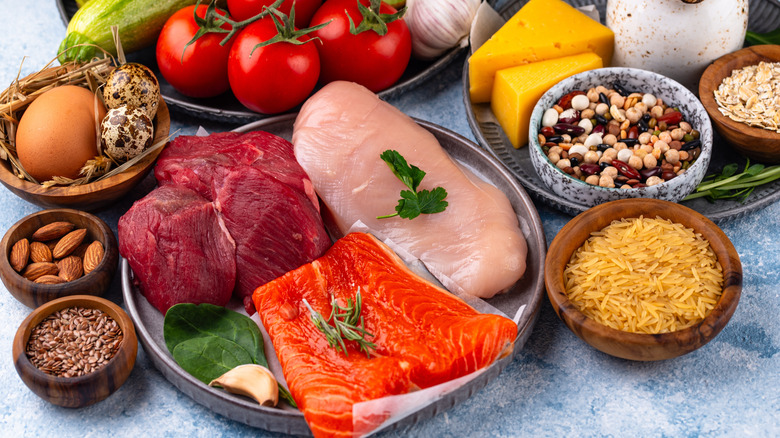
The 3-3-3 rule works perfectly for people who prefer simplicity and easy decision-making over variety in their meals. Having said that, you're probably wondering what happens to the other important food groups when you follow this restrictive shopping formula. For example, where does one get all that dietary fiber without fruits and vegetables? The main thing to understand is that the 3-3-3 rule is not a diet. It's just a framework to help you shop smart. It doesn't come with restrictions on what you can and can't eat. Keeping that in mind, there are two different ways to approach the "extras."
The first is to add a couple of fruits and vegetables to your shopping cart. The second is to adapt the 3-3-3 rule itself. For example, instead of three proteins, three fats, and three carbs, you could shop for three meats, three vegetables, and three fruits. The goal is to make sure you're not over-shopping, which helps keep costs down, and to cover three types of foods or food groups, which keeps the meals balanced. Inflation has been changing the way we shop for a while now, and the 3-3-3 rule is perfect for individuals or small families looking to cut costs to fit within tightening budgets.
Other shopping formulas for healthy diets

As we mentioned, the 3-3-3 rule isn't about eating healthy. It's just about shopping efficiently and covering major food groups. If you're looking for a framework with a sharper focus on what you should be eating, here are a couple that you can try out.
For example, there's the 5-4-3-2-1 rule, which Chef Will Coleman propagated on TikTok. The formula in this case involves adding five fruits, four veggies, three proteins, two sauces, and one grain to your shopping cart. There's also the 3-3-2-2-1 method for a balanced grocery haul, which leans slightly heavier on protein and significantly lighter on fruit than Coleman's rule. In this case, you'll return from your weekly outing to the grocers with three proteins, three vegetables, two fruits, two grains, and one sauce or dip.
These three rules will appeal to different demographics based on their likes, dislikes, and goals. What they do have in common is that your shopping trips will get much shorter, and you'll make a significant dent in the amount of food you throw away every month. Use these alongside our other tips to save money at the grocery store, and you'll be laughing all the way to the bank.