

Real Lumberjacks Didn't Actually Eat The Breakfast We Imagine
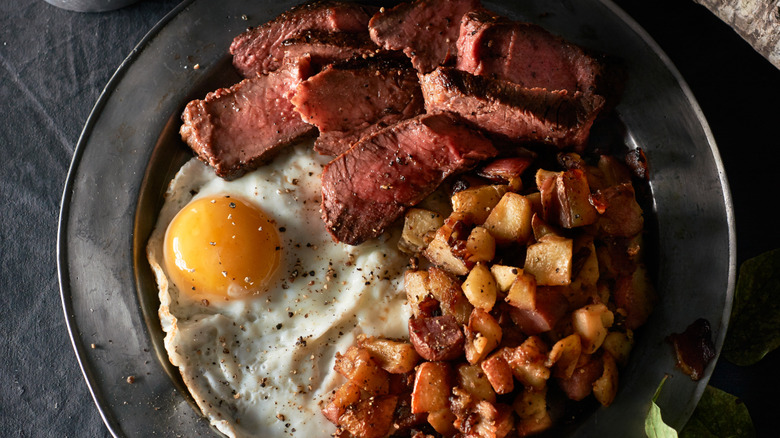
Ride up to a restaurant where a "lumberjack breakfast" is listed on the menu, and you may expect a generous stack of flapjacks, eggs, bacon, and some delicious roasted potatoes to tide you over until the next meal. While the name is charming, what real-deal loggers ate is probably not what arrives at your table. A lumberjack breakfast may sound filling, as lumberjacks were known for eating substantial amounts of beans, bread, meats, baked goods, and stews, but even modern diner versions don't capture the full reality of a camp meal.
What 19th-century lumberjacks piled into their mouths to fuel long days out in the woods certainly wasn't the modern spread we see today. Meals were meant for endurance, not indulgence. Based on a cataloguing effort conducted by the University of Maine and published by the U.S. Department of Agriculture, we know that baked beans were a common staple, with some lumberjacks eating as much as one-and-a-half pounds of beans each day.
While pancakes did make appearances in logging camps — often loaded with butter and syrup — they were not the defining breakfast dish. Indeed, porridge, oatmeal, pies, doughnuts, and cured meats also helped lumberjacks endure long workdays, as did coffee and tea. Cooks regularly changed their menus to keep workers fed, as a lumberjack could have had as many as five meals in one day — most of which were eaten in silence to maximize recovery.
What lumberjack real meals looked like
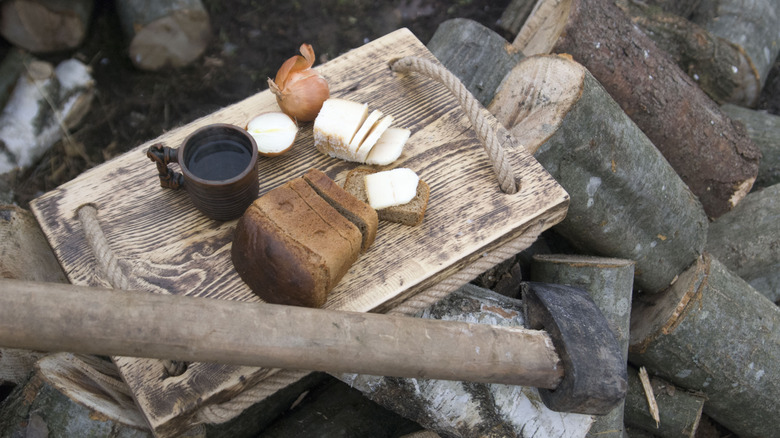
A lumberjack meal listed on a modern menu may include stacks of pancakes, bacon, and eggs, but while some of those foods may have existed in the historical diet, this kind of spread is more symbolic of a 20th-century diner than what was traditionally offered in logging camps. Menus depended on location, with inland camps relying on stored grains, salted pork, sourdough biscuits, and dried beans. Camps closer to coasts often had access to fish and served up baked and salted fish in addition to meaty stews. Fruit, vegetables, and eggs, for instance, were not common staples in Maine, though they were more prevalent elsewhere.
Camp cooks often rose in the early morning hours to start preparing meals for the loggers. The job wasn't an easy one, as feeding dozens of men with limited supplies required careful coordination and was not a chore to be taken lightly. Some of the recipes were derived from Native Americans, like cooking beans in stone-lined holes. Maple syrup was also used to flavor proteins like fish or venison. As the timber industry evolved, the image of a lumberjack captivated American society, as did its accompanying calorically dense, hearty diet packed with protein. Portions remain generous, even if the displays aren't entirely accurate. Sometimes myth outlives memory.