

This Popular Supermarket Chain Once Had Hundreds Of Locations But Went Bankrupt In 1978

Grocery stores, as we know them, have only been around since 1916. As tends to happen over 110-year time spans, things have changed ... a lot. The average American's access and availability to grocery markets is one thing that has shifted. So too have the major players in the market space, players that have come, gone, and carved out a place in our shared recollection along the way. Food deserts notwithstanding, most American shoppers are spoiled for choice in grocery store chains these days, though many of us (especially those of older age) have memories of chains that aren't around anymore. Folks on the East Coast, for example, might remember Food Fair, a popular supermarket chain that once had hundreds of stores before going bankrupt in the late 1970s.
Food Fair was a grocery chain that came into business during the 1920s. Its original location, founded by Samuel Friedland and his brother George, first opened in Harrisburg as a discount-focused business called Reading Giant Quality Price Cutter. (No relation to the Giant grocery chain, founded outside of Washington D.C.)
For Food Fair, success came at a clip. The business became a staple around Philadelphia, where nine stores grew into 22, and then 67 locations throughout the Mid-Atlantic by the end of the 1930s. With America's post-War boom came even more success. By 1950, Food Fair had grown into a chain with 113 locations that served customers across Delaware, Florida, Maryland, New Jersey, New York, and Pennsylvania. Americans were hungry for Food Fair. Food Fair was hungry for increased market share. It acquired the Best Markets of Philadelphia in the 1960s, a chain with the house brand Pantry Pride. At one point, the business operated over 500 stores, and at its peak in 1978, the company was making billions in revenue. Then it disappeared. So, what happened?
Food Fair's owners bit off more than they could chew
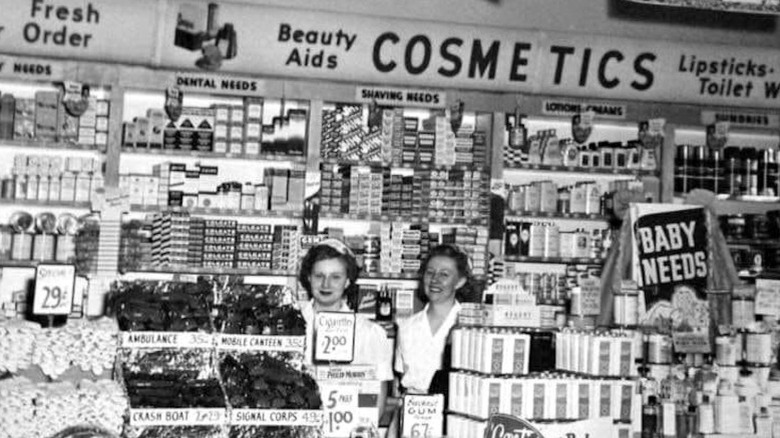
The history of Food Fair is one of aggressive expansion. Small chains like King Arthur Markets of New Jersey, Giant Stores of Baltimore, Setzer's Market of Jacksonville, and the aforementioned Best Markets were gobbled up over the decades. Once Best Market was acquired, Food Fair began opening up discount locations under the name Pantry Pride, and it transitioned all of its stores to the same name by '77. But a year later, the company hit Chapter 11 bankruptcy. It retreated from Philly, relocating corporate headquarters to Fort Lauderdale, where it rebranded fully as Pantry Pride Stores Inc. in 1985. This didn't stop the sell-off, and by 2000, the last location vanished, joining this Midwestern grocery chain that was never seen again.
Growing too big, too fast seems to have been a part of the problem. During its 1960s run, the company made a play for stores in California and Nevada. It proved a tenuous and ill-fated choice for the East Coast business, which had to divest from those stores in the early 1970s. Another problem for this successful grocery business was that its ascendency (and profit) were used to fuel other business ventures beyond selling food. That profit, however, was never as great as believed. In 1996, the SEC charged and fined ex-executives of Food Fair Inc. for faulty accounting. The government found that Food Fair, along with its real estate subsidiary, had cooked its books to the tune of a $40 million difference that led to "materially false and misleading annual and quarterly reports," per the New York Times.