

Why Storing Bread In Its Original Plastic Packaging Can Be A Big Mistake
We may receive a commission on purchases made from links.
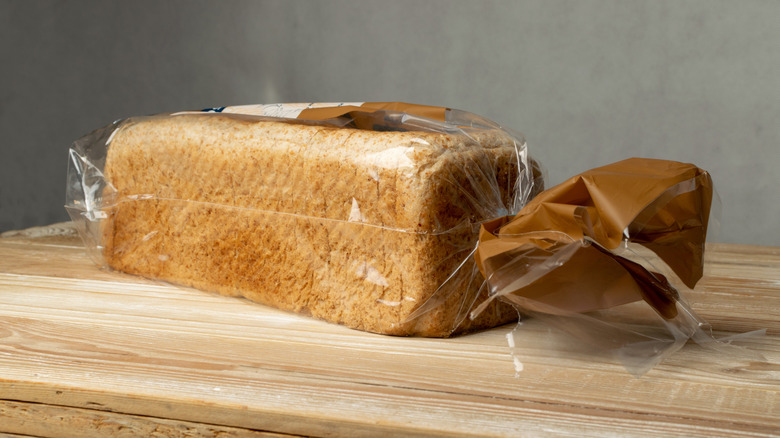
It makes perfect sense that bread is often sold in plastic bags. It's the easiest way to provide a hygienic barrier against handling, insects, and dust. Plastic also prevents bread from drying out, ensuring that when it reaches supermarket shelves, it's still as soft as when it was fresh from the oven. In theory, this all sounds like what you want from packaging, but it's this last point that is an issue when it comes to storing bread for longer periods.
Plastic packaging creates an airtight environment, trapping excess moisture inside. This will first ruin any crust that the loaf might have had, and leave you with something that's more soggy than soft. More problematically, the moist environment encourages the growth of mold.
It's true that the plastic can keep bread from going stale, but a stale loaf is more preferable to a spoiled one. Stale bread has lost moisture and is dry and often hard, but safe to eat — and stale bread has plenty of uses in the kitchen, from croutons to bread pudding. Bread that has spoiled, on the other hand, has been affected by bacteria or mold, and should be thrown out. Fuzzy patches of white, green, or black mold are one of the most obvious signs of spoilage, but an unpleasant or sour smell can also be evidence of bacterial growth.
The best ways to store bread
So if plastic is out, what's the best option for keeping bread fresh? Well, that depends in part on the type of bread you have, and how soon you plan to use it. An unsliced crusty loaf is safe in a paper bag on the countertop for a day or two. Once you slice into it, place bread cut side down on a cutting board to protect the soft interior from drying out.
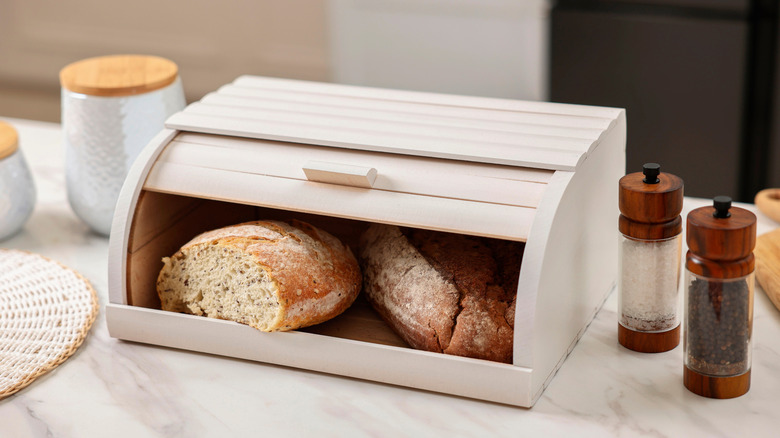
Softer rolls and sliced breads need a more controlled environment to prevent both drying out and spoiling. You'll want a cool, dry storage place that's out of direct sunlight, with just enough airflow to prevent trapped moisture. This is what bread bins were designed for, but if you don't regularly buy loaves, they can be a waste of counter space. Reusable bread bags or wraps are space-saving alternatives. This Bread Story Linen Bread Bag is breathable and washable, while these Johnny Boy Beeswax Bread Wraps can be molded to fit the shape of your loaf.
Once you reach beyond a couple of days, bread will need better protection against spoilage — particularly artisan loaves that contain fewer preservatives. While refrigeration will slow the growth of mold and bacteria, it speeds up starch recrystallisation, which is the mechanism behind bread going stale. The better option is to freeze any bread that you don't plan on using within a few days, storing in airtight bags to prevent freezer burn.