

'Equivalent To Taking 2,000 Cars Off The Road' — How Burger King Transforms Food Waste To Help Save The Planet
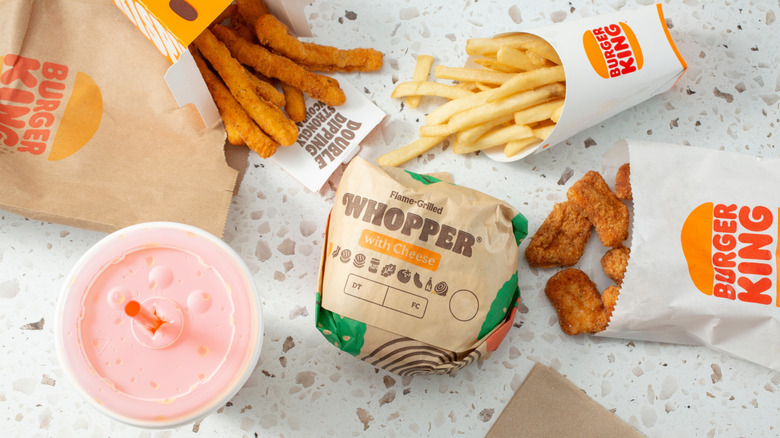
Fast food restaurants use nearly 300 million gallons of cooking oil per year, according to Restaurant Technologies in 2016. That oil can be recycled, and many chains have come to realize it's a valuable commodity. Eazy Grease, a company that specializes in collecting used fryer oil, says restaurants typically receive between $0.25 and $0.50 per gallon. That can really add up for restaurants that use an average of 1,600 gallons per year. Getting $400 to $800 back from a waste product is a good deal, and it helps the environment, which is good for the restaurant's image. In the U.K., Burger King locations have been involved in converting waste oil to biofuel for years.
According to Burger King's U.K. site, the carbon saved by converting used cooking oil to biofuel was "equivalent to taking 2,000 cars off the road." Burger King's logistics supplier, which transports the beef, potatoes, and other necessary items for the chain, runs its fleet on biofuel. The chain's U.K. management is also pushing towards a more balanced menu, with the goal of being 50% meat-free by the year 2030. Some locations have even had trial days serving vegan menus.
In the U.S., Burger King engages in similar oil recycling programs. According to the parent company Restaurant Brands International, in 2024 alone, American Burger King restaurants recycled more than 12 million pounds of used cooking oil. That was enough to replace 1.6 million gallons of diesel fuel.
Making fuel seems pretty cool
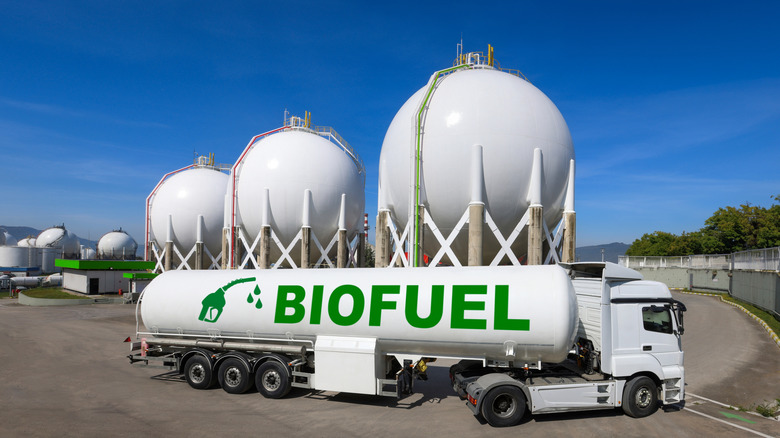
U.S. Burger Kings are almost all run by franchisees, so it's up to them to decide how oil gets recycled, rather than something that is dictated by the parent company. As a result, franchisees may contract companies to manage used oil, which offers advantages beyond just recycling.
Many restaurants hire oil management companies to optimize oil use, filtering and replacing it based on quality rather than a fixed schedule. This means restaurant employees don't need to spend time worrying about disposing of oil that can be dangerous and time-consuming. Since employees are no longer forced to deal with it, workplace injuries are reduced and restaurants save money on insurance.
Burger King is far from the only chain to recycle oil. McDonald's locations also recycle oil, and at the Dallas Fort Worth International Airport location, used oil is even converted into jet fuel. In Hawaii, the chain has worked with a local company since around 2010 to recycle oil into fuel for use on the island. In the Netherlands, McDonald's recycled 1,000 tons of used oil in its first year. McDonald's U.K. started an oil recycling program to fuel its trucks in 2007. In 2018, McDonald's U.K. stated that 42% of its delivery fleet was fueled by biodiesel and that improved fryer technology had reduced the amount of oil recycled because the company used less overall. Other chains like KFC, Taco Bell, and Jack in the Box participate in used oil recycling programs that can produce biofuel and, in some cases, animal feedstock. Disposing cooking oil at home also presents its own challenges, but we have some tips on the best ways to do it.