

Brown-Stemmed Grapes Are Usually Not The Freshest, But Here's Why Some People Prefer Them Anyway
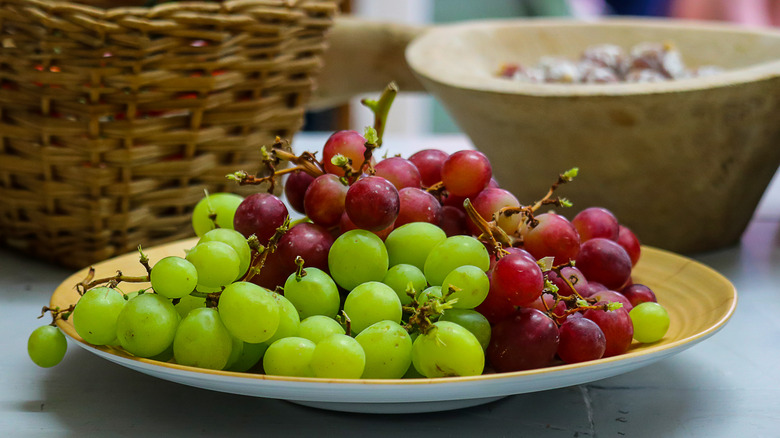
No matter which variety of grapes are your favorite, there are important indicators that signal ripeness. A tell-tale visual for picking ripe grapes without having to taste one is to look for green stems, and while brown stems allude to grapes that aren't the freshest, some prefer them that way. We spoke to Jackie Newgent, RDN, chef, culinary wellness expert, and author of "The Plant-Based Diabetes Cookbook," who reveals that "as stems get browner, the grapes actually tend to be sweeter since their natural sugars become more concentrated with age."
Where green stems are strong and unbreakable, brown stems are often shriveled, dry, and easy to snap off. "Brown stems are a sign of aging, while green stems are a sign of freshness," Newgent notes. "Grapes are often firmer and they're less likely to fall off the vine when the stems are fresh and green." Because of their fragility, these overripe grapes are less stable, and their stems may be disconnected already. However, the added sweetness that comes from these brown-stemmed grapes is ideal for many.
The expert adds that, due to the additional sweetening, "the grapes will become softer, too." This is also the case with most fruits, from bananas and berries to mangoes and pineapple, which all continue to ripen even after they've been harvested. If you're not a fan of crunchy and subtly sweet grapes, brown stems might be a better indicator for choosing grapes than green ones.
Overripe, underripe, and ripe: a comparison of nutrition and taste
Grapes may have the same calorie count no matter their state of ripeness, but sugars and other nutrient benefits change throughout the ripening process. For example, the crunchier underripe grapes contain starch resistant carbohydrates and less simple sugars, which is better for gut health and blood sugar. As the starch converts to glucose and fructose, it becomes easier to digest but causes higher spikes in blood sugar.
On the brighter side, ripe grapes are high in antioxidants and Vitamin C. Logically, overripe grapes indicated by brown stems have the highest levels of simple sugars because they also begin to lose water content. However, if you buy brown stemmed grapes, you'll have to enjoy them quickly as they're already well on their way to becoming overly ripe. Softer, sweeter grapes will transform into shriveled textures and sicky-sweet raisin-adjacent flavors. When faced with a bag full of overripe grapes, you don't have to throw them away.
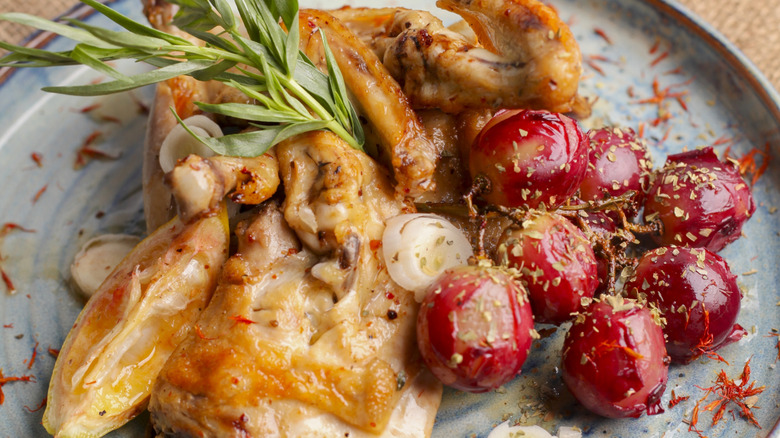
Instead, repurpose them with various cooking methods and dishes. Since they're already closer to raisins than grapes, dehydrate them in your oven or dehydrator for homemade raisins to add to your next bowl of oatmeal. You can also roast grapes for a juicy, sweet, and caramelized addition to savory dishes like sausage or even Thanksgiving stuffing. Of course, frozen grapes are just as beloved as a sweet treat if you're hoping to repurpose your overripe grapes.