

The Ideal Oven Temperature For Ultra-Tender Chuck Roast
We may receive a commission on purchases made from links.
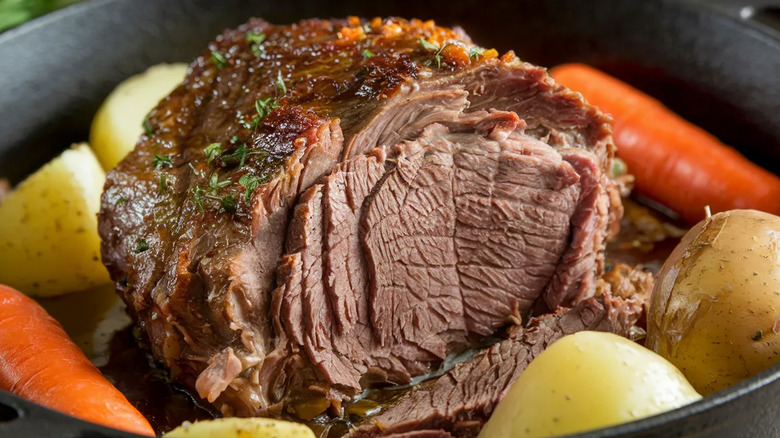
While there are many choices out there for the best cuts of meat for a pot roast, the most affordable (and arguably tastiest) is usually chuck. Although chuck roast can be tough, other cuts like round or brisket are typically leaner and even tougher. For this reason, chuck is ideal when looking to achieve the ultimate flavor from your pot roast. When properly cooked, it's quite forgiving, and it offers a great lean to fat ratio. The connective tissues yield a rich, beefy flavor when the meat breaks down. The important thing is how to cook the roast. You don't need to sweat it, simply let the chuck roast and braising liquid do the work in an oven set at 300 degrees Fahrenheit.
You may come across different recipes that call for starting a chuck roast out at a certain temperature, then lowering it (or even increasing it). The truth of the matter is that you really only need to keep the oven temperature at a steady 300 degrees in a good dutch oven for the right amount of time. So, how long will you cook pot roast for fall-apart tender results? You don't need to sweat this part either. One hour per pound of chuck will yield a tender, juicy roast with a beefy depth of flavor. Most packaged chuck come in between two and five pounds, so a four-pound roast will cook beautifully at four hours.
Chuck roast is easy, but requires a couple of important steps
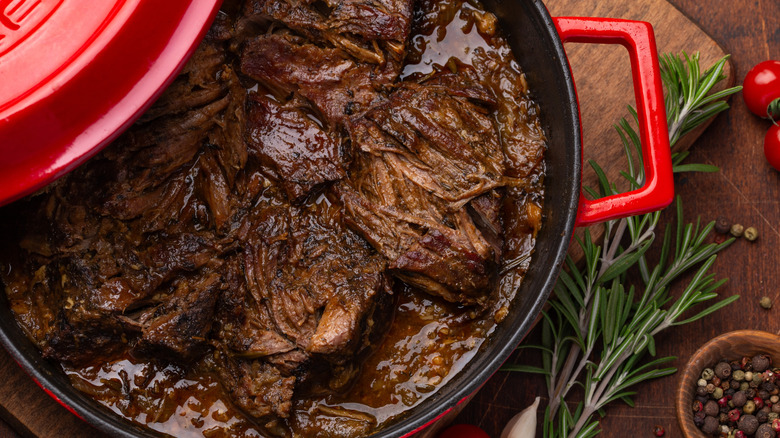
While a low-and-slow cooking temperature is the key to tender chuck roast, there are some steps involved when preparing your meal. Fork-tender pot roast is a result of the cooking time and temperature, sure, but don't forget the importance of the seasoning and braising liquid. Since chuck roast already boasts a nice marbling and strong flavor profile, you can skip any overpowering seasonings.
A dry rub of salt, black pepper, and garlic are really all you need, though you can improvise with some of your favorite herbs or other flavors. A go-to braising liquid consists of equal parts beef broth and dry red wine (start with 2 cups of each). If you want to ditch the booze, double the stock and add a tablespoon of vinegar for some acidic flavor instead.
After seasoning the roast, the trick to sealing in the flavors is to sear the meat on high heat in 2 tablespoons of olive oil in the pot. Next goes your braising liquid; start with a set amount of liquid poured around the sides of the roast. The key braising tip to ensure your beef has a deeper flavor is to surround the meat with liquid, but don't submerge or drown it. A good dutch oven with a tight lid — like this Umite Chief Enameled Cast Iron Dutch Oven — and the proper 300-degree slow cook will yield an ultra-tender pot roast worthy of Sunday dinner.