

The Best Temperature For Storing Bottled Water Is Lower Than You'd Think
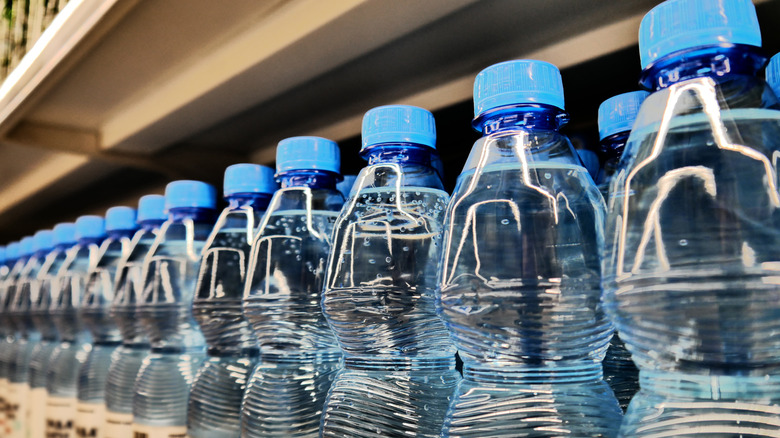
In the summertime, you might keep a case of bottled water in your car, garage, or out by your pool. But is it safe to drink bottled water left in the sun? Not really. When the single-use plastic in bottled water gets too hot, certain chemicals like bisphenol A (BPA) and heavy metals like antimony can seep from the plastic into the water. And you may be unknowingly ingesting them.
Studies show the best temperature to store bottled water is below 70 degrees Fahrenheit, with the ideal range being 50 to 70 degrees Fahrenheit. Why? According to a 2014 study published in Environmental Pollution, bottled water stored at 77 degrees Fahrenheit had higher levels of antimony — almost twice that of water at colder temps — and bottles stored at 158 degrees Fahrenheit (mimicking the heat of the sun), had roughly a 300-fold increase in antimony levels. BPA concentrations increased at both temperatures, too.
In other words, the higher the temperature, the higher the chance plastic chemicals get released. While the U.S. Food and Drug Administration (FDA) deems the level of chemicals in most plastic water bottles minimal and generally safe, it's better to reduce exposure when you can. Long-term exposure to BPA, for example, has been associated with an elevated risk of hormone dysfunction and certain cancers, according to a 2021 study in Environmental Science and Pollution Research. Better to keep things cool ... and safe!
How to safely store bottled water
Keep your bottled water stored in a cool, dry place in your home or anywhere with air conditioning and ample airflow to avoid chemical seepage or the buildup of bacteria and microplastics, and avoid stowing them in your hot car, shed, or garage — aka, the worst places to store bottled water. Check your bottled water's expiration date, too. Most expire after one to two years and simply won't taste as fresh.
It's tempting, but it's generally a bad idea to reuse single-use plastic water bottles often. They're great in a pinch or when access to fresh water is limited, but they're typically not as stable or environmentally friendly as reusable alternatives. Invest in a food-safe, stainless-steel or glass water bottle instead, if you can. And always read bottled water labels to make sure they're BPA-free. Most brands use BPA-free plastic nowadays, but it's best to double check.