

The Small, Rural West Coast City Known As The Apricot Capital Of The World
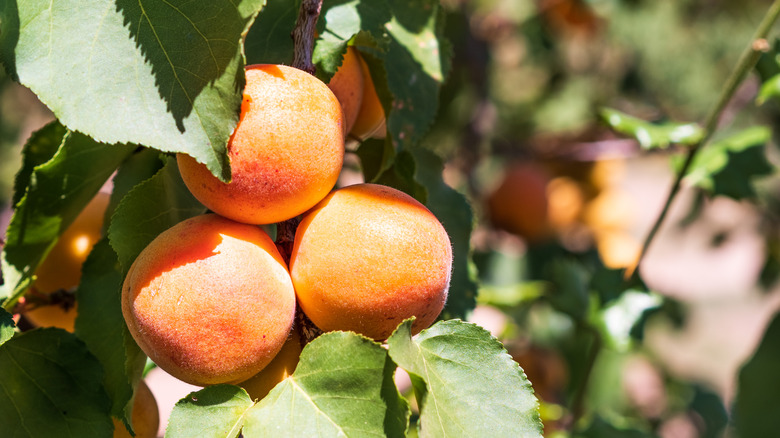
You can enjoy them dried or fresh. They can brighten up your breakfast parfaits and add oomph to your salads. You can bake, boil, or steam them to make delicious side dishes. You can even give your diet a magnesium boost using this delicious fruit. And while they're popular across the globe, it's a small, rural West Coast city you may have never heard of that's known as the apricot capital of the world. We're talking about Patterson, California, a city with a population of around 25,000 whose story is so intrinsically linked with apricots that it even has a variety named after it.
Patterson is a small city located in California's Central Valley. It's modeled after the layout of Washington, D.C. — concentric circles moving outwards from the center of the town. The town itself is surrounded by agricultural land, with almonds, tomatoes, peas, spinach, broccoli, and melons all contributing to the local economy. But it's apricots that are the heroes. One local farm, Blossom Hill Apricots, calls Patterson the best apricot-growing grounds in the world — grounds on which the Patterson apricot thrives.
The Patterson apricot is a versatile, medium-to-large-sized fruit that can be canned, dried, or eaten fresh. The flesh itself tastes sweet, but the skin has a tartness that cuts through the clean sugar hit. The Patterson apricot is one of many varieties that grow in the city, alongside varieties such as the Blenheim, Tilton, and Apache, as well as newer favorites like the Ruby Royal, Gold Bar, and Bonny Cot. While each has distinct characteristics when it comes to size, taste, and texture, they all have one thing in common: They're always the talk of the town in Patterson.
Patterson is a place where apricots are celebrated
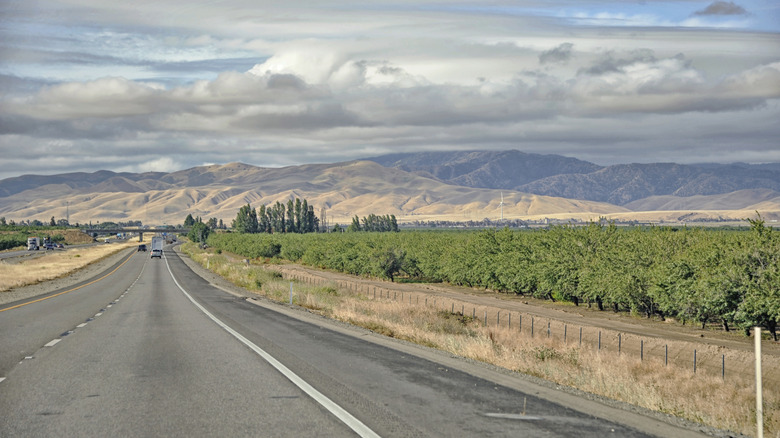
It's not an exaggeration to say that in Patterson, apricots aren't just cultivated, but celebrated — for more than 50 years, the city has been hosting an annual Patterson Apricot Fiesta, a three-day event that features pop-ups serving apricot jams, apricot sangrias, apricot ice cream, and even apricot-flavored kettle corn. To round things off, there are pie-eating contests, and given that this is an apricot fiesta organized in the apricot capital of the world, there should be no prizes for guessing what flavor the pies are.
Incidentally, while it may be known as the apricot capital, Patterson is not the largest producer or exporter of the fruit. In fact, most of the world's apricots come from Turkey, a country that exported $330 million worth of the fruit from 2020 to 2024. Predictably, Turkey too has a city — Malataya — which is referred to as the "apricot capital of the world."
Patterson and Malataya share more in common than just that title. Apricots thrive in temperate weather: cold winters, warm springs, and hot summers. Apricot trees typically need between 300 and 1000 chilling hours (with temperatures from 32 to 45 degrees Fahrenheit) to stimulate fruit production. At the other end of the cycle, they need hot summers (75 to 85 degrees) for optimal development. Patterson and Malataya share this sweet spot when it comes to weather, a sweet spot that delivers the kind of bounty that leaves the rest of the world searching for creative ways to use dried fruit in our cooking.