

Here's Why Hojicha Tea Sometimes Tastes (And Smells) Fishy
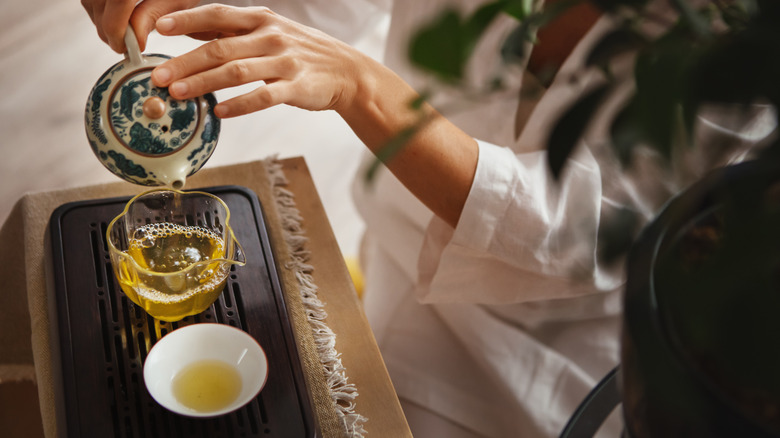
Hojicha tea originated in Kyoto, Japan, and is made from roasting green tea leaves over charcoal. The tea typically tastes like toasted nuts and has a sweet, caramel-like scent, and its soothing flavor and aroma are why a cup of hojicha can help if you're feeling extra stressed. However, some people find that hojicha tea sometimes tastes and smells fishy. To find out why, Tasting Table spoke with Jee Choe, certified tea sommelier and creator of the Oh, How Civilized blog.
Choe outlined what makes hojicha green tea unique: "Hojicha is a roasted Japanese green tea. Most Japanese green teas are steamed, but hojicha is roasted over high heat. This roasting process produces a green tea that's dark brown in color, and one that's lower in caffeine since." She also explained the difference between traditional green tea and hojicha: "The flavor has a nutty, toasty flavor, while other Japanese green teas have more of a vegetal taste."
According to Choe, there are a few reasons why hojicha may smell or taste like fish. "If the hojicha has a fishy smell or taste, this most likely means it's lower in quality or stale." If you know you purchased high-grade hojicha, it could have gone bad due to improper storage. As Choe said, "Storing it improperly can degrade the tea." When green tea degrades, it loses its essential oils and active compounds, which affects its health benefits, aroma, and flavor.
How to properly store hojicha or any other loose-leaf tea
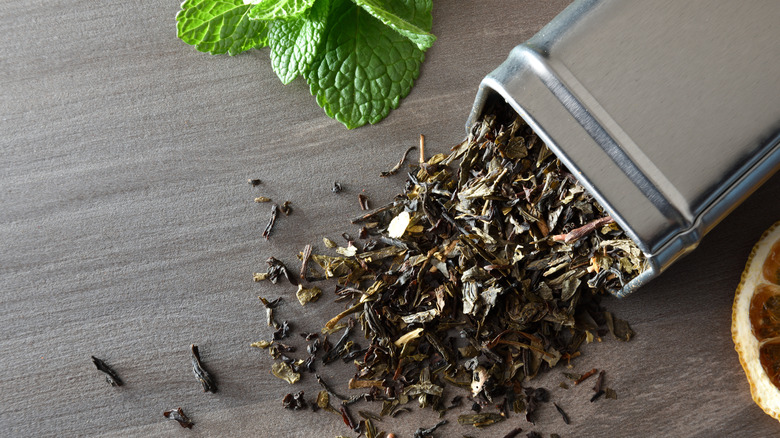
Jee Choe advised, "Tea should be stored in an airtight container away from heat or light." Loose-leaf tea can become degraded due to exposure to air, light, moisture, heat, and strong odors. Oxygen can speed oxidation, resulting in diminished color, flavor, and aroma. Direct sunlight degrades flavor compounds, and heat accelerates the breakdown of essential oils. Excess humidity can increase the risk of mold growth.
Loose-leaf tea is also vulnerable to strong odors, and the leaves can absorb smells. For that reason, the best way to store your tea is to place it in an opaque, vacuum-sealed canister or tea caddy with an airtight lid. Keep it in a place that is cool, dark, and protected from moisture. Store different flavors and types of teas separately, away from other pantry items with strong odors. Don't use a wet spoon to remove leaves from jars.
If you are storing your tea properly but still notice a strange odor or flavor, or if the tea seems to decline quickly in quality, there may be another issue at play. Choe told us, "If it has been stored properly but it has the fishy smell, the tea itself may be lower quality." Consider buying a higher-quality loose-leaf tea from a different vendor to see if it tastes and smells better.