

Why A Cup Of Hojicha Can Help If You're Feeling Extra-Stressed
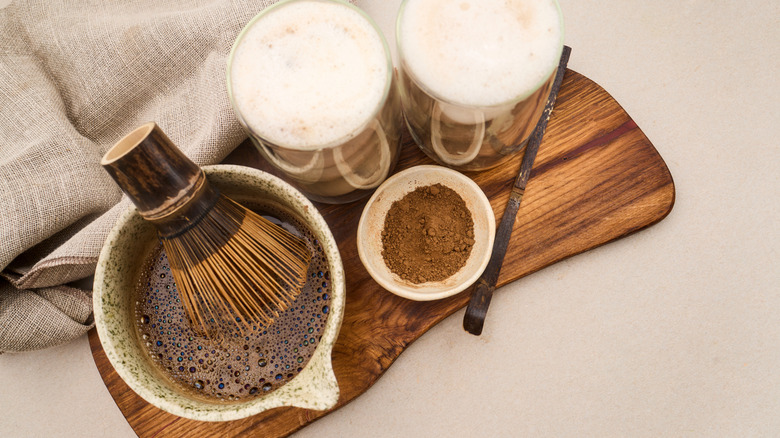
If you're unfamiliar with hojicha tea, here's the roast: It's a type of Japanese tea, green tea, which undergoes a specific processing that the verdant bite of matcha could never. Hojicha is smoky, it has umami, and that's because the tea leaves and stems are roasted in a tool called a horaku. Some hojichas are steamed before roasting, but the strongly nutty flavor belies their actual strength. Hojicha isn't just rustier than other green teas; it generally has less caffeine. Thus, the most soothing aspects of green tea are given room to percolate.
Most green tea contains an amino acid called L-theanine. L-theanine is buzzy in the supplement world, and it also naturally occurs in a few edible things, like tea. Research around it remains limited, but one 2019 study published in the journal, Nutrients, suggested that l-theanine can reduce biological signs of stress, while another 2019 study published in the journal, Pharmaceutical Biology, flagged it as possibly improving sleep functions. Other research, such as the 2008 study published in the Asia Pacific Journal of Clinical Nutrition, also suggested it induces calming states.
Green tea contains L-theanine in varying levels. Shade-grown green is generally believed to have the highest content, and that is one of the primary differentiators of matcha. Because it's roasted, hojicha may actually have less L-theanine than other green teas, but also because it's roasted, the general caffeine content remains low enough for you to taste all of that juice without the jitters.
How to pick your hojicha
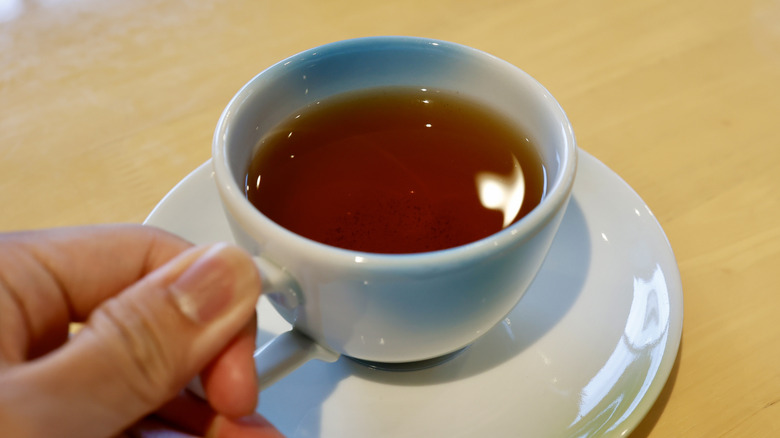
Like the rest of the world of green tea, hojicha isn't a monolith. There is hojicha tea made from older leaves, bancha; hojicha tea made from early season leaf flushes, sencha; and hojicha that includes stems and twigs from the tea plant. Hojicha even comes in a powdered form like matcha, though the higher concentration per serving may boost the amount of caffeine you're consuming.
Because of these differences, it's hard to get an exact read on caffeine per serving of hojicha. Some sources put it around 8 milligrams per serving, others say there are brands with 40 or 70 milligrams per serving. In any case, if you want a shot at sussing out the effects of L-theanine, it's best to look for brands that emphasize the caffeine content specifically.
Apart from the calming L-theanine and reduced caffeine content, hojicha green tea is unique because it also contains a natural compound called pyrazine that is known to induce a sense of relaxation. Enjoyed with a bit of honey or plain, all of these factors come together to make hojicha tea just the dose of calm you need whenever you're extra-stressed.