

What Seasonings Are In Store-Bought Hot Dogs?
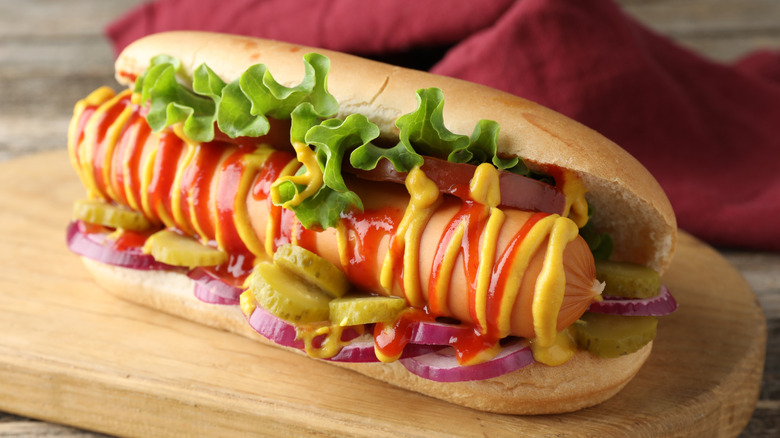
Many things in life are beautiful because they are mysterious. Inherently ephemeral, they resist measurement or definition. How do you quantify the sound of a baby's laugh, the smell of a sweet memory, or why hot dogs taste like that? There may be answers to these questions, but are you sure you want to know?
There's a reason the phrase "how the sausage is made" refers to a disappointing or gross reveal. Hot dogs, perhaps more than any other food, exemplify delicious enigma. They're salty, smoky tubes of smooth, pink slime-based mystery meat whose exact composition most people prefer not to interrogate too aggressively. "Frankly," though, the actual seasonings in store-bought hot dogs are less horrifying and more pedestrian than expected. The flavor mostly comes from a melange of familiar, savory pantry spices and a little sprinkle of industrial food science.
Although recipes vary by brand, most major off-the-shelf hot dogs contain roughly the same constellation of seasonings. They're often vaguely listed as proprietary "spices" or "natural flavors," which is where the air of mystery comes from. But still, it's usually some combination of salt, garlic or onion powder, paprika or paprika oleoresin, celery powder, smoke flavor, and black pepper. Some may contain more surprising spices like nutmeg and cinnamon, or even cherry for color. Nathan's Famous uses dehydrated garlic, cherry and celery juice, yeast extract and vinegar, sugar, salt, paprika, and "natural flavoring." Hebrew National lists garlic, paprika, and chemical curing agents along with preservatives, while Sabrett includes similar ingredients, plus hickory smoke flavor in a sheep casing. Combined with the fattiness of the meat emulsion, you get that unmistakable hot dog flavor profile — meaty and greasy, smoky and subtly sweet, all coming together with that magical je ne sais quoi that distinguishes a hot dog from every other sausage in the supermarket.
Fine, hot dogs, keep your secrets
The mystery persists because food labeling laws allow it. Manufacturers must disclose ingredients, allergens, chemical preservatives, and major additives, but some spice specificity can legally hide behind those blurry terms, "natural flavorings, "spices," and so on. This protects proprietary recipes while still technically informing consumers. In practice, it means the flavor of a hot dog remains slightly inexplicable, which adds to their nostalgic allure. Could there be something way weirder than paprika hiding behind those terms? Maybe, and we'll never truly know for sure. But luckily, eating hot dogs is a choice, and getting down with the ambiguity is part of the fun.
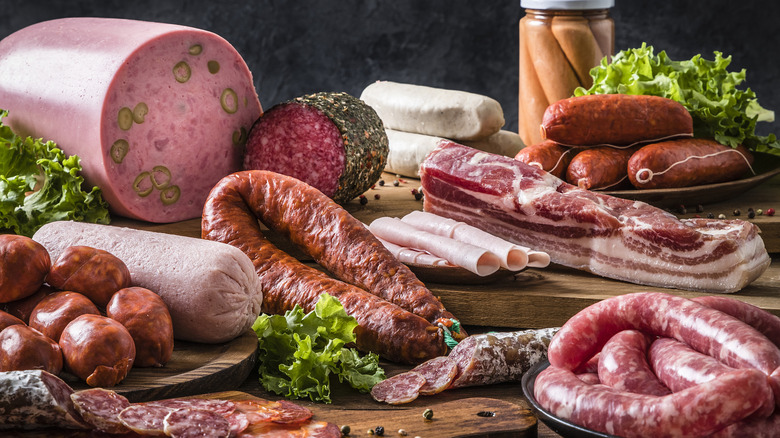
We do know that hot dogs are linked to an enormous sausage lineage that transcends culture and geography, and includes bratwurst, chorizo, salami, lamb merguez, bologna, and làcháng, among many, many others. Humans started grinding scraps of meat together and curing them with salt, fat, spices, and smoke because preservation was a matter of survival. Before refrigeration, sausage-making allowed people to stretch an animal-based protein source, make it transportable, and keep valuable meat from spoiling immediately.
Salt, sugar, smoke, and spices are all very effective, ancient preservatives. Salt reduces available water, inhibiting microbial growth; sugar does something similar osmotically. Smoke preserves food because it dries it out and deposits antimicrobial and antioxidant compounds, and many common sausage spices contain volatile oils and phenolic compounds that mildly inhibit bacteria, oxidation, and rancidity. Together, they contribute a symphony of strong tastes that also mask and rebalance preserved meat flavors. Today's ballpark dogs are a chemically enhanced, industrial descendant of those traditional preservation systems.
Flavor, grown in a lab

Along with the recognizable spices, many of the chemistry-kit-sounding seasonings and ingredients that make modern hot dogs taste like "hot dog" are also there to amplify palatability, and further stabilize and preserve them. Sodium nitrite, one of the most common curing agents, inhibits bacterial growth and slows oxidation and rancidity, and helps maintain the signature pinky color associated with cured meat. Other additives perform similar jobs; sodium erythorbate and sodium ascorbate act as antioxidants and color stabilizers. Potassium lactate and sodium dictate manage pH levels and help suppress microbial growth, extending shelf life. Monosodium glutamate, the queen of controversial additives that sparked decades of debate about what exactly MSG is and if it's bad for you, intensifies flavor and satisfaction perception. Phosphates help retain moisture and maintain the hot dog's juicy-springy, cohesive texture so it doesn't become crumbly or dry. None of these things are "spices" per se, but they contribute character and flavor as much as the garlic and paprika do, and can therefore be considered seasonings.
The funny thing is, all of this chemistry and industrial engineering ultimately exists in service of something emotional. A hot dog is a carefully calibrated sausage designed to taste comforting and familiar, whether it's eaten off a backyard grill on a perfect summer day, standing up in the middle of the sidewalk New York City-style, or inhaled under fluorescent gas station lights at midnight. Most store-bought hot dogs are fundamentally ethereal combinations of meat industry byproducts, cultural technique and scientific progress, garlic salt and corporate secrecy, tucked tightly inside an edible casing. The real unanswerable question remains: ketchup or mustard?