

Is It Ever Okay To Drink Expired Juice? Here's What To Know Before You Sip

Best-before dates on juice and other foods can be misleading. We often refer to them as expiration dates, but many products actually say "best before" or "use by," which are technically different. Strictly speaking, food eaten after its best-before date could still be safe, but it may just not be its best. How products are packaged also has a lot to do with whether you can eat or drink something after the listed date. Many juices are safe up to six months past their listed date, but you need to use discretion. If it looks or smells off after opening, don't risk it. That remains true even if the juice hasn't passed the expiration date and should always be a guiding principle.
There is no law in the U.S. requiring manufacturers to put a date on packages, with the exception of eggs and baby formula. The date on your juice is provided by the manufacturer based on its own guidelines. Because of that, juice labels can vary between companies in both wording and how the dates are determined. There's also some evidence that Al Capone influenced the creation of expiration dates, if you've ever heard that rumor.
Fresh juice should be consumed within 48 to 72 hours. However, a carton of store-bought, pasteurized juice should be consumed within 10 days after it's been opened. Even if the expiration date is six months from now, once it's been opened, it's on a new timer. The listed dates only apply to factory-sealed products.
Don't let the bad juice loose
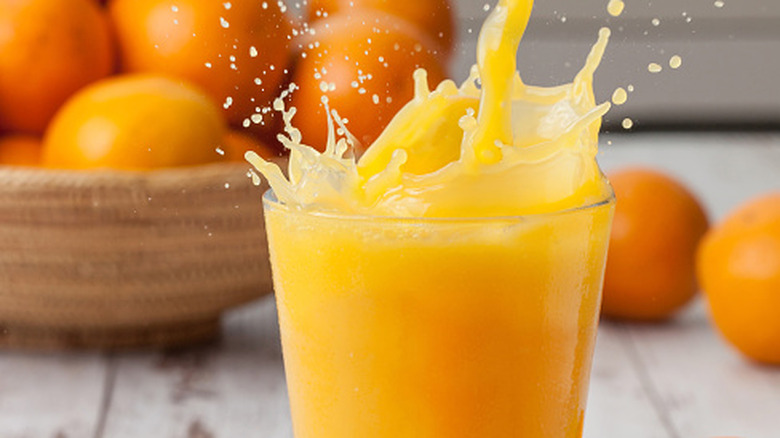
Pasteurized juice has a long shelf life because the heat treatment kills most dangerous microorganisms. Fruit is exposed to bacteria and yeast through insects, fertilizer, animals, and environmental conditions while growing. Even though people often focus on dangerous bacteria like E. coli and Salmonella, yeast is found naturally on the skin of fruit and could contaminate juice, causing it to ferment.
The pasteurization process allows jars, cans, and cartons to remain shelf-stable for months. Fresh juice made at home or prepared on-site at a grocery store or restaurant should be refrigerated immediately because bacteria and yeast can quickly multiply. Because it will be present the moment you get the juice, rather than after you open it, the shelf-life timer is much shorter.
It may not always be easy to tell if juice has gone bad, but there are some telltale signs to look out for. Many of the signs that tell if orange juice has gone bad can also be applied to any juice. If the container is swollen, that's a sign that the microorganisms inside are releasing gases. If there's enough to make the container bulge, it means the juice has gone bad.
Never drink potentially spoiled juice without looking at it first. Even if there's no bad smell and the container isn't bulging, pour a glass to inspect it. If the juice is normally clear, look for cloudiness, bubbles, or chunks. If the color is off or there are particles floating in it, don't risk consuming it.