

Why Americans Aren't Drinking As Much Alcohol Anymore
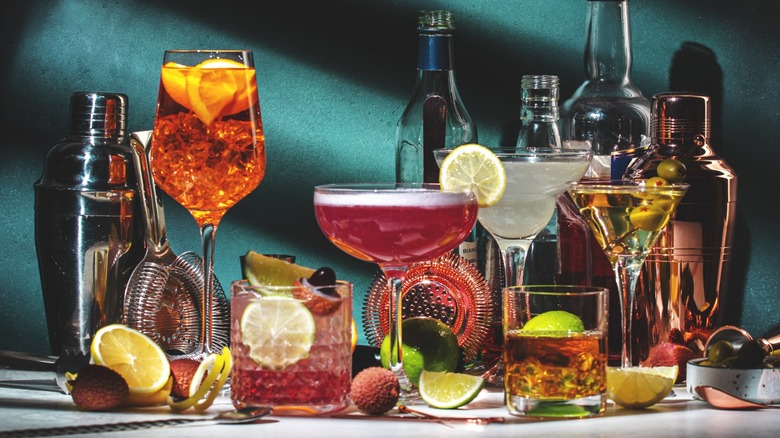
Americans are now thinking twice before drinking alcohol, according to 2025 reporting by Gallup, a global analytics and advisory firm. Their polling found that alcohol consumption in the U.S. had been declining for the last three years prior. This downward trend applied to both the number of people who reported drinking and the quantity of drinks consumed by those who did partake. Gallup noted that the drinking rate sank to 54%, the lowest since they started tracking the drinking behavior of Americans in 1939. Previously, the all-time low was 55% in 1958. For context, from 1997 to 2023, around 60% of people consistently reported drinking alcohol. Additionally, Gallup's research suggested that this downshift in alcohol consumption could continue in 2026.
What changed in 2023? That was the year the World Health Organization (WHO) put out a statement that no alcohol consumption can be said to be safe. This went counter to the previously held belief that moderate amounts of certain types of alcohol, such as red wine, could have positive health benefits. WHO's stance was that alcohol's negative effects begin with the very first sip and that any potential good doesn't necessarily outweigh the bad. The article stated that "currently available evidence cannot indicate the existence of a threshold at which the carcinogenic effects of alcohol 'switch on' and start to manifest in the human body."
Changing perceptions among Americans around the dangers of alcohol
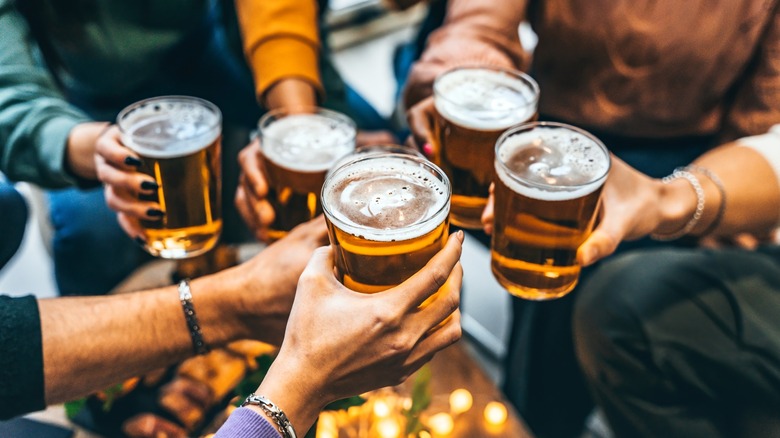
Even just a few years ago, during the height of the COVID-19 pandemic, alcohol use was on the rise. The drinking rate in 2022 was at 67%, which had doctors seriously concerned about changing drinking habits. And while you might think that some of this shift was due to increased drug use, with the widespread legalization of marijuana, Gallup's findings didn't support this as a contributing factor. Nor did they find that other criteria, such as race/ethnicity, education, and income, played a significant role. Rather, their data revealed a significant spike in awareness of alcohol's health risks as being key, especially in young adults. For example, only 30% of adults aged 18 to 34 viewed a moderate amount of alcohol as bad for their health in 2001. This peaked at around two-thirds in 2025.
More and more studies have been coming out that highlight the harmful effects of alcohol, such as one from 2022 published in Nature Communications that revealed how even a small amount of alcohol affects your brain. And although alcohol has long been classified as a carcinogen, the WHO believes this fact is not widely understood in most countries. "We need cancer-related health information messages on labels of alcoholic beverages, following the example of tobacco products ... and we need overall wide awareness of this topic in countries and communities," said Dr. Ferreira-Borges, Head and Programme Manager, WHO European Office for Prevention and Control of NCDs.