

The Common BBQ Dry Rub Mistake That Actually Makes Perfect Sense
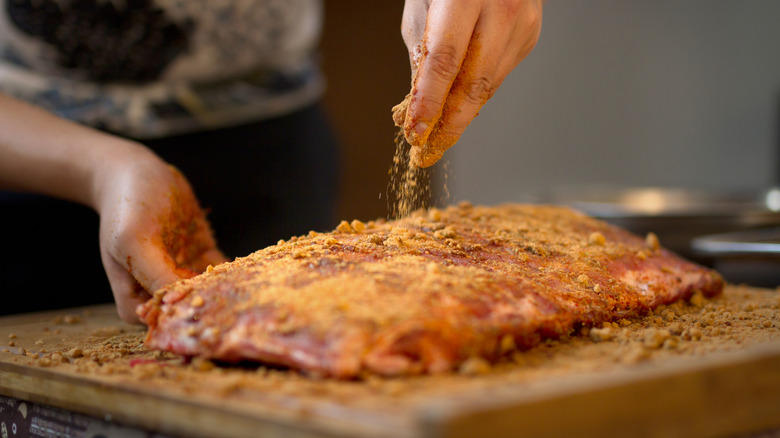
You want to pack your barbecue with as much flavor as possible, and when you don't have time for a marinade, a dry rub is the way to go. There are plenty of dry rub recipes you can try with pork, beef, and chicken that help build a flavorful crust and a delicious bite. The name is oddly confusing, though, especially if you are new to dry rubs and how to use them. It seems obvious to assume you're supposed to rub dry spices into the meat before cooking, but that's not how it works. Despite the name, you shouldn't be rubbing your dry rub.
The problem with rubbing in a dry rub is that it mixes with the meat's moisture and starts to clump. The point of any rub is to add flavor and create a crust, but there can be too much of a good thing. Depending on the cut of meat, there could be ridges, pockets, or folds that trap excess seasoning as you work it into the surface, and a substantial amount could get stuck in place.
If your rub has a lot of salt, sugar, or even spicy ingredients, you don't really want to bite into a chunk of that. Not only will it throw off the flavor balance, but it could ruin the texture as well. Sugar and other spices could form a thick, unpleasant paste, and some herbs could dry out, making hard chunks. Literally rubbing a dry rub into meat is another BBQ myth you can stop believing.
That's the rub with dry rubs
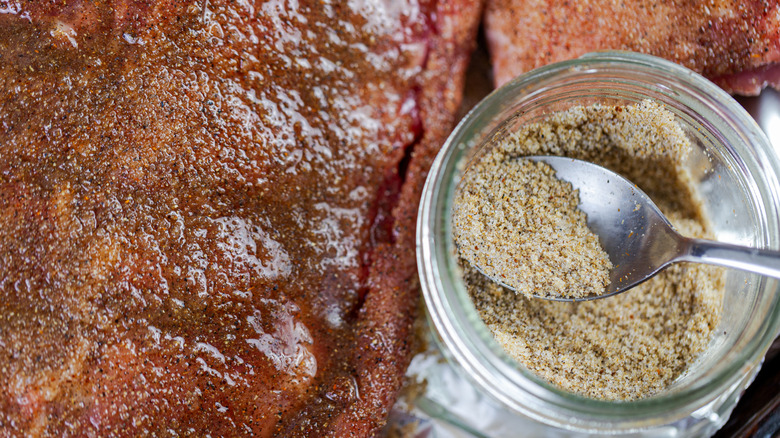
Another problem that comes from rubbing in a dry rub is the paste it forms with the meat's natural juices or any added brine. If this becomes too thick on the meat you're trying to smoke, you might inadvertently create a shell that smoke can't properly penetrate. The bark will not form the way you want it to, either. That can leave the exterior unevenly seasoned or pasty, instead of crisp and balanced. Plus, all of the effort put into smoking a brisket or some chicken wings will have been for nothing.
Rubbing the meat can also cause surface damage. Most rubs are mildly abrasive due to the mix of dry spices. Rubbing it into meat can work a little like sandpaper. The rub can rough up the surface of the meat, which may cause the loss of more juices during cooking, leading to drier and less flavorful meat when it's done.
A dry rub should evenly coat the meat. The best approach is to salt your meat first and then sprinkle on the dry rub. You can pat the seasoning down to help it adhere and avoid unintentional clumping. An even coating of rub ensures a consistency of flavor and texture. A rub that has sugar in it or certain herbs may be more prone to burn, especially where those clumps may have formed. Burning sugar won't just taste bad and alter the texture, it prevents the meat from cooking through before the exterior burns. Stick with the sprinkle and pat method for an even, controlled layer that creates the crust you want.