

The 'Sa-Shi-Su-Se-So' Rule For Japanese Cooking
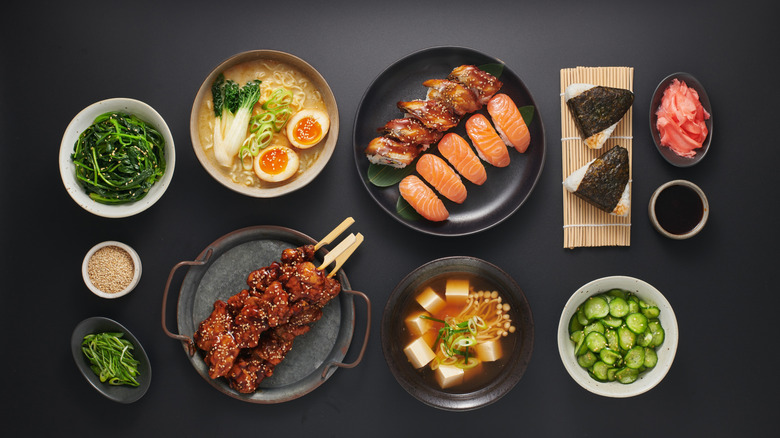
Traditional Japanese cuisine, known in Japan as washoku, is guided by basic principles of seasonality, simplicity, and beauty. The word washoku literally means Japanese food, but it also has an alternate meaning, roughly translating as "harmonious eating." This definition accurately describes the ethos behind Japan's famed cuisine, as behind every recipe is the concept of sa-shi-su-se-so, an expression that describes how cooks combine the essential ingredients for Japanese cooking to achieve a harmonious balance that pleases all senses.
The name sa-shi-su-se-so combines the first Japanese character in the words for sugar (satoh,) salt (shio,) vinegar (su,) soy sauce (shoyu,) and fermented bean paste (miso) — the five ingredients that are a must to create the balance of flavors which characterizes washoku as one of the most unique cuisines in the world, recognized by UNESCO as part of the Intangible Cultural Heritage of Humanity in 2013.
For centuries, washoku has been guided by a set of principles that include healthfulness, respect for nature and ingredient seasonality, beautiful presentations, meticulous and varied cooking techniques, simplicity, and a harmonious balance of colors, textures, and flavors. It is here that sa-shi-su-se-so comes into play as the art of incorporating sweet, salty, sour, bitter, and umami flavors in the right combinations, a practice that's at the heart of the most emblematic dishes in Japanese cuisine.
Sa-shi-su-se-so belongs among washoku's "rules of five," which are derived from principles of Japan's Shinto religion. According to Shintoism, a Japanese meal should contain five colors, five flavors, and five cooking methods, as well as stimulate the five senses. Of course, sugar, salt, vinegar, shoyu, and miso are not the only seasonings used in Japanese cuisine — mirin, dashi, kombu, and sake are essential, but they are not considered as part of the sa-shi-su-se-so principle.
How sa-shi-su-se-so works to create a dish with flavor balance
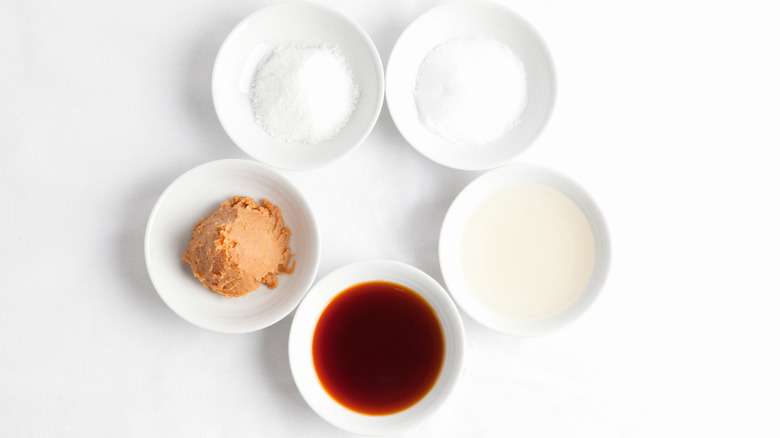
The order of the characters in sa-shi-su-se-so is important, as it mirrors the order in which ingredients should be added to the recipe for best results — some seasonings don't mix well when they are combined in the wrong order. So, although it may sound counterintuitive, according to sa-shi-su-se-so, you must add sugar at the start of cooking — if you add salt or soy sauce before the sugar, you'll have a hard time getting the sweetness to show.
Salt should follow, added during the early stages of cooking, so it will have time to be absorbed by all ingredients and season the dish properly. Adding salt at the end of cooking, or worse, once the food is on your plate, will only season the outside and make the food seem salty. That's why vinegar should be added after salt, as it will tame a dish that tastes salty.
It also has the acidity needed to lighten richness in a fatty dish, and adds structure to balance sweetness. There are many types of vinegar used in washoku, each with a different flavor profile and purpose, essential for making the indispensable oshinko pickles.
Soy sauce and miso go in at the end of cooking, as their flavors can be affected by heat. Adding them last preserves their original flavors and aroma, which creates another layer of sensory perception. Using the right kind of soy sauce is important, as not all soy sauces are created equal.
It's important to note that not all Japanese recipes will include all the sa-shi-su-se-so ingredients. For instance, it is rare that Japanese cooks use miso and vinegar together in the same recipe. What matters is that you add the ingredients in the correct order, whether the recipe calls for two or five of them.