

The Proper Microwave Setting To Soften Butter Without It Turning Into A Puddle
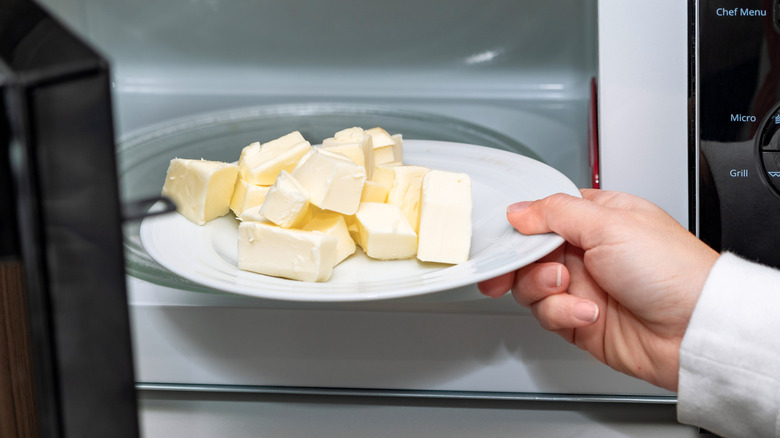
While there are certain microwave settings you should use more often, pastry chef Emie Dunagan told Tasting Table that the shortcut setting isn't accurate enough to soften butter properly. "Microwaves work by targeting the water inside food," Dunagan explained. "Butter (at least butter in the USA) contains less than 20% of water. Many folks have had the misfortune of a butter explosion on their microwave plate. This eruption comes from rapid heating, changing water to steam, which boils parts of the butterfat." She added that this is why you might still have solid butter amidst the explosion. Some innovative home bakers have come up with hacks like the toothpick trick, but the fact remains that it's difficult to get a consistent result.
So what's a home baker to do? Dunagan said the secret isn't a setting, but simply your attention and a little patience. "When softening butter in the microwave, the standard setting will work perfectly well," she explained. "Many folks want a programmable button for this, but the best way for consistent outcomes is really just a moment or two of attention." She suggested incrementally heating butter in the microwave in short time intervals to prevent those melted caverns that boil the fat. "I recommend softening one stick of butter, using the standard factory setting of the microwave, by heating for 20 seconds, rotating to one side, heating for another 10-15 seconds, repeating until softened," she said.
The importance of properly softened butter (and how to tell when it's just right)
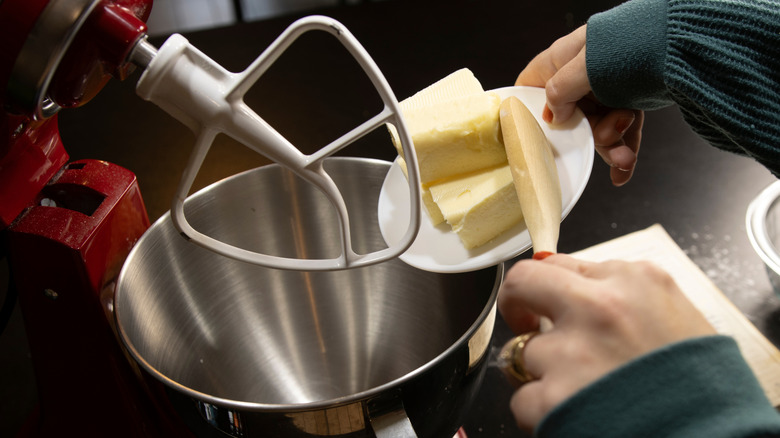
Does it really matter whether the butter is melted versus softened? According to Emie Dunagan, the answer is unequivocally yes. "Butter needs to remain solid in order to expand and suspend other ingredients within the butterfat. Butter itself is already an emulsion of butterfat, milk solids and water. When it is properly softened, it acts as a foundation to expand," she explained. Dunagan pointed to creaming a cookie dough or cake batter as an example: "This expansion of whipped butter and sugar is the starting foundation for these sweet treats. If the butter is liquid, the sugar crystals will dissolve and not suspend, therefore not expanding," she told us.
In short, if your cookies keep turning out greasy or your cakes dense, broken emulsification of the butter is likely to blame — and properly softened butter will make all the difference. But how do you know when butter is perfectly softened? Dunagan said it comes down to look and touch: "The butter needs to remain in its solid form without melting. If there's melting in the center or edges, it's too soft," she said. Then, there's the poking test: " If your butter is no longer cold, but when poked it only leaves a slight fingerprint, it's not soft enough ... it should be stable enough to be solid, just barely, and leave a deep indentation," Dunagan said. That's the ideal texture for softened butter.
Some people swear by the hot jar trick to soften butter quickly without risking the microwave explosion. If you heat your butter at all to soften it, Dunagan advised to always allow it to cool before adding it to the other ingredients in your recipe.