

This Ricotta Trick Improves Lasagna Texture And Saves A Step In Prep
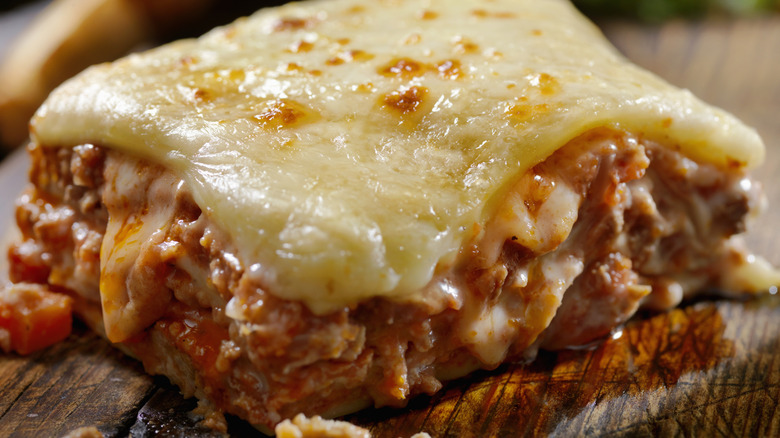
The best part of lasagna isn't the mouthfeel of the pasta, sauce, and meat (or veggies) or the ample ooey-gooey mozzarella on top — it's the ricotta layer. Without ricotta, your lasagna will come out dense and like a sad version of stuffed shells. The ricotta is what makes it creamy and delicious.
Many people stick to adding their ricotta as a separate layer in their lasagna — between the meat, sauce, and noodles — but the better way to integrate this ingredient is to instead mix it into the meat. The reason for this is simple: It prevents you from biting into a wad of ricotta when you eat your lasagna. Instead, that fat and richness get mixed with your choice of meat, infusing it with extra flavor and making it more easily spreadable in your casserole dish. If you don't mind biting into the cheese (or, on the flip side, enjoy it), you can leave it as a separate layer, but mixing it into the meat will prevent any textural or ratio issues you may have with this dish.
Other ricotta tips for tastier lasagna
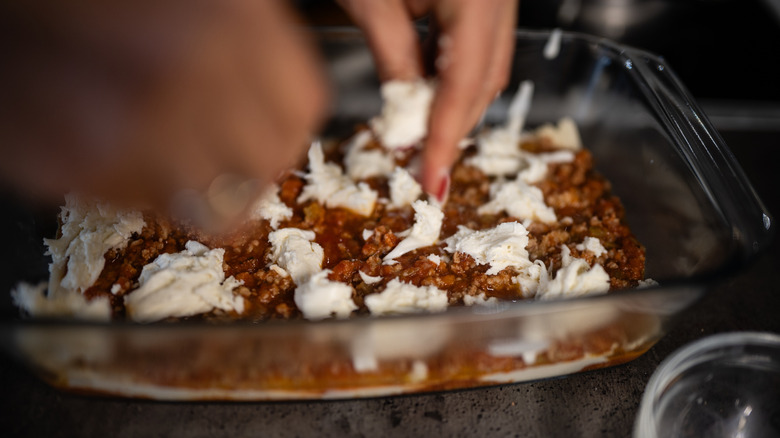
Adding ricotta directly to the meat rather than as a layer of its own in the dish isn't the only tip here to keep in mind. Although the flavor of the meat is going to be doing a lot of the talking, you should season your ricotta before adding it in. Even a pinch of salt, garlic, or Parmesan cheese (which offers both saltiness and umami) will intensify the flavor of your ricotta and round out this dish even more. If you are finding that your ricotta gets dry, adding an egg to it can help it retain its moisture, yielding a better, creamier lasagna.
You can try these ricotta hacks on virtually any lasagna recipe. If you need some inspiration, check out our classic lasagna Bolognese recipe, which calls for a mixture of ground pork and beef. Our fun riff on a game-day staple — this Buffalo chicken lasagna recipe — could also benefit from a bit of ricotta added to the succulent, spicy meat.