

Freeze Eggs Into Perfect Portions Using A Tool You Probably Already Own
We may receive a commission on purchases made from links.
Between egg shortages and soaring prices, it might seem like an impossible task to keep the fridge stocked. If you are lucky enough to come across eggs at reasonable prices, buying in bulk and freezing will help you take advantage of the situation. When stored correctly, frozen eggs are safe to eat for up to 12 months. But don't just toss them into the freezer — the shells will crack as the eggs expand during freezing.
Silicone muffin cups are the ideal size and shape for freezing whole eggs, and the non-stick flexible sides come in handy when it's time to remove them. Simply crack an egg into each and place in the freezer on a baking tray to keep them level. Once the eggs are frozen, you pop them out and add them to a zip-lock bag or airtight plastic container. Using individual liners like the Amazon Basics Baking Cups rather than a full tray will help you save space if you're just freezing one or two eggs.
Depending on your plans for cooking with frozen eggs, you might want to freeze the whites and yolks separately or prepare batches of beaten whole eggs. In which case, you'll likely need different portion sizes. If you have a Uozuke Silicone 1 Cup Freezer Tray, each section will hold five large beaten eggs. The ½ cup version of the tray can be useful for separated eggs, with each section holding 4 to 5 large egg whites or 6 to 8 large egg yolks.
Thawing and cooking frozen eggs
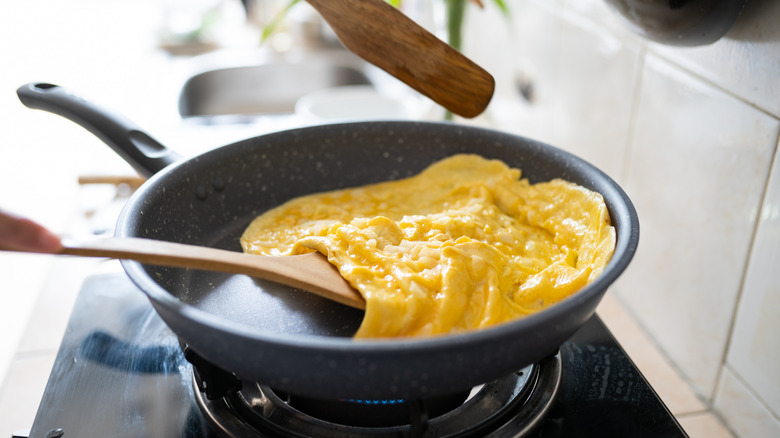
Before you portion out all of the eggs you have to hand, be aware that previously frozen eggs won't behave the same way as fresh eggs. Most notably, frozen eggs won't poach or fry well, but they can be reliably used to make omelets and scrambled eggs or added to baked goods as normal. For food safety reasons, they shouldn't be consumed raw, as freezing won't kill Salmonella bacteria.
To thaw eggs for cooking, the safest option is to let them sit in the refrigerator overnight, though you can speed up the process by running the container or plastic bag under cold water. Avoid the temptation to use hot water, as that will increase your chances of bacterial growth. For the same reason, eggs should be used as soon as possible after defrosting, and never left for more than a day after thawing. If you've frozen egg whites to make an omelet, you might find that leaving them at room temperature for 30 minutes helps get more volume when beating.
Egg yolks are the most impacted by the freezing process, and you'll notice that they take on a firm, gelatinous texture that remains even after thawing. You can prevent this coagulation by adding a pinch of salt or 1 ½ teaspoons of sugar for every four egg yolks before freezing, depending on what you plan to use them for. This, of course, requires some forethought, and is why labeling your freezer bags is so important.