

The One Ingredient That's In Almost Every Restaurant Dish
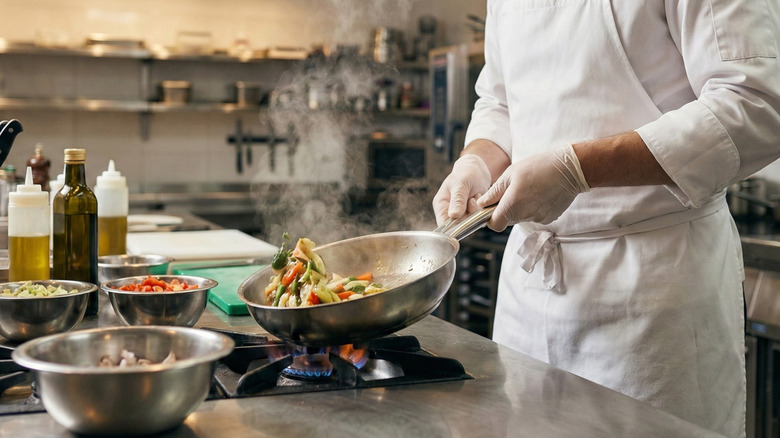
Restaurant food often tastes richer and more cohesive than what some people make at home. The main reasons are related to things you can't replicate at home, like skilled labor and the vision of the menu developer, but there is one simple "secret ingredient" that contributes. Professional kitchens use enormous amounts of onions. They're the foundation of countless dishes across cuisines. They layer and dissolve into all the good stuff: stocks, sauces, braises, soups, gravies, and reductions. Even when you can't visibly identify an onion in a finished plate, there's a good chance at least one or two helped build its underlying flavor.
Restaurant cooks know that flavor develops cumulatively. Good dishes become what they are — succulent, savory, satisfying — through ingredients that support and amplify one another. In Western cooking, that process often begins with the French mirepoix, the classic combination of onions, carrots, and celery, softened in butter. Other cuisines use similar culinary building blocks. Italian soffritto and Spanish sofrito boast the same three vegetables, but cut slightly differently and sautéed with olive oil. Cajun cuisine, which is influenced by French technique, adds in bell pepper. Across these traditions, onions are the stabilizing force that ties it all together.
Raw onions taste sharp, sometimes aggressive enough to incite tears. But heat soothes and transforms them. Slow-cooked onions become mellow and sweet, imparting a deeply savory aroma in any dish they're a part of without taking over. Over time, visible bits of onion have most likely disappeared into a recipe, but they leave behind an ineffable body and depth. You might not identify that you're tasting onion, but you'd definitely notice its absence.
A layered veg for layered flavor
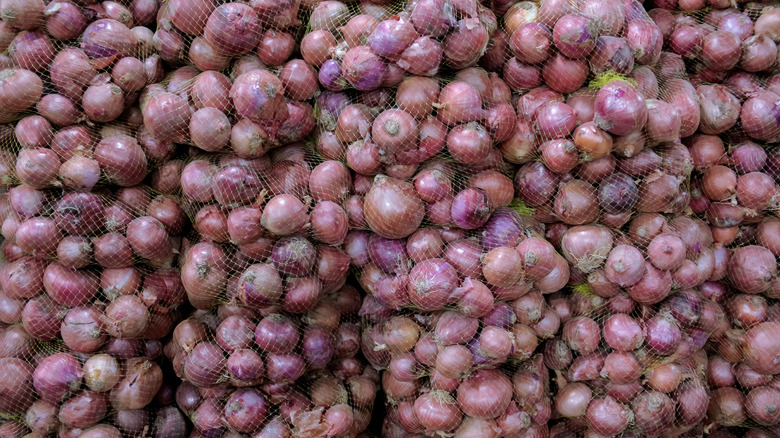
The smell of onions hitting fat in a hot pan is one of the defining notes of professional cooking, and it hangs perpetually in aprons and hood vents. Before service even begins, prep cooks have often already gone through astonishing quantities of onions — they're typically delivered in 50-pound sacks, for a reason. The mountain of onion are peeled and broken down into various sizes (like mince, dice, or brunoise) because the way you chop vegetables affects how they flavor food. A large wedge breaks down more slowly, and releases flavor gradually during braising. It adds bulk or texture even if it's not entirely cooked down, meanwhile a finely minced onion melts silkily into sauces and meat mixtures. Once prepped, onions are usually kept in the walk-in refrigerator, stored in neat rows of containers, ready to be mise en placed and thrown into most savory recipes.
When an onion is sliced, damaged cells release volatile and sulfuric-smelling compounds designed to protect the plant from underground predators and pathogens. Humans, somewhat improbably, love those pungent compounds. We've been eating onions for thousands of years, because we realized that in small amounts, sulfurous onions contribute both complexity of flavor and appetite stimulation, which is why they smell so alluring once they mingle with fat. We've spent thousands of years selectively cultivating onions to grow sweeter, larger, and less fibrous than their wild ancestors, and today they're one of the most universally beloved flavor builders. Few ingredients adapt so completely to the needs of the dish they're used in, which is why they're so common in restaurant cooking.